 Russia · 16th century
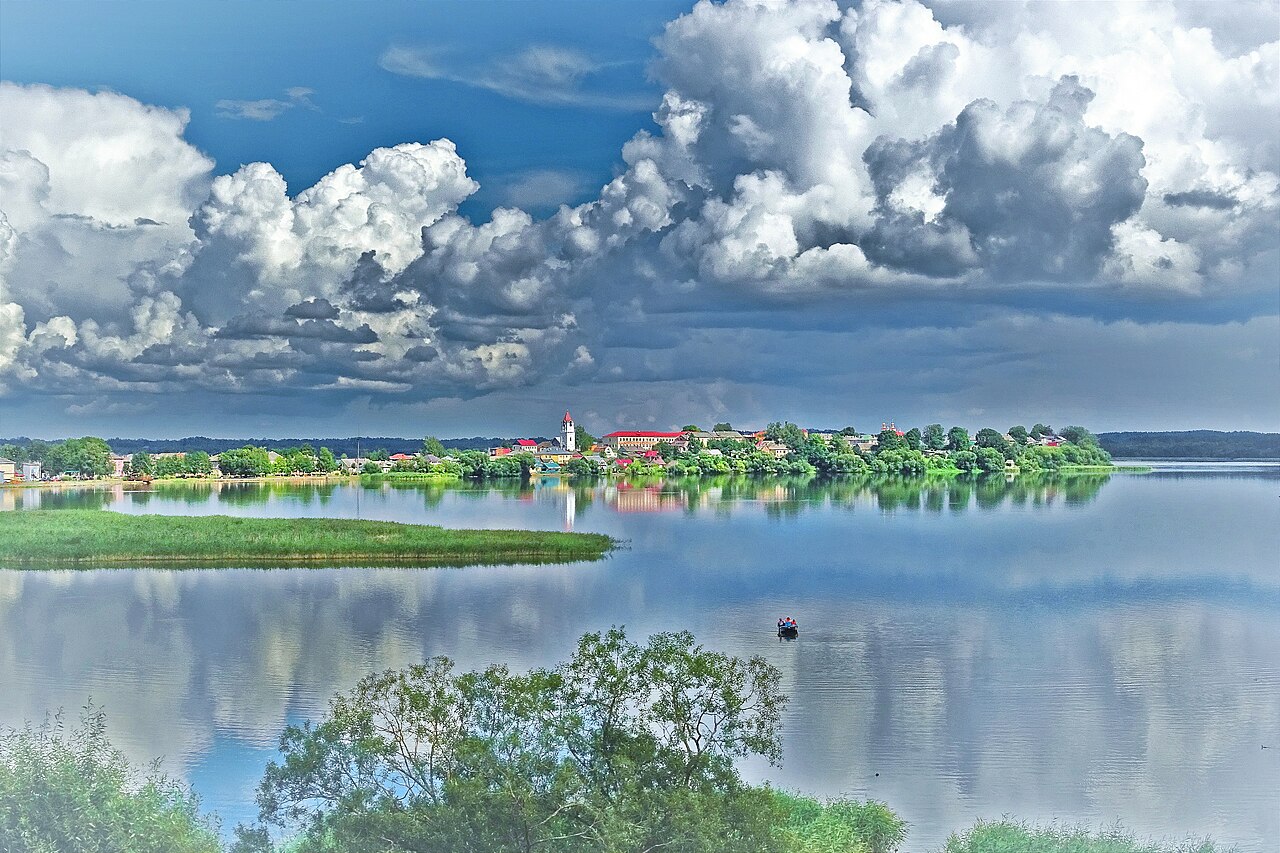
Sebezh Fortress ranks #8,560 of 9,040 worldwide in the atlas's castle fame ranking, and #141 of the 145 mapped in Russia. Founded 1535, it is older than 40% of the atlas's dated landmarks, one of 887 atlas entries founded in the 16th century. See how Russia compares in the castle statistics.
Sebezh Fortress consists of historical fortifications in Sebezh in the Pskov region, situated on the "Castle" peninsula projecting into Lake Sebezh.
Sebezh is first mentioned in the chronicles under the year 1414 as a Pskov "prigorod", that is, a subordinate town, in connection with its capture and devastation by Vytautas, Grand Duke of Lithuania. In 1535, in the course of the Starodub War, the Sebezh volost was reconquered by Russia. By that time the former fortress no longer existed. In the same year, by order of Prince I. V. Shuisky and under the direction of I. N. Buturlin, a wooden fortress was erected in record time on the site of the ancient fortifications, named in honour of the Beheading of John the Baptist as Ivangorod-on-Sebezh. The works were directed by the Italian architect Petrok Maly Fryazin, who had arrived from Moscow. From Pskov 500 arquebusiers with a large baggage train were immediately dispatched here.
In February 1536 the new fortress, which made good use of the advantages of the landscape, withstood a siege by the Polish-Lithuanian troops of King Sigismund I. All the attackers' assaults failed and brought them heavy losses. During the retreat of the enemy detachments across Lake Sebezh the ice gave way beneath them. The defenders of the fortress made a sortie and completed the rout. At the end of the war in the following year Sebezh remained part of the Russian state, becoming a frontier fortress. In the following centuries the town repeatedly passed from hand to hand.
The core of Sebezh Fortress was the citadel, which in the Polish period was called the Castle. This small fortress was erected on the highest part of the peninsula, in the area of the cape. On an earthen rampart about 350 m long a wooden wall was set up.
Machine-translated from “Себежская крепость” on the Russian Wikipedia, CC BY-SA 4.0.
View on the interactive castle map →