Castle
Luffness Castle
SCT Scotland · 13th century
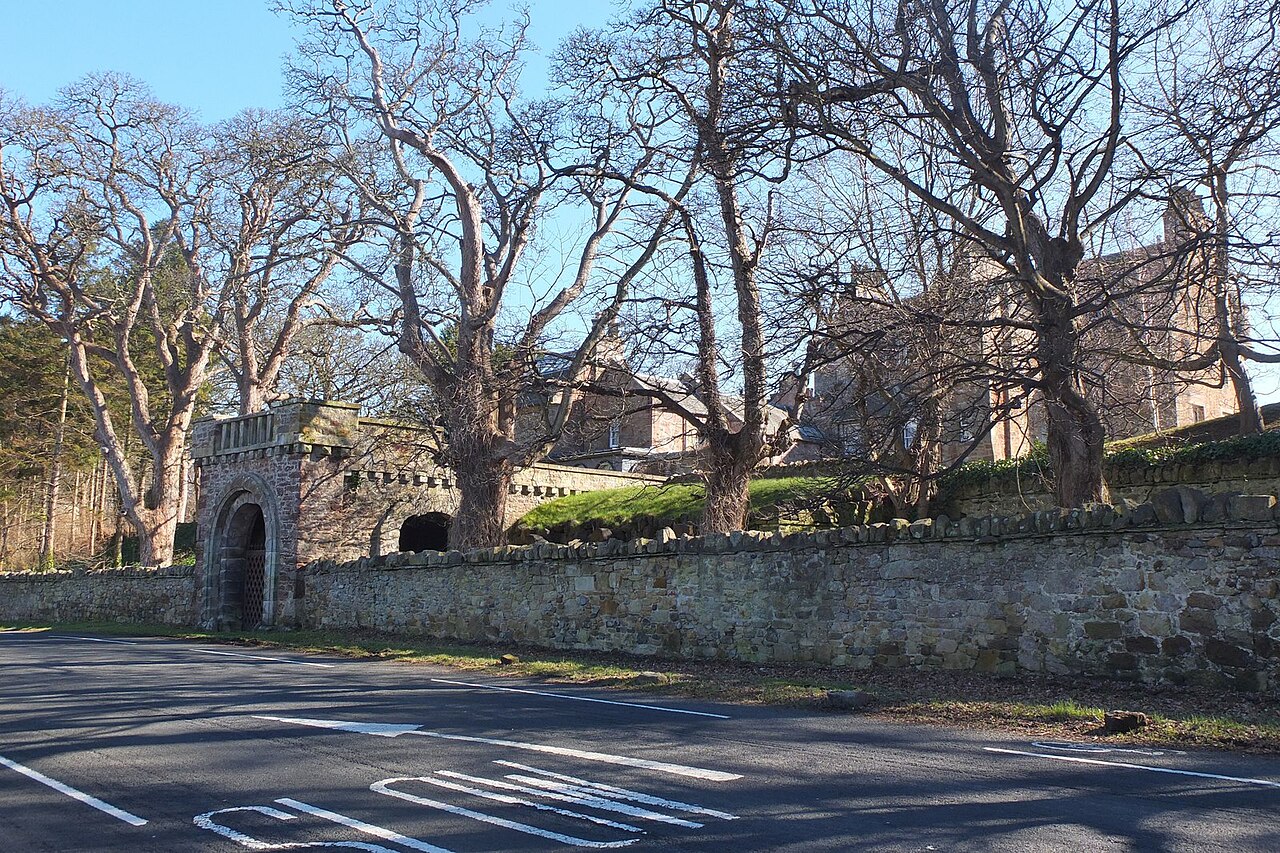
Luffness Castle, also known as Luffness House, is a house built in a former fortification near the village of Aberlady, East Lothian, Scotland.
The lands around the current house were a part of the estates of the Gospatrick Earls of Lothian, but in the 12th Century they were given to the Lindsay family in marriage and this family constructed a castle on the site in the 13th century, this was described as a large and strong fortress. Some of the property was donated to the Church as a memorial to Sir David Lindsay, High Chamberlain of Scotland in 1256 and a Regent for Alexander III, who died on crusade which was under the leadership of Louis of France. On his deathbed Sir David promised to donate land for a religious house so long as his remains were returned to Scotland.
A Carmelite friary was then built nearby in 1293 and remnants of the priory still exist overgrown within the woods. Edward I and an English army occupied the castle in 1311. It was sacked in 1547 by an English force under the command of Edward Clinton, Lord Clinton.
The English army treasurer and diplomat Ralph Sadler advised the Earl of Shrewsbury that a new fort at Aberlady would support an English garrison to be installed nearby inland at Haddington. There were also suggestions that an English fort should be built for this purpose at "White-castell" at Nunraw or on the "Pethes", a narrow route between hills in Scotland.
French and Scots soldiers, directed by Paul de Thermes, built a fort here in 1549 to interrupt the English supply to their garrison at Haddington. On 23 June 1549 Regent Arran summoned neighbouring villagers to fight off English soldiers trying to prevent the buildings work. On 25 June Arran requested the lairds of East and West Lothian to provide labourers. The royal treasurer's accounts refer to the "fort of Aberlady". Oxen dragged guns from the fort to the nearest harbour in January 1550 for shipping to Monifieth, to be used against Broughty Castle.
The fort was demolished by Patrick Hepburn of Waughton on the orders of Mary of Guise in 1552. He was instructed to leave an existing house and mansion, and deliver the artillery to Dunbar Castle.
Text adapted from “Luffness Castle” on Wikipedia, CC BY-SA 4.0.
Luffness Castle ranks #7,010 of 8,764 worldwide in the atlas's castle fame ranking, and #202 of the 207 mapped in Scotland. Founded 1293, it is older than 67% of the atlas's dated landmarks — one of 906 atlas entries founded in the 13th century. 14 more atlas landmarks stand within 25 km. The nearest day-trip guide is Edinburgh, 23 km away. See how Scotland compares in the castle statistics.
View on the interactive castle map →Frequently asked questions
Where is Luffness Castle?
Luffness Castle stands in Scotland, at 56.0143°, -2.84385°.
When was Luffness Castle built?
The atlas dates its founding to 1293. Earlier structures may have stood on the site; this is the earliest documented founding year.
How famous is Luffness Castle?
In this atlas's fame ranking: #7,010 of 8,764 worldwide, and #202 in Scotland. Fame here combines how many Wikipedia language editions cover a landmark with how many people read them.
What is the nearest castle to Luffness Castle?
Dirleton Castle, about 5 km away.
More castles in Scotland
- Macduff's Castle Scotland
- Mearns Castle Scotland · 15th century
- Muchalls Castle Scotland · 17th century
- Newton Castle Scotland · 16th century
More castles
- Portencross Castle Scotland · 11th century
- Roch Castle Wales · 13th century
- Stanecastle Scotland · 14th century
- Sundrum Castle Scotland · 14th century