 Scotland · 15th century
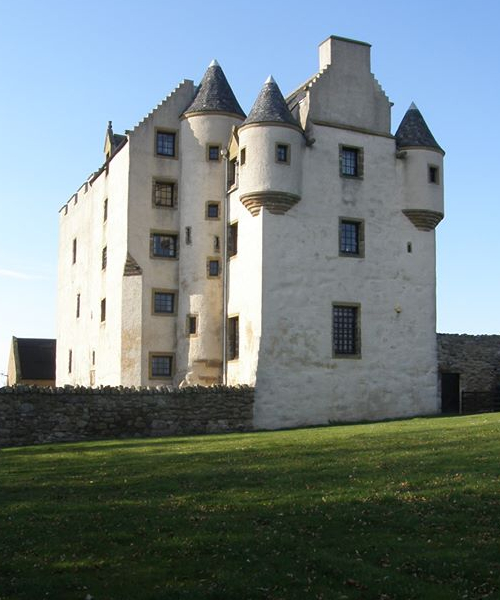
Fa'side Castle ranks #4,080 of 9,040 worldwide in the atlas's castle fame ranking, and #144 of the 225 mapped in Scotland. Founded c. 1450, it is older than 46% of the atlas's dated landmarks, one of 556 atlas entries founded in the 15th century. 17 more atlas landmarks stand within 25 km. The nearest day-trip guide is Edinburgh, 12 km away. See how Scotland compares in the castle statistics.
Fa'side Castle (also Fawside or Falside) is a 15th-century keep located in East Lothian in Scotland. The castle is approximately 2 miles (3 kilometres) southwest of Tranent, and 2 mi (3 km) southeast of Musselburgh. The building was restored in the 1980s and is now protected as a category B listed building.
The earliest records of the building and land reflect that in the 1190's-early 1200's, it was in the possession of Saer de Quincy, 1st Earl of Winchester and son of Robert de Quincy. Saer de Quincy inherited several English and Scottish titles and estates through his marriage to Margaret, the sister of Robert de Beaumont, 2nd Earl of Leicester.
When Saer died, the earldom of Winchester and its land holdings passed to his son Roger de Quincy. When Roger de Quincy, 2nd Earl of Winchester d. 1264, the Tranent property and title passed to one of his sons-in-law Alan la Zouche, 1st Baron la Zouche of Ashby.
La Zouche was killed in battle in 1270, after which his widow, Helene (or "Ellen") de Quincy, remained in residence at the Tranent manor until her death.
Ellen's niece, Eleanor de Ferrers, widow of William de Ferrers, was visiting the manor when it was besieged by Sir William Douglas in 1288. Douglas kidnapped the widow de Ferrers during this event, and subsequently married her.
The land was lost to Robert the Bruce after the De Quincy family declared their loyalty to Edward I of England. Bruce granted the lands to the Seton family.
The Fawsydes of that Ilk acquired land in the area from the Setons in 1371, which was around the time when the building and hill all were renamed to "Falside" or "Fawside."
The earliest part of the present building was constructed by the Fawsydes in the 15th century.
The castle was burned by the English before the Battle of Pinkie Cleugh, which was fought on Falside Hill on 10 September 1547, suffocating or burning all those inside.
Mary, Queen of Scots left Fa'side on the morning of 15 June 1567 for the Battle of Carberry Hill. She changed into a short skirt and left her fine clothes behind in a chest.
The castle was rebuilt and extended to the south in the late 16th century. A surviving oak bed, now at Biggar Museum, was made for Margaret Fawside, who married Patrick Levingstone of Saltcoats near Gullane.
Text adapted from “Fa'side Castle” on Wikipedia, CC BY-SA 4.0.
View on the interactive castle map →