Fortress
Matara Star Fort
🇱🇰 Sri Lanka · 18th century
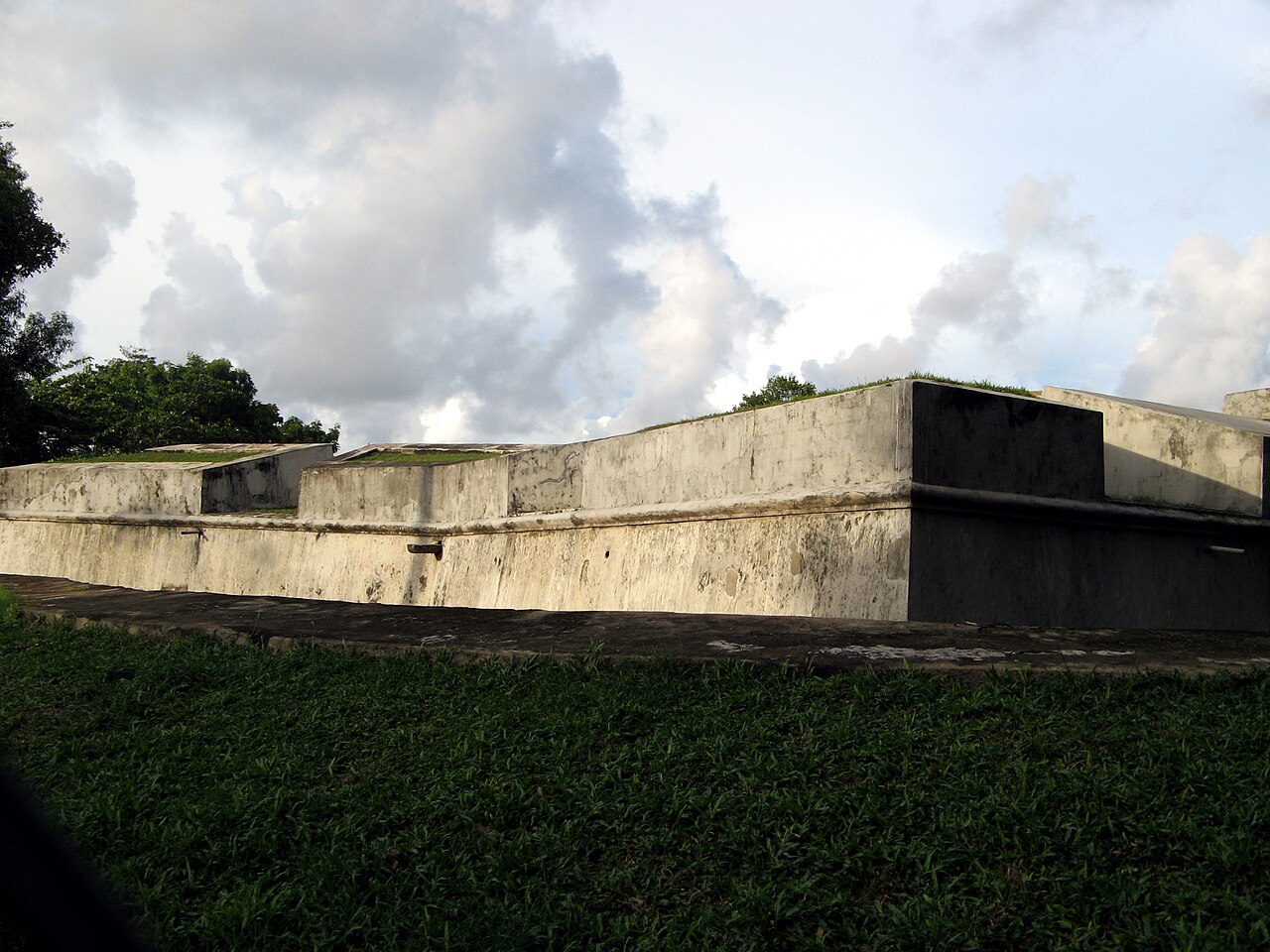
The Star Fort (Sinhala: මාතර තාරකා කොටුව Mathara Tharaka Kotuwa; Tamil: விண்மீன் கோட்டை, romanized: Viṇmīṉ Kōṭṭai) is a fort in Matara, Sri Lanka, located on the eastern bank of the Nilwala River, approximately 350 metres (1,150 ft) from the gate to the Matara fort. It was constructed by the Dutch in 1765, and was originally called Redoute Van Eck.
In 1640 the Dutch completed the main fort at Matara but found it to be vulnerable from attacks coming from land. In 1761, the Dutch were forced to flee as a result of the Matara Rebellion, in which Sinhalese forces backed by Kandyan Kingdom attacked and took control of the fort.
In 1763 the Dutch regained control of the fort and that year commenced construction of another smaller fort on the east bank of the Nilwala River, in order to protect the main fort from attacks originating from the river.
The Star Fort was built to a unique shape of a six pointed star with space for 12 large cannons to cover approaches from all directions. The glacis or outer wall is approximately 7.5 metres (25 ft) wide and is surrounded by a 6 metres (20 ft) wide and 3.1 metres (10 ft) deep moat. The rampart walls of the fort are constructed out of granite rock and coral, and are 14 feet (4.3 m) in width. The fort was built to hold a small garrison, food supplies and enough ammunition to withstand an attack before being re-inforced from the main fort. The fort also had a two prison cells and a 2.75 metres (9.0 ft) diameter well in its centre to supply water.
The drainage system was internal and disposed of the water collected from the monsoon rains to the moat. The date of construction (1765) is embossed over the main gate with the Dutch East India Company insignia and the coat of arms of the governor flanked by two rampart lions. The entrance gate of the Star Fort, which is faced with coral, is also emblazoned "Redoute Van Eck 1763", commemorating the Dutch Governor of Ceylon, Lubbert Jan baron van Eck (1719 - 1765). The roof of the building originally was roofed with cadjan leaves, which were later replaced with clay tiles.
The fort is said to be the last major defence post built by the Dutch but never had the chance to prove its effectiveness. In 1796 the fort was handed over to the British with the surrender of the Sri Lankan territory by the Dutch.
Text adapted from “Star Fort, Matara” on Wikipedia, CC BY-SA 4.0.
Matara Star Fort ranks #5,288 of 8,134 worldwide in the atlas's castle fame ranking, and #9 of the 15 mapped in Sri Lanka. Founded 1763, it is older than 16% of the atlas's dated landmarks — one of 556 atlas entries founded in the 18th century. 1 more atlas landmarks stand within 25 km. See how Sri Lanka compares in the castle statistics.
View on the interactive castle map →Frequently asked questions
Where is Matara Star Fort?
Matara Star Fort stands in Sri Lanka, at 5.94806°, 80.5483°.
When was Matara Star Fort built?
The atlas dates its founding to 1763. Earlier structures may have stood on the site; this is the earliest documented founding year.
How famous is Matara Star Fort?
In this atlas's fame ranking: #5,288 of 8,134 worldwide, and #9 in Sri Lanka. Fame here combines how many Wikipedia language editions cover a landmark with how many people read them.
What is the nearest castle to Matara Star Fort?
Matara Fort, about 1 km away.
More castles in Sri Lanka
- Sigiriya Sri Lanka · 2nd century BC
- Batticaloa Fort Sri Lanka · 17th century
- Fort Fredrick Sri Lanka · 17th century
- Jaffna Fort Sri Lanka · 17th century
More fortresses
- Dawulun Fort Taiwan · 19th century
- Raichur Fort India · 13th century
- Geumjeongsanseong South Korea · 18th century
- Bukkur Pakistan