 Japan · 16th century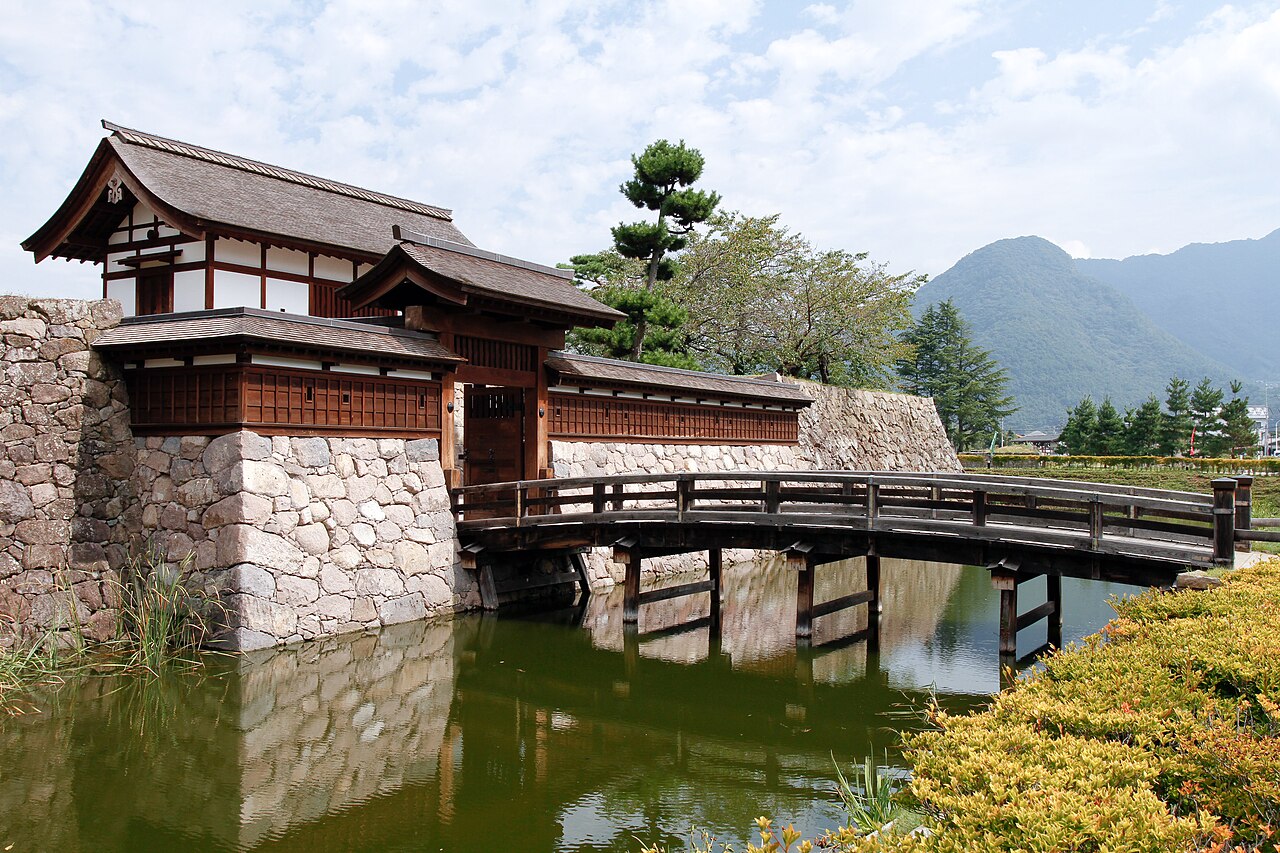
Matsushiro Castle (松代城, Matsushiro-jō), formerly known as Kaizu Castle (海津城, Kaizu-jō), is a Japanese castle located in former Matsushiro town, now part of Nagano City. The site is a registered National Historic Site of Japan.
Matsushiro Castle is located in the flatlands of northern Shinano, in-between the main stream of the Chikuma River and a former bed of the river, which serves as a broad outer moat on the north side of the castle. Due to its location, the castle (and surrounding castle town) was subjected to occasional flooding.
The design of the castle is concentric, with the Central Bailey (Hon-Maru) protected by walls, and containing the tenshu in its northwest corner, which was later replaced by a yagura. The Central Bailey was surrounded by a moat, which was in turn surrounded completely by the Second Bailey (Ni-no-Maru), which had earthen ramparts except for areas around its gates, which were protected by stonework. The Second Bailey had a wide dry moat on its south and east, and the Third Bailey (San-no-Maru). The palace structures, or residence and official offices of the daimyō, were located adjacent to the main fortifications in the Hana-no-Maru enclosure.
The first castle on this site was built in 1560 by Yamamoto Kansuke, under the direction of Takeda Shingen and was called Kaizu Castle (海津城, Kaizu-jō) Kōsaka Danjō (Kōsaka Masanobu) a Takeda clan retainer, was its first commander. Takeda Shingen used the castle for the ongoing conflict with Uesugi Kenshin for control of the northern part of Shinano Province. The site is also near the location of the Battle of Kawanakajima, where the Takeda and Uesugi forces repeatedly clashed After the fall of the Takeda clan, Oda Nobunaga eventually took control. However, when he was assassinated in the Honnō-ji incident in 1582, Uesugi Kagekatsu recovered northern Shinano.
During this time the castle was in dispute between Uesugi and the Sanada clan. Under Toyotomi Hideyoshi, the Uesugi were relocated to Aizu. Following Hideyoshi's death and the Battle of Sekigahara, the Tokugawa shogunate ordered Sanada Nobuyuki to relocate here in 1622 from his former domains at Ueda as the daimyō of Matsushiro Domain.
The castle's name was changed from Kaizu Castle to Matsushiro Castle by Sanada Yukimichi, the third generation of Sanada daimyō in 1711.
Text adapted from “Matsushiro Castle” on Wikipedia, CC BY-SA 4.0.
Matsushiro Castle ranks #1,623 of 9,035 worldwide in the atlas's castle fame ranking, and #94 of the 295 mapped in Japan. Founded 1560, it is older than 35% of the atlas's dated landmarks, one of 886 atlas entries founded in the 16th century. Its Wikipedia articles were opened 5,500 times in the last 60 days, more than 88% of the atlas. 1 more atlas landmarks stand within 25 km. See how Japan compares in the castle statistics.
View on the interactive castle map →