要塞
明活城
Myeonghwalseong Fortress · 🇰🇷 韓国 · 7世紀
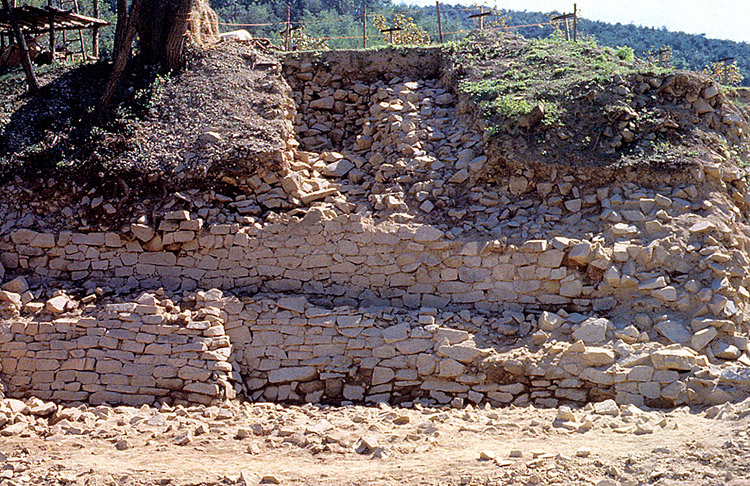
明活城(韓国語: 명활성、漢字: 明活城)または明活山城(명활산성、明活山城)は、現在の大韓民国慶州にある明活山という山にあった新羅時代の朝鮮の城である。1963年1月21日に大韓民国史跡第47号に指定された。ユネスコ世界遺産「慶州歴史地域」の一部であり、山城地区の一部をなす。
この城が最初にいつ築かれたかは確実には分かっていない。『三国史記』には、405年(韓国暦)にこの城が攻撃された記録がある。431年には日本の侵入者に攻撃された。473年に修復され、475年には慈悲王がここへ移った。551年、554年、593年に再建された記録がある。647年、毘曇の反乱軍に占拠されたのちに放棄された可能性が高い。この場所で7世紀より後に遡る活動の痕跡は知られていない。
現在、城の大部分は廃墟となっている。考古学的発掘により、かつて建物が建っていたと思われる6つの場所が確認されている。1998年に現地調査が行われた。2012年から2014年にかけて別の調査が実施され、城が幾度も再建されたことを示すさらなる証拠が見つかった。
英語版ウィキペディア「Myeonghwalseong」より機械翻訳、CC BY-SA 4.0。
明活城は、アトラスの城の知名度ランキングで世界7,862位(全8,134件中)、韓国の58件では38位にランクされています。約650年に創建され、アトラスの年代判明済みの城の96%より古い城です(7世紀に創建されたアトラス収録の31件のひとつ)。半径25キロ以内にはアトラス収録の城が5件あります。最寄りの日帰りガイドは4キロ先の慶州市です。韓国が他とどう比べられるかは、城の統計をご覧ください。
インタラクティブ地図で見る →よくある質問
明活城はどこにありますか?
韓国にあります。座標は35.83556°, 129.25528°です。
明活城はいつ建てられましたか?
アトラスが記録する創建は約650年です。これ以前の建造物が存在した可能性もありますが、これは記録に残る最も古い創建年です。
明活城はどれくらい有名ですか?
このアトラスの知名度ランキングでは全8,134件中7,862位(韓国では38位)です。知名度は、ウィキペディアの言語版の数とその閲覧数を組み合わせた指標です。
明活城に最も近い城は?
月城 (慶州)です。約3 km離れています。
韓国のその他の城
その他の要塞
- Fortress of Ghat リビア
- Urabi Fortress エジプト
- Dzivgis Cave Fortress ロシア
- Kremlin of Pereslavl-Zalessky ロシア