Vesting
Myeonghwalseong Fortress
🇰🇷 Zuid-Korea · 7e eeuw
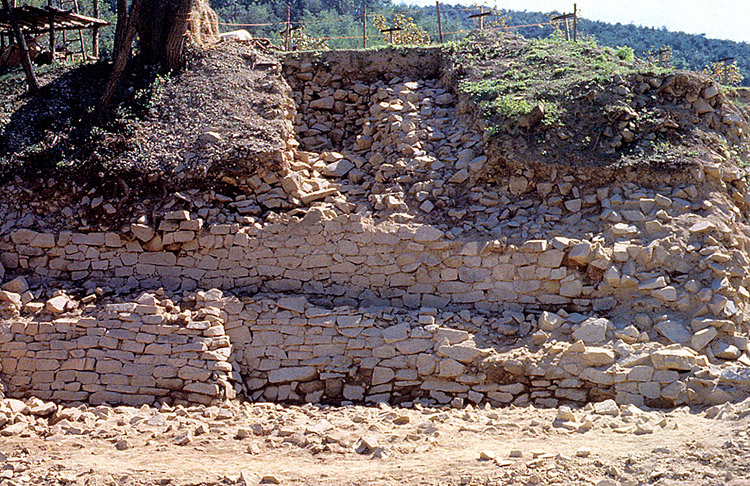
Myeonghwalseong (Koreaans: 명활성; Hanja: 明活城) of Myeonghwalsanseong (명활산성; 明活山城) was een Koreaanse vesting uit de Silla-periode op de berg Myeonghwalsan in het huidige Gyeongju, Zuid-Korea. Op 21 januari 1963 werd het uitgeroepen tot Historische Plaats van Zuid-Korea nr. 47. Het maakt deel uit van het UNESCO-werelderfgoed "Historische gebieden van Gyeongju", als onderdeel van de Sanseong Fortress Belt.
Het is niet met zekerheid bekend wanneer de vesting voor het eerst werd gebouwd. In de Samguk sagi staat vermeld dat de vesting in 405 n.Chr. (Koreaanse kalender) werd aangevallen. In 431 werd zij aangevallen door Japanse invallers. In 473 werd zij hersteld, en in 475 betrok koning Jabi haar. Er zijn verslagen van herbouw in 551, 554 en 593. Zij werd waarschijnlijk verlaten na 647, nadat zij was ingenomen door de opstandelingen van Bidam. Er zijn geen bekende sporen van activiteit op deze plaats die dateren van na de 7e eeuw.
Tegenwoordig ligt de vesting grotendeels in ruïnes. Archeologische opgravingen hebben zes plaatsen geïdentificeerd waar waarschijnlijk gebouwen hebben gestaan. In 1998 werd een onderzoek op de site uitgevoerd. Van 2012 tot 2014 vond een tweede onderzoek plaats, dat verder bewijs vond dat de vesting meermaals werd herbouwd.
Machinaal vertaald uit “Myeonghwalseong” op de Engelstalige Wikipedia, CC BY-SA 4.0.
Myeonghwalseong Fortress staat op plaats 7.862 van 8.134 in de bekendheidsranglijst van deze atlas en op plaats 38 van de 58 die de atlas in Zuid-Korea in kaart brengt. Gebouwd in ca. 650, en daarmee ouder dan 96% van de gedateerde bouwwerken in de atlas — een van de 31 bouwwerken in de atlas die uit de 7e eeuw stammen. Binnen 25 km staan nog 5 andere bouwwerken uit de atlas. De dichtstbijzijnde dagtripgids is Gyeongju, 4 km verderop. Zie hoe dat zich verhoudt in de kastelenstatistiek.
Bekijk op de interactieve kastelenkaart →Veelgestelde vragen
Waar ligt Myeonghwalseong Fortress?
Myeonghwalseong Fortress ligt in Zuid-Korea, op 35.83556°, 129.25528°.
Wanneer werd Myeonghwalseong Fortress gebouwd?
De atlas dateert de stichting op ca. 650. Er kunnen eerdere bouwwerken hebben gestaan; dit is het oudste gedocumenteerde bouwjaar.
Hoe bekend is Myeonghwalseong Fortress?
In de bekendheidsranglijst van deze atlas: plaats 7.862 van 8.134 wereldwijd, plaats 38 in Zuid-Korea. Bekendheid combineert het aantal Wikipedia-taalversies met het aantal lezers.
Welk kasteel ligt het dichtst bij Myeonghwalseong Fortress?
Banwolseong, ongeveer 3 km verderop.
Meer kastelen in Zuid-Korea
- Ch'ŏngmasansŏng Zuid-Korea
- Changnyeong Mokmasanseong Fortress Zuid-Korea
- Gupo Waeseong Zuid-Korea
- Gyeonhwonsanseong Fortress Zuid-Korea
Meer vestingen
- Fortress of Ghat Libië
- Urabi Fortress Egypte
- Dzivgis Cave Fortress Rusland
- Kremlin of Pereslavl-Zalessky Rusland