 Jordan · 4th century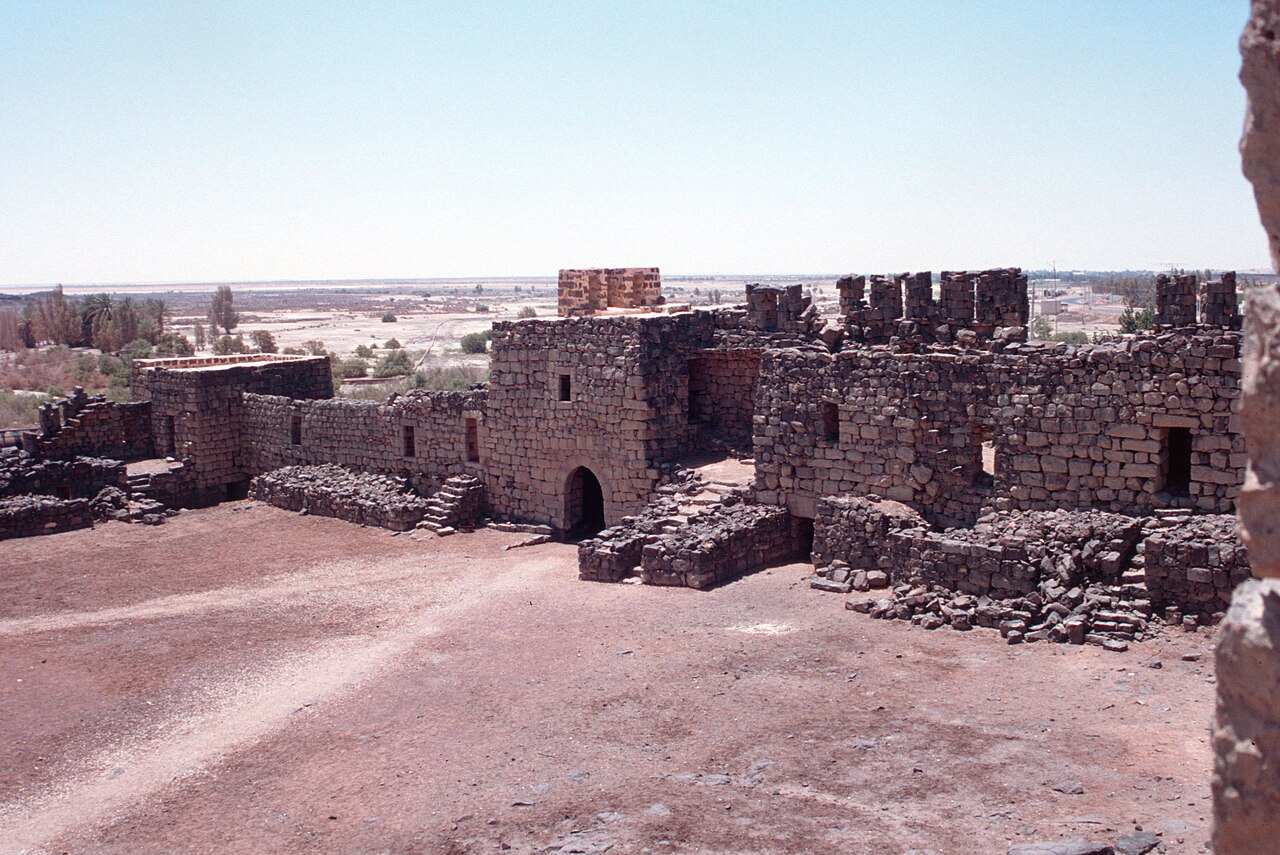
Qasr al-Azraq (Arabic: قصر الأزرق, "Blue Fortress") is a large fortress located in present-day eastern Jordan. It is one of the desert castles, located on the outskirts of present-day town of Azraq, roughly 100 km (62 mi) east of Amman.
Its strategic value came from the nearby Azraq oasis, the only water source in a vast desert region. The name of the fortress and associated town came from the oasis. The settlement was known in antiquity as Basie and the Romans were the first to make military use of the site, and later an early mosque was built in the middle. The fortress did not assume its present form until an extensive renovation and expansion by the Ayyubids in the 13th century, using locally quarried basalt which makes the castle darker than most other buildings in the area.
Later, it would be used by the Ottoman armies during that empire's hegemony over the region. During the Arab Revolt, T. E. Lawrence based his operations here in 1917–18, an experience he wrote about in his book Seven Pillars of Wisdom. The connection to "Lawrence of Arabia" has been one of the castle's major draws for tourists.
Text adapted from “Qasr al-Azraq” on Wikipedia, CC BY-SA 4.0.
Qasr Azraq ranks #1,385 of 9,079 worldwide in the atlas's castle fame ranking, and #8 of the 23 mapped in Jordan. Founded c. 350, it is older than 97% of the atlas's dated landmarks — one of 14 atlas entries founded in the 4th century. Its Wikipedia articles were opened 2,660 times in the last 60 days, more than 75% of the atlas. 3 more atlas landmarks stand within 25 km. The nearest day-trip guide is Amman, 85 km away. It is one of the 106 landmarks on the atlas's regional map of the Levant. See how Jordan compares in the castle statistics.
View on the interactive castle map →