Palace
Royal Monastery of San Lorenzo de El Escorial
 Spain · 16th century
- Founded
- 1563
- Style
- Renaissance architecture
- Heritage status
- part of UNESCO World Heritage Site · bien de interés cultural
- Location
- San Lorenzo de El Escorial
- Coordinates
- 40.58917°, -4.14778°
- Open data
- Wikidata Q28471
- Links
- UNESCO · OpenStreetMap · Wikimedia Commons · Plan

Description
The Royal Site of San Lorenzo de El Escorial (Spanish: Monasterio y Sitio de El Escorial en Madrid), also called Monasterio de El Escorial (Spanish pronunciation: [el eskoˈɾjal]) or simply El Escorial, is a historical residence of the king of Spain located in the town of San Lorenzo de El Escorial, 2.06 kilometres (1.28 mi) up the valley (4.1 km [2.5 mi] road distance) from the town of El Escorial and about 45 kilometres (28 mi) northwest of the Spanish capital Madrid. Built between 1563 and 1584 by order of King Philip II (who reigned 1556–1598), El Escorial is the largest Renaissance building in the world. It is one of the Spanish royal sites and functions as a monastery, basilica, royal palace, pantheon, library, museum, university, school, and hospital.
El Escorial consists of two architectural complexes of great historical and cultural significance: the royal monastery itself and La Granjilla de La Fresneda, a royal hunting lodge and monastic retreat about five kilometres (3.1 mi) away. These sites have a dual nature: during the 16th and 17th centuries, they were places in which the power of the Spanish monarchy and the ecclesiastical predominance of the Catholic religion in Spain found a common architectural manifestation. El Escorial was both a Spanish royal palace and a monastery. Established with a community of Hieronymite monks, it has become a monastery of the Order of Saint Augustine. It also contained a boarding school, now the Real Colegio de Alfonso XII, still in operation.
Philip II engaged the Spanish architect Juan Bautista de Toledo to be his collaborator in the building of the complex at El Escorial. Toledo had spent the greater part of his career in Rome, where he had worked on St. Peter's Basilica, and in Naples serving the king's viceroy, whose recommendation brought him to the king's attention.
Text adapted from “El Escorial” on Wikipedia, CC BY-SA 4.0.
In the rankings
Royal Monastery of San Lorenzo de El Escorial ranks #21 of 9,902 worldwide in the atlas's castle fame ranking, and #2 of the 646 mapped in Spain. Founded 1563, it is older than 36% of the atlas's dated landmarks, one of 933 atlas entries founded in the 16th century. Its Wikipedia articles were opened 70,297 times in the last 60 days, more than 99% of the atlas. 1 more atlas landmarks stand within 25 km. The nearest day-trip guide is Segovia, 40 km away. It is stop 11 of 28 on the Castile castle route, Valladolid to Madrid. See how Spain compares in the castle statistics.
Castles nearby
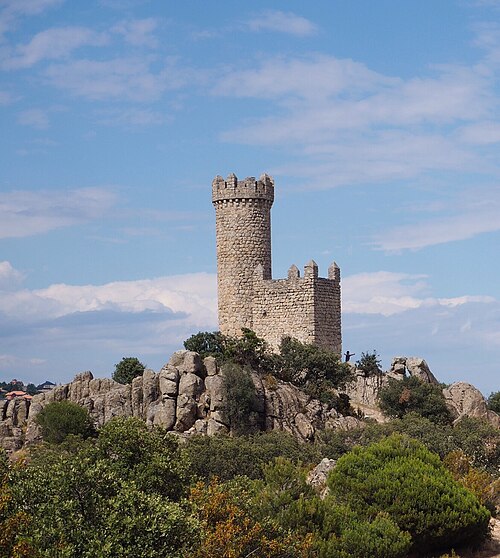
- Watchtower of Torrelodones18 km · Spain
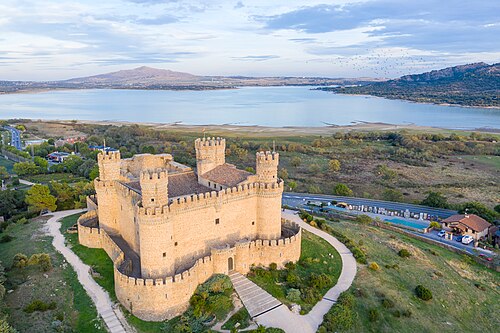
- New Castle of Manzanares el Real29 km · Spain
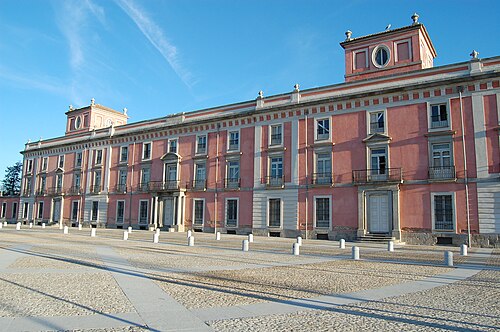
- Palace of Infante don Luis31 km · Spain
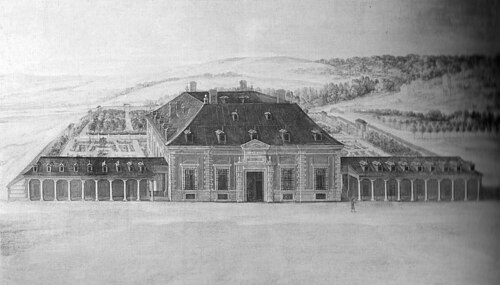
- Palace of Zarzuela32 km · Spain
More castles in Spain
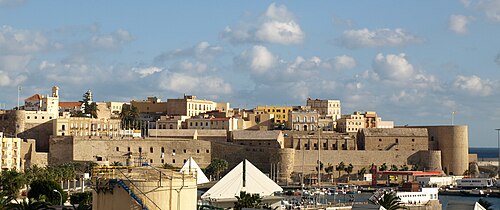
- Melilla la ViejaSpain · 16th century
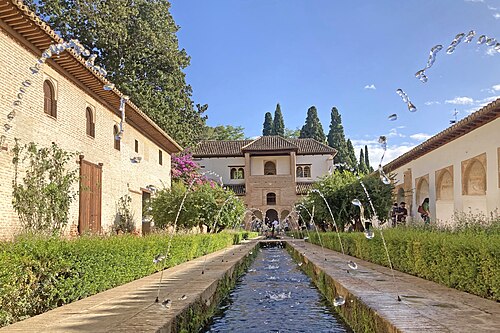
- GeneralifeSpain · 13th century
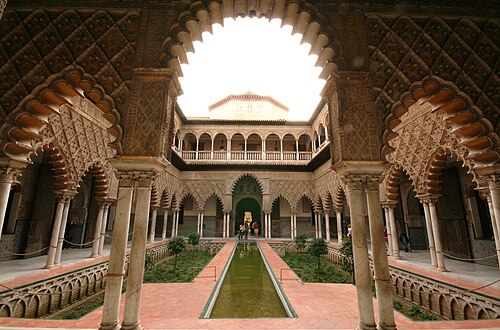
- Reales AlcázaresSpain · 10th century
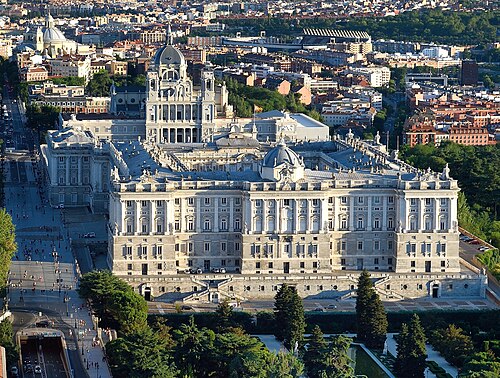
- Royal Palace of MadridSpain · 18th century