 India
India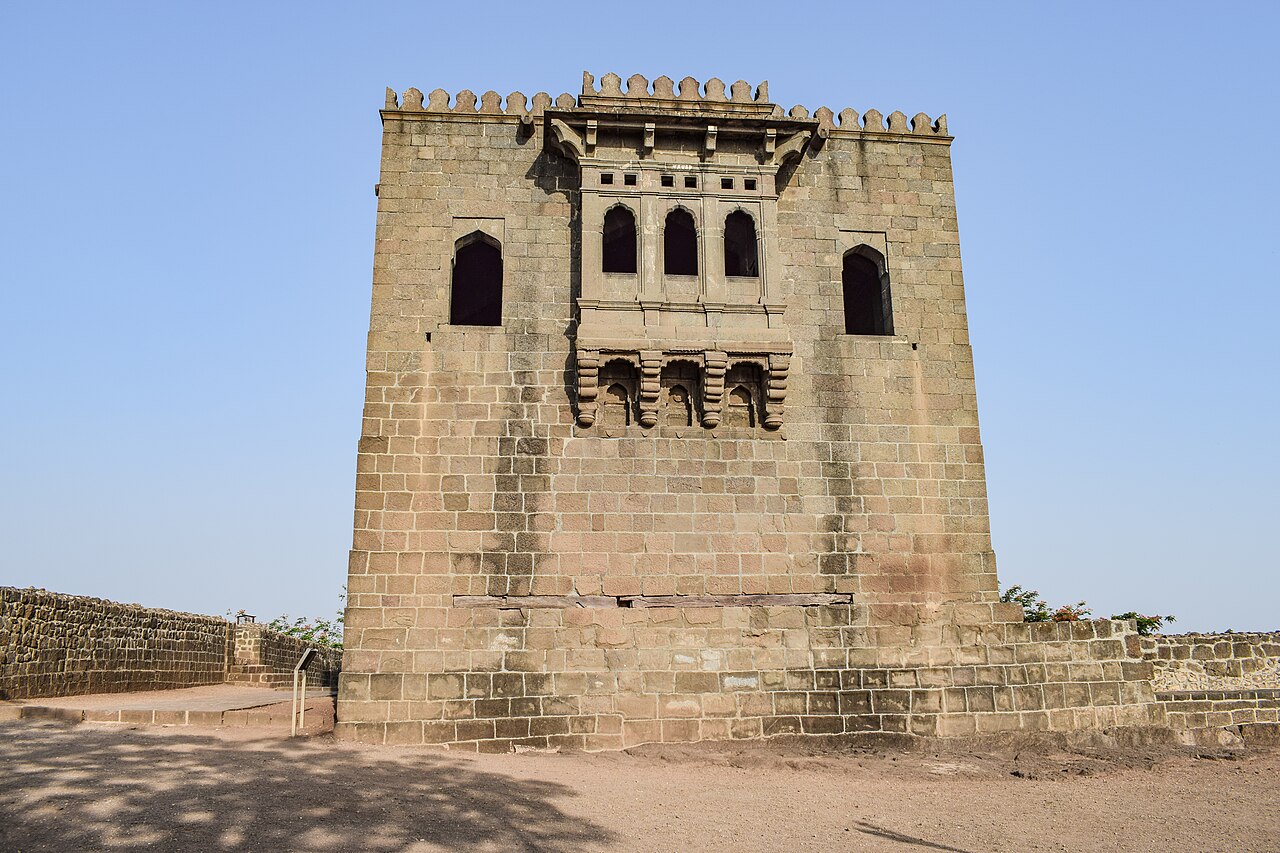
Shivneri Fort (known as Killa) (Marathi pronunciation: [ʃiʋneɾiː]) is an ancient military fortification located near Junnar in Pune district in Maharashtra, India. It is the birthplace of Chatrapati Shivaji Maharaj, the founder of Maratha Kingdom.
Shivneri got its name as it was under the possession of the Yadavas of Devagiri. This fort was mainly used to guard the old trading route from Desh to the port city of Kalyan. The place passed on to the Bahmani Sultanate after the weakening of Delhi Sultanate during the 15th century and it then passed on to the Ahmadnagar Sultanate in the 16th century. In 1595, a Maratha chief named Maloji Bhosale, the grandfather of Chhatrapati Shivaji Maharaj, was ennobled by the Ahmadnagar Sultan, Bahadur Nizam Shah and he gave him Shivneri and Chakan. Shivaji Maharaj was born at the fort on 19 February 1630, and spent his childhood there.
Inside the fort is a small temple dedicated to goddess Shivai Devi (some accounts gives us information that the name Shivaji came from the name of the fort i.e. Shivneri), after whom Shivaji was named. The English traveller Fraze visited the fort in 1673 and found it invincible. According to his accounts, the fort was well-stocked to feed thousand families for seven years. The fort came under the control of the British rule in 1819 after the Third Anglo-Maratha War.
In 2021, it was added to the tentative list of the UNESCO World Heritage Committee as part of "Serial Nomination of Maratha Military Architecture in Maharashtra".
Shivneri Fort is a hill fort having a triangular shape and has its entrance from the South-west side of the hill. Apart from the main gate there is an entrance to the fort from side called locally as the chain gate, where in one has to hold chains to climb up to the fort gate. The fort extends up to 1 mile (1.6 km) with seven spiral well-defended gates. There are mud walls all around the fort. Inside the fort, the major buildings are the prayer hall, a tomb and a mosque. There is an overhanging where executions took place. There are many gates structures protecting this fort. Maha Darvaja is one of the many gates of the fort. Its also called the origin of Tune.
At the centre of the fort is a water pond which is called 'Badami Talav', and to the south of this pond are statues of Rajmata Jijabai and a young Shivaji raje.
Text adapted from “Shivneri Fort” on Wikipedia, CC BY-SA 4.0.
Shivneri Fort ranks #585 of 9,079 worldwide in the atlas's castle fame ranking, and #24 of the 224 mapped in India. Its Wikipedia articles were opened 9,636 times in the last 60 days, more than 93% of the atlas. 3 more atlas landmarks stand within 25 km. The nearest day-trip guide is Junnar, 2 km away. See how India compares in the castle statistics.
View on the interactive castle map →