 Austria · 16th century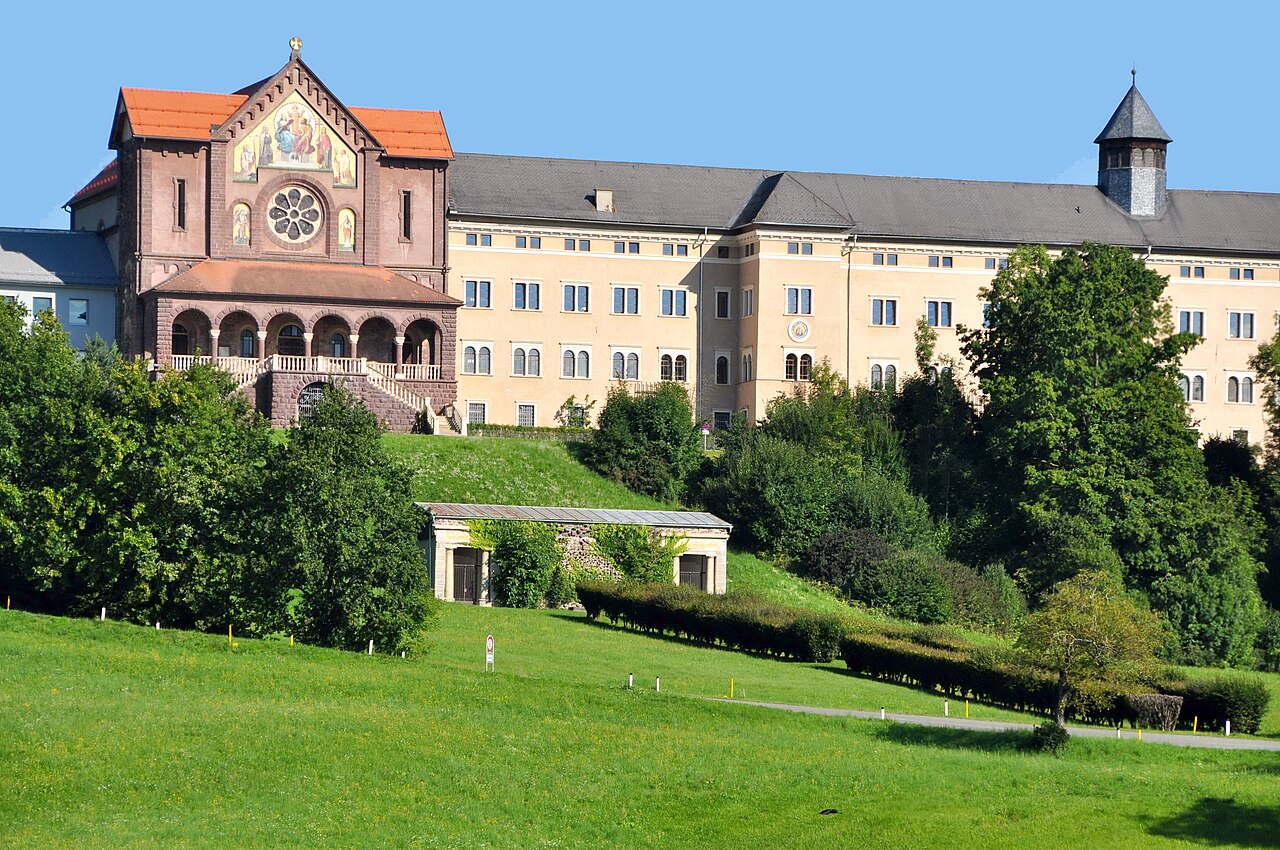
Tanzenberg Castle (German: Schloss Tanzenberg) is a schloss in the town of Sankt Veit an der Glan in Carinthia, Austria.
In 1247, there was an individual called Konrad von Tanzenberg who owned the castle. Documents show that the property in 1300 and 1341 was in the possession of the family Mordax (or Mordachs). The castle was acquired in 1513 by Maximilian I, Holy Roman Emperor. The brothers Siegmund and Wolfgang von Keutschach, nephews of the Archbishop of Salzburg Leonhard von Keutschach, began construction of the present-day castle in 1515. The palace, built in four wings around a rectangular courtyard, is one of Austria's most important Renaissance buildings.
Presumably, under the supervision of Leonhard II, the son of Wolfgang von Keutschach, the castle was completed. The property remained in the possession of von Keutschach until the second half of the 17th century.
The building fell into disrepair in the 19th century. In 1891, Georg von Gutmannsthal acquired the castle. In 1898, the Olivetans acquired the castle and began its renovation into a monastery building. The two lower floors are from the original sixteenth-century structure. In the northeast section, there are preserved components of the medieval castle. Replacing the former banqueting hall on the southwestern side, a monastery church was built in 1898.
From 1942 until the end of the war in 1945, Tanzenberg Castle served as a repository for the collections of the Central Library of the Advanced School of the NSDAP. In 1946, it became a Catholic boys' boarding school for seminary candidates. In 1953, the castle became the property of the Roman Catholic Diocese of Gurk. In 1995/1996, the facades were restored.
The mighty three-story palace complex can be seen dominating over the Zollfeld. Four tracts around a rectangular courtyard form a Renaissance structure that is significant in Austria, although the state of disrepair in the 19th century and the subsequent renovations of 1898 caused much to longer exist. The original structures of the 16th century largely correspond to the two lower floors.
The Neo-Romanesque, three-nave basilica with an apse was built in the first two decades of the twentieth century according to plans by Hans Pascher in collaboration with the architect Father Johann Maria Reiter and Eduard Avian, but it was not completed.
Text adapted from “Tanzenberg Castle” on Wikipedia, CC BY-SA 4.0.
Tanzenberg Castle ranks #4,287 of 9,035 worldwide in the atlas's castle fame ranking, and #114 of the 239 mapped in Austria. Founded 1515, it is older than 42% of the atlas's dated landmarks, one of 886 atlas entries founded in the 16th century. 15 more atlas landmarks stand within 25 km. The nearest day-trip guide is Klagenfurt am Wörthersee, 11 km away. See how Austria compares in the castle statistics.
View on the interactive castle map →