 Iraq
Iraq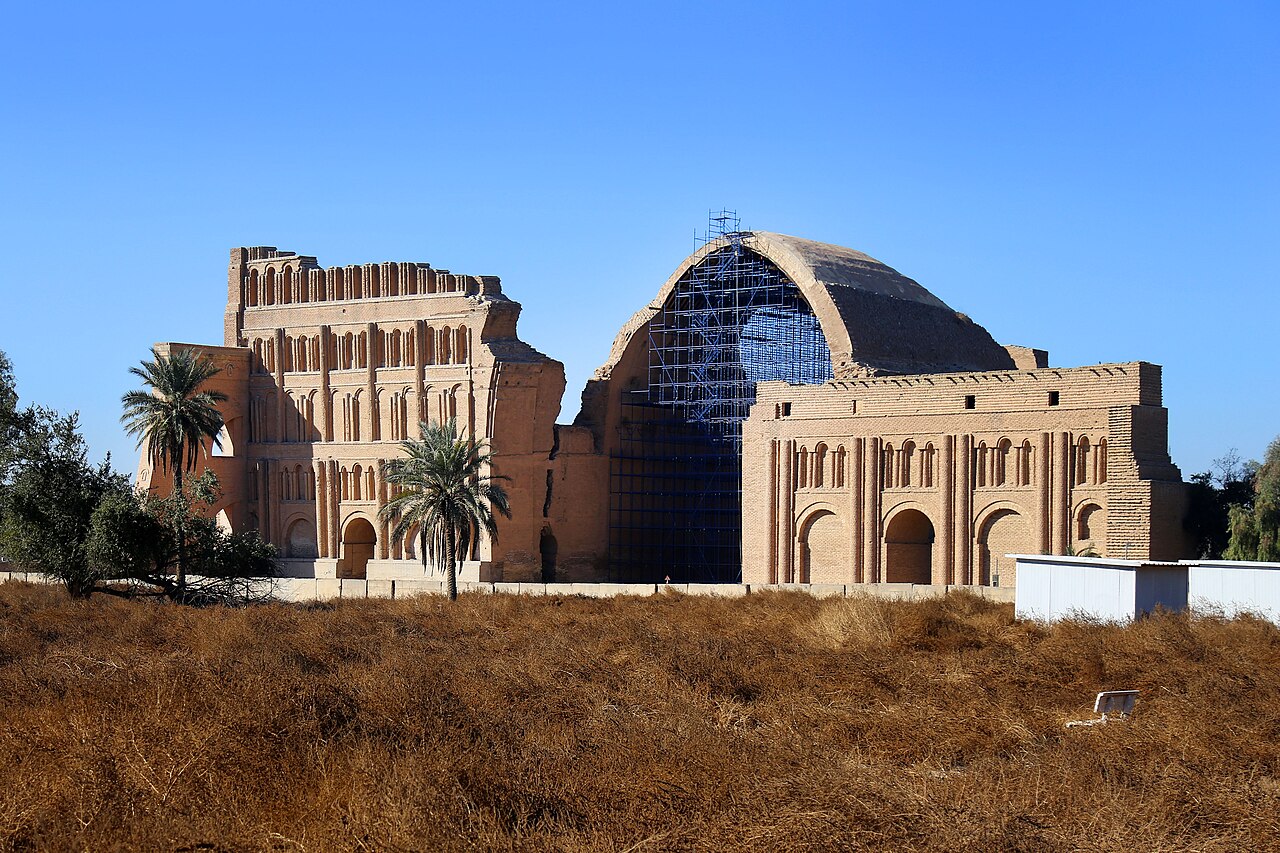
Tāq Kasrā (Arabic: طاق كسرى, romanized: ṭāq kisrā), also transcribed as Taq-i Kisra or Taq-e Kesra (Persian: طاق کسری, romanized: tâğe kasrâ) or Ayvān-e Kesrā (Persian: ایوان خسرو, romanized: Eivâne Xosrow, lit. 'Iwan of Khosrow') are the remains of a Sasanian-era Persian monument, dated to c. the 3rd to 6th centuries, which is sometimes called the Arch of Ctesiphon. It is located near the modern town of Salman Pak, Iraq. It was the facade of the main palace in Ctesiphon, and is the only visible remaining structure of the ancient capital city. The archway is considered a landmark in the history of architecture, and is the second largest single-span vault of unreinforced brickwork in the world after the Gavmishan Bridge in Iran.
Text adapted from “Taq Kasra” on Wikipedia, CC BY-SA 4.0.
Taq-i Kisra ranks #190 of 9,079 worldwide in the atlas's castle fame ranking, and #2 of the 15 mapped in Iraq. Its Wikipedia articles were opened 23,791 times in the last 60 days, more than 98% of the atlas. See how Iraq compares in the castle statistics.
View on the interactive castle map →