 Iraq · 8th century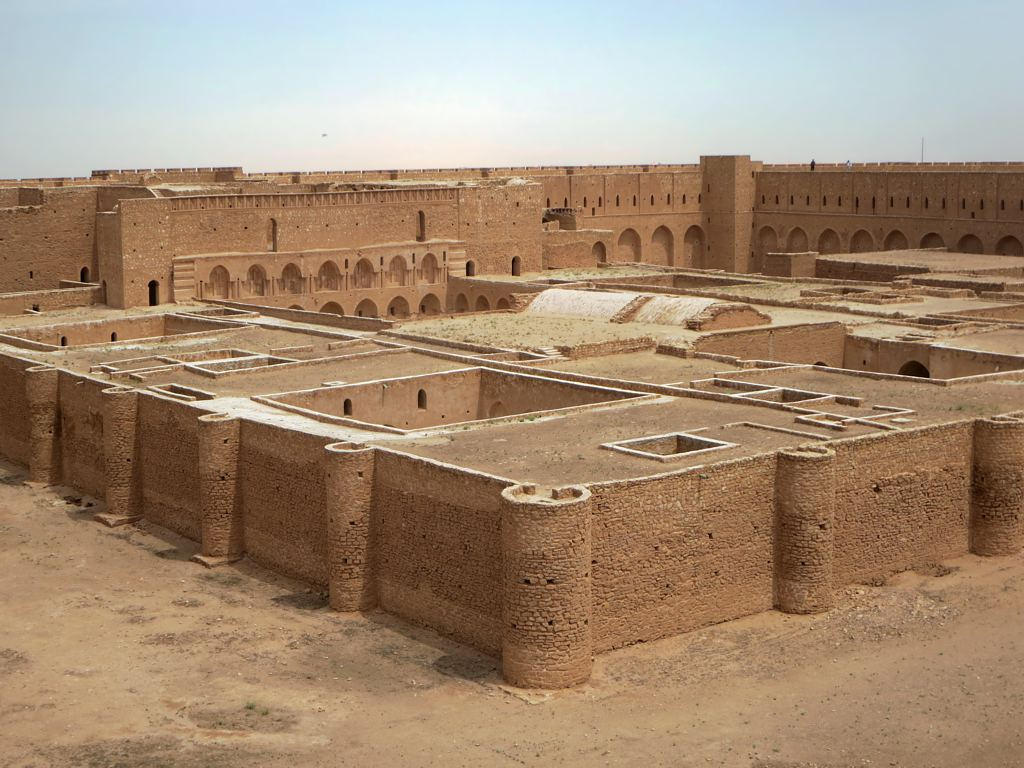
The Fortress of Al-Ukhaidir (Arabic: حصن الأخيضر) or Abbasid palace of Ukhaider is located roughly 50 km south of Karbala, Iraq. It is a large, rectangular fortress erected in 775 AD with a unique defensive style. Constructed by the Abbasid caliph As-Saffah's nephew Isa ibn Musa, Ukhaidir represents Abbasid architectural innovation in the structures of its courtyards, residences and mosque. Excavations at Ukhaidir were conducted in the early 20th century by Gertrude Bell, who wrote the first major report on the remains. Ukhaidir was an important stop on regional trade routes, similar to Atshan and Mujdah. The complex comprises a primary hall, a large Iwan, a reception hall and servants quarters. The fortress exemplifies Abbasid architecture in Iraq by demonstrating the "despotic and the pleasure-loving character of the dynasty" in its grand size but cramped living quarters.
The current name could be related to Isma'il ibn Yusuf al-Ukhaidhir from Banu Ukhaidhir who launched a rebellion against the Abbasid, then later he became the governor of Kufa with the support of Qarmatians.
Text adapted from “Al-Ukhaidir Fortress” on Wikipedia, CC BY-SA 4.0.
Al-Ukhaidir Fortress ranks #1,157 of 9,079 worldwide in the atlas's castle fame ranking, and #5 of the 15 mapped in Iraq. Founded 775, it is older than 95% of the atlas's dated landmarks — one of 48 atlas entries founded in the 8th century. Its Wikipedia articles were opened 3,304 times in the last 60 days, more than 80% of the atlas. See how Iraq compares in the castle statistics.
View on the interactive castle map →