Ruin
Toprak-Kala
 Uzbekistan · 1st century
- Founded
- c. 50
- Heritage status
- object of tangible cultural heritage of Uzbekistan
- Location
- Ellikqala District
- Coordinates
- 41.92861°, 60.82083°
- Open data
- Wikidata Q2443559
- Links
- Wikimedia Commons
Description
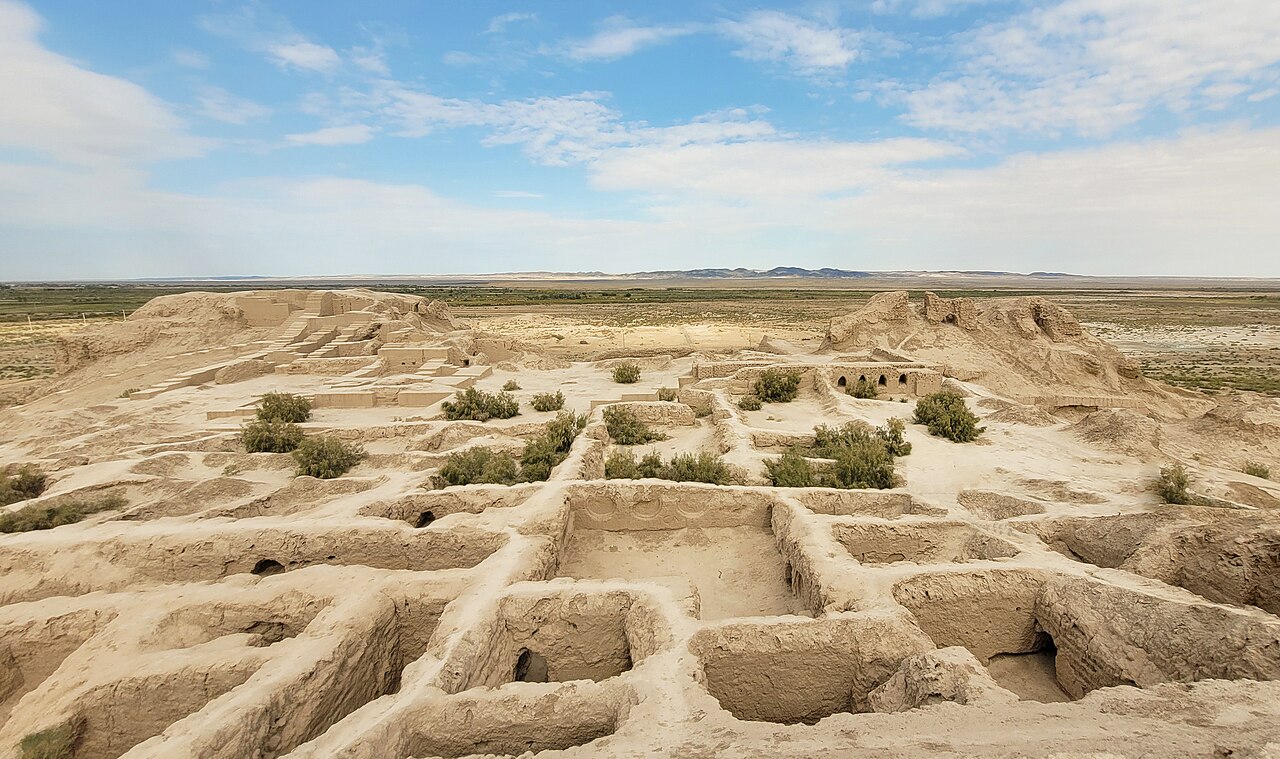
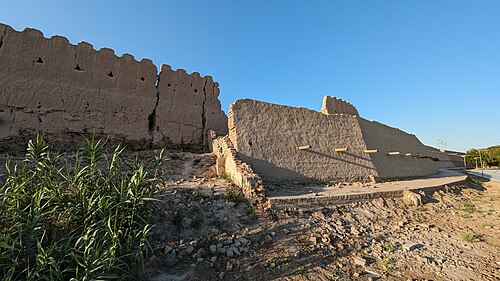
Toprak-Kala, in modern Karakalpakstan, Uzbekistan, was an ancient palace city and the capital of Chorasmia in the 2nd/3rd century CE, where wall paintings, coins and archives were discovered. Its history covers a period from the 1st to the 5th century CE. It is part of the "Fifty fortresses oasis" in modern-day Uzbekistan.
Toprak-Kala appears to have been built by Artav (Artabanos), ruler of Khwarezm, in the 1st or 2nd century CE. The establishment of Toprak-Kala probably followed the abandonment of Akchakhan-Kala, 14 km to the southwest.
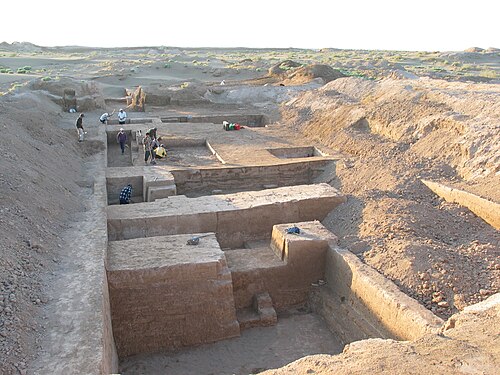
The ruins of the city were explored by the Chorasmian Expedition under the guidance of Sergey Tolstov in 1938. The date of the palace has been determined by the discovery of coins of the Kushan Empire rulers Vima Kadphises and Kanishka, as well as coins of the Khwarazmian king Artav (Artabanus). Wall paintings representing Zoroastrian deities were discovered in the Palace.
Toprak-kala and the whole of Chorasmia seem to have been under the control of the Kushan Empire for some time during the 2nd century CE, as coins of Vima Kadphises and Kanishka were found, interrupting a series of coins of Chorasmian rulers before and after them. Others have analysed the coinage evidence as indicating that the Kushan did not control Khwarezm.
Several high-reliefs of standing figures drapped in robes of Hellenistic style, which are thought to derive from the style of the Greco-Buddhist art of Gandhara, reflecting the influence of the Kushan Empire, were discovered in the ruins of Toprak-Kala. This abundant sculptural work may also have been accomplished by artisans from nearby Bactria, where a Hellenistic tradition remained active since the time of the Greco-Bactrian kingdom. The statues are now located in the Hermitage Museum in Saint-Petersburg. Sergey Tolstov drew a reconstruction of the ancient city.
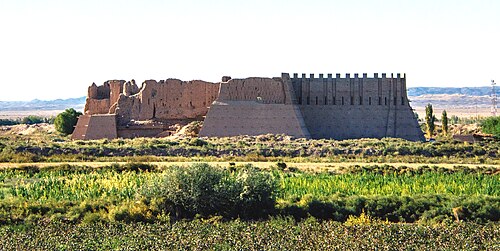
The small fortress of Kyzyl-Kala, also "Qyzyl Qala" ("Red fortress") is located nearby, 1 km to the west, and was also built in the 1st-4th century CE, possibly as a fortified defense for the site of Toprak-Kala (41.930031°N 60.784109°E / 41.930031; 60.784109).
Kyzyl-Kala was once restored in the 12th century CE. It has also been the subject of a modern renovation program, with the objective of showing what a fortress looked like originally.
Text adapted from “Toprak-Kala” on Wikipedia, CC BY-SA 4.0.
In the rankings
Toprak-Kala ranks #1,114 of 9,902 worldwide in the atlas's castle fame ranking, and #2 of the 14 mapped in Uzbekistan. Founded c. 50, it is older than 98% of the atlas's dated landmarks, one of 34 atlas entries founded in the 1st century. Its Wikipedia articles were opened 3,000 times in the last 60 days, more than 81% of the atlas. 3 more atlas landmarks stand within 25 km. The nearest day-trip guide is Khiva, 72 km away. See how Uzbekistan compares in the castle statistics.
Castles nearby
- Kyzyl-Kala3 km · Uzbekistan
- Akchakhan-Kala14 km · Uzbekistan
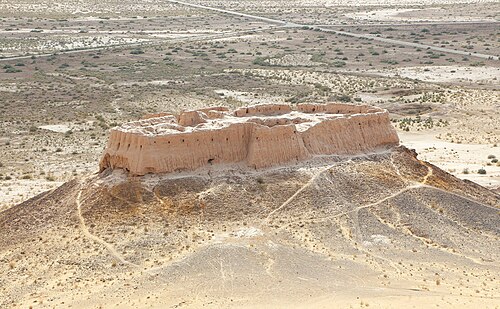
- Ayaz-Kala19 km · Uzbekistan
- Ditchan Kala72 km · Uzbekistan
More castles in Uzbekistan
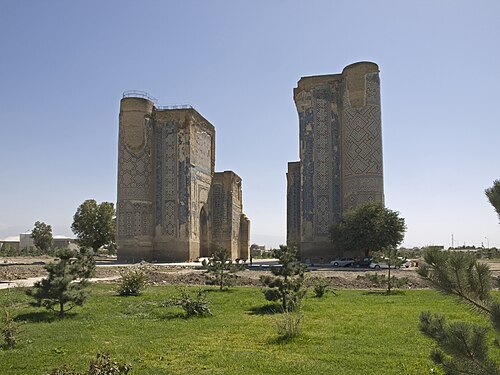
- Ak-Saray PalaceUzbekistan · 14th century
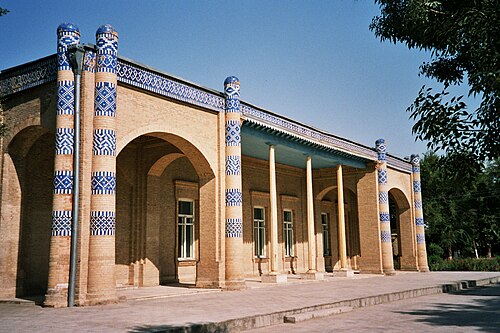
- Nurullabay's palaceUzbekistan · 20th century
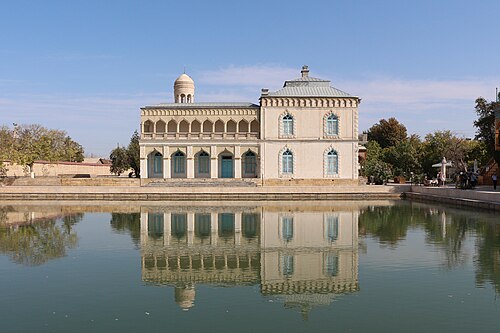
- Sitorai Mokhi-Khosa PalaceUzbekistan · 20th century
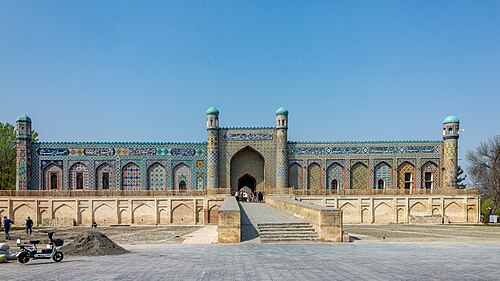
- Palace of Khudáyár KhánUzbekistan · 19th century