Palace
Wallenstein Palace
 Czech Republic · 17th century
- Founded
- 1623
- Style
- Mannerism
- Architect
- Andrzej Spezza, Giovanni de Galliano Pieroni
- Heritage status
- part of national cultural heritage site in the Czech Republic · cultural monument of the Czech Republic
- Location
- Malá Strana
- Coordinates
- 50.09°, 14.40667°
- Open data
- Wikidata Q569877
- Links
- Wikimedia Commons
Description
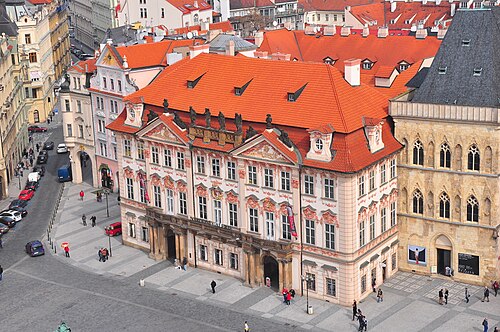
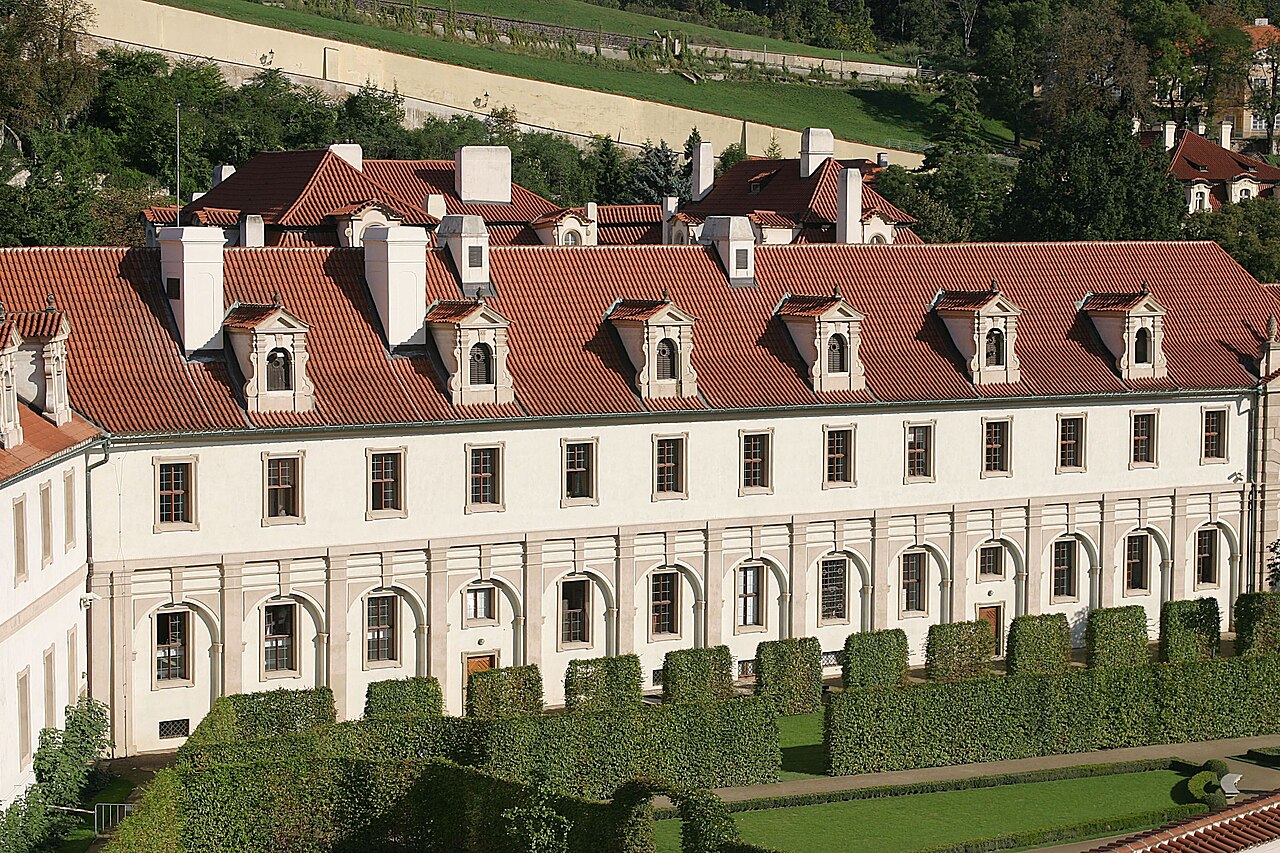
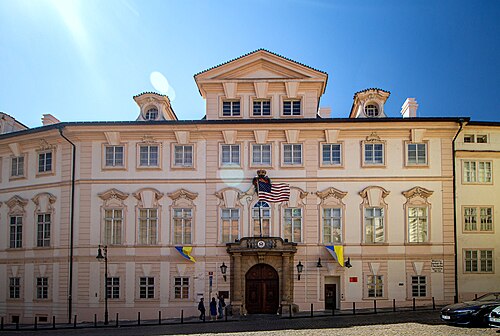
Waldstein Palace (Czech: Valdštejnský palác) is a Baroque palace in Malá Strana, Prague, that served as a residence for Imperial Generalissimo Albrecht von Waldstein and now houses the Senate of the Czech Republic.
The original Palace was built in years 1623-1630 by Albrecht von Wallenstein, Duke of Mecklenburg (1583-1634), who made his name and fortune as the Commander-in-Chief of the Imperial forces in the Thirty Years War. Emperor Ferdinand II feared Albrecht von Wallenstein's calculating mind and had him assassinated in 1634 in the town of Eger (now Cheb). He lived in the palace for only a year before his death. His widow sold it to his nephew and it remained in the Wallenstein family until 1945. After the Second World War, the palace became Czechoslovak state property and was renovated to house government offices. Today, the Senate of the Czech Republic operates out of the main palace buildings.
The Riding School is used as a branch of the National Gallery in Prague. The challenging restoration of the main building began in mid-1999. The most valuable parts of this building in historical and artistic terms are the Main Hall, the Knights' Hall, the Antechamber, the Audience Hall and the Mythological and Astronomical Corridors.
Albrecht of Wallenstein had traveled in Italy, and when the palace was built between 1623 and 1630, Italian architects and artisans were used including Andrea Spezza (likely the main architect), succeeded in 1628 by Niccolo Sebregondi. The interiors were decorated by the Florentine Baccio del Bianco (1604-1656), who completed the ceiling fresco in the Main Hall, figure paintings in St Wenceslas Chapel, and most important parts of the decoration of the Mythological Corridor during the first year of construction. The Florentine Giovanni de Galliano Pieroni (1586-1654), engineer and army colonel, played an important role in the construction.
Pieroni's father Alessandro (1550-1607) had been an architect for the Medici. Pieroni studied the design of the new part to Wallenstein's Castle in Jičín and the church of St. Jacob there, and the garden, Sala Terrena, and Riding School are attributed to him. Pieroni also influences the astrological and astronomical decoration of the Mythological Corridor and other interiors.
Text adapted from “Wallenstein Palace” on Wikipedia, CC BY-SA 4.0.
In the rankings
Wallenstein Palace ranks #521 of 9,902 worldwide in the atlas's castle fame ranking, and #11 of the 257 mapped in Czech Republic. Founded 1623, it is older than 29% of the atlas's dated landmarks, one of 755 atlas entries founded in the 17th century. Its Wikipedia articles were opened 8,200 times in the last 60 days, more than 93% of the atlas. 29 more atlas landmarks stand within 25 km. The nearest day-trip guide is Prague, 1 km away. It is one of the 201 landmarks on the atlas's regional map of Bohemia. It is stop 8 of 28 on the Bohemian castle route, Prague to Český Krumlov. See how Czech Republic compares in the castle statistics.
Castles nearby
- Thun Palace1 km · Czech Republic
- Old Royal Palace (Prague)1 km · Czech Republic
- Prague Castle1 km · Czech Republic
- Schönborn Palace1 km · Czech Republic
More castles in the Czech Republic
- Kinsky PalaceCzech Republic · 18th century
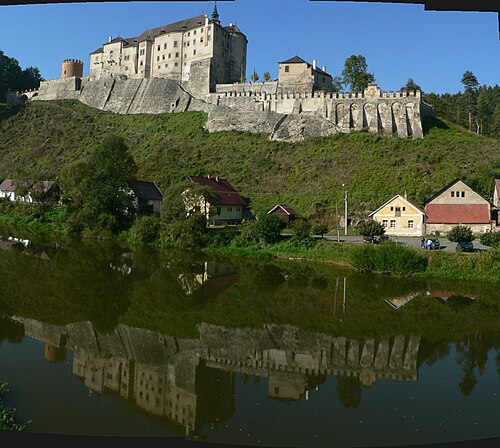
- Český Šternberk CastleCzech Republic · 13th century
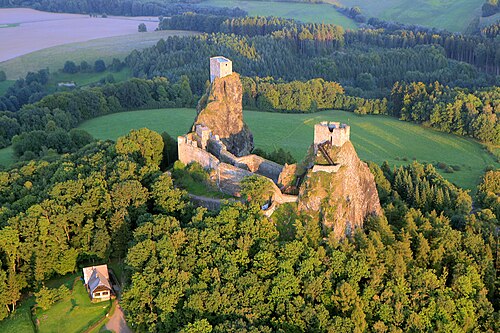
- Trosky CastleCzech Republic · 14th century
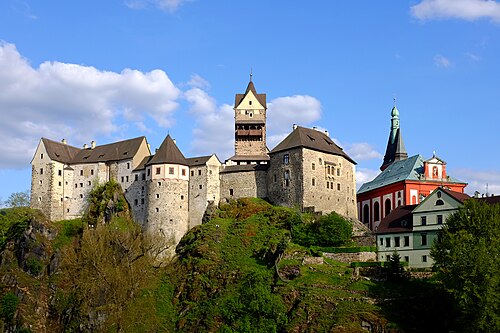
- Loket CastleCzech Republic · 13th century