 England · 11th century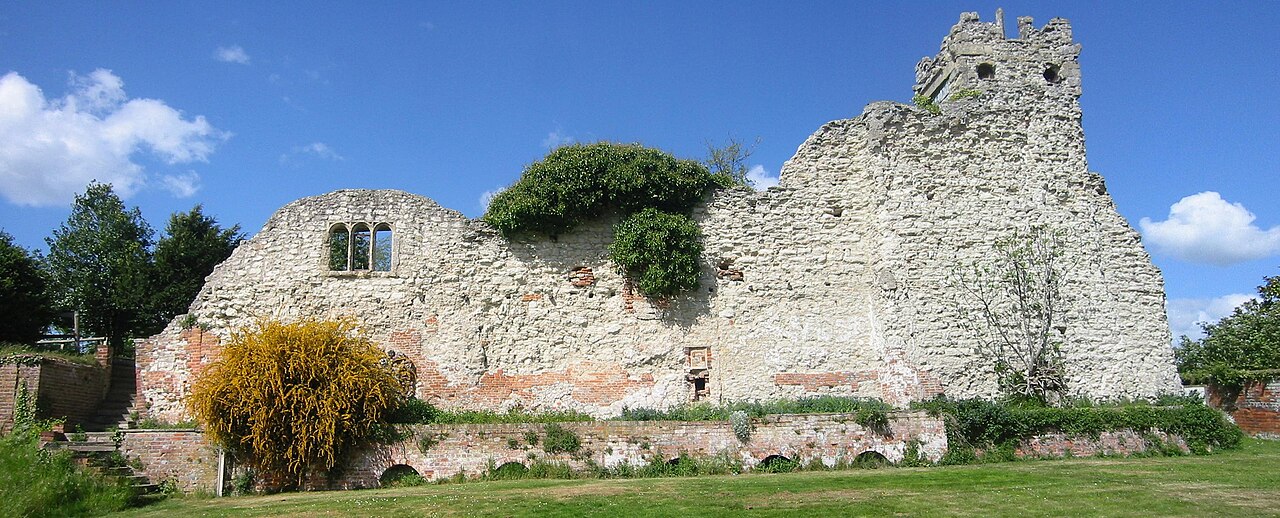
Wallingford Castle is a medieval castle situated in Wallingford in the English county of Oxfordshire (historically Berkshire), adjacent to the River Thames. Established in the 11th century as a motte-and-bailey design within an Anglo-Saxon burgh, it grew to become what historian Nicholas Brooks has described as "one of the most powerful royal castles of the 12th and 13th centuries". Held for the Empress Matilda during the civil war years of the Anarchy, it survived multiple sieges and was never taken. Over the next two centuries it became a luxurious castle, used by royalty and their immediate family. After being abandoned as a royal residence by Henry VIII, the castle fell into decline.
Refortified during the English Civil War, it was eventually slighted, i.e. deliberately destroyed, after being captured by Parliamentary forces after a long siege. The site was subsequently left relatively undeveloped, and the limited remains of the castle walls and the considerable earthworks are now open to the public.
Text adapted from “Wallingford Castle” on Wikipedia, CC BY-SA 4.0.
Wallingford Castle ranks #1,517 of 9,079 worldwide in the atlas's castle fame ranking, and #99 of the 360 mapped in England. Founded 1067, it is older than 88% of the atlas's dated landmarks — one of 436 atlas entries founded in the 11th century. Its Wikipedia articles were opened 3,975 times in the last 60 days, more than 83% of the atlas. 3 more atlas landmarks stand within 25 km. The nearest day-trip guide is Oxford, 19 km away. See how England compares in the castle statistics.
View on the interactive castle map →