Castle
Zweibrücken Castle
🇩🇪 Germany · 18th century
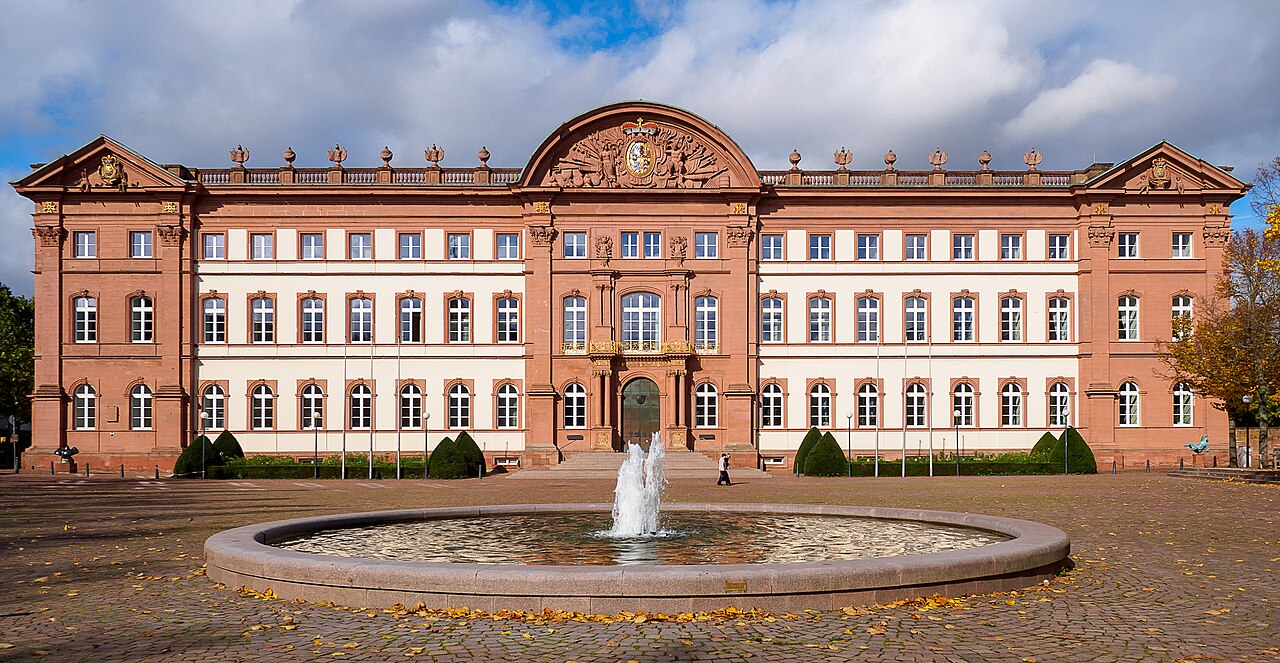
Zweibrücken Castle (German: Schloss Zweibrücken) is a building in the town of Zweibrücken, Rheinland-Pfalz, Germany. It was built as a ducal palace in 1720–1725. It is the largest and most magnificent secular (i.e. non-religious) building in the Palatinate. It is now the seat of the Palatine Higher Regional Court, and of the Zweibrücken law courts.
The earliest recorded building near the site was a fortress (German: Burg Zweibrücken). It was built in the 12th century by the Counts of Zweibrücken; the town was on an important trade route. It sat on the eastern side of an open triangular area, which still exists today: the Schlossplatz (which translates into English as "Castle Square", whatever its shape might be).
In 1444, a junior (cadet) branch of the House of Wittelsbach was granted the title of Duke of a new state: Palatine Zweibrücken, with its seat in Zweibrücken. In the 16th and 17th centuries, the ducal family modernised and enlarged their dwelling-place. In 1585, they constructed a palace (known as "the long building by the water", German: der lange Bau am Wasser) on the northern side of the Schlossplatz, complete with water-mill and library.
In 1677, the ancient and the newer buildings were badly damaged during the Franco-Dutch War (1672–1678). In the early 18th century, Gustav, Duke of Zweibrücken ordered the construction of a new residence appropriate for his rank and status. The architect was Jonas Erikson Sundahl, whose design was in the modern Late Baroque style - for show and comfort, and not for defence. In 1720–25, this palace was built on the northern side of the Schlossplatz. The site was marshy, so preliminary work involved driving very many oak piles into the ground to provide a solid foundation. That building has been twice destroyed and twice rebuilt; its second reconstruction is the building which exists today.
Christian IV, Duke of Zweibrücken 1735–1775, entertained notable creative artists at his palace, including the leading operatic composer Christoph Willibald von Gluck. Christian's nephew Maximilian (1756–1825) spent some of his childhood at the palace.
On 3 May 1793, during the War of the First Coalition, Zweibrücken was overrun and sacked by French troops. The building was badly damaged.
Text adapted from “Zweibrücken Castle” on Wikipedia, CC BY-SA 4.0.
Zweibrücken Castle ranks #4,545 of 8,134 worldwide in the atlas's castle fame ranking, and #351 of the 505 mapped in Germany. Founded 1720, it is older than 21% of the atlas's dated landmarks — one of 556 atlas entries founded in the 18th century. Its Wikipedia articles were opened 1,137 times in the last 60 days, more than 52% of the atlas. 4 more atlas landmarks stand within 25 km. The nearest day-trip guide is Saarbrücken, 26 km away. See how Germany compares in the castle statistics.
View on the interactive castle map →Frequently asked questions
Where is Zweibrücken Castle?
Zweibrücken Castle stands in Germany, at 49.2489°, 7.36393°.
When was Zweibrücken Castle built?
The atlas dates its founding to 1720. Earlier structures may have stood on the site; this is the earliest documented founding year.
How famous is Zweibrücken Castle?
In this atlas's fame ranking: #4,545 of 8,134 worldwide, and #351 in Germany. Fame here combines how many Wikipedia language editions cover a landmark with how many people read them.
What is the nearest castle to Zweibrücken Castle?
Burg Kirkel, about 10 km away.
More castles in Germany
- Castle Crottorf Germany · 14th century
- Schloss Neuhaus, Paderborn Germany
- Wilhelmsburg Castle Germany · 16th century
- Iburg Castle Germany · 11th century
More castles
- Nový Berštejn Castle Czech Republic · 16th century
- Neue Residenz Austria · 17th century
- Prugg Castle Austria · 12th century
- Sagunto Castle Spain