Paleis
Heian Palace
🇯🇵 Japan · 8e eeuw
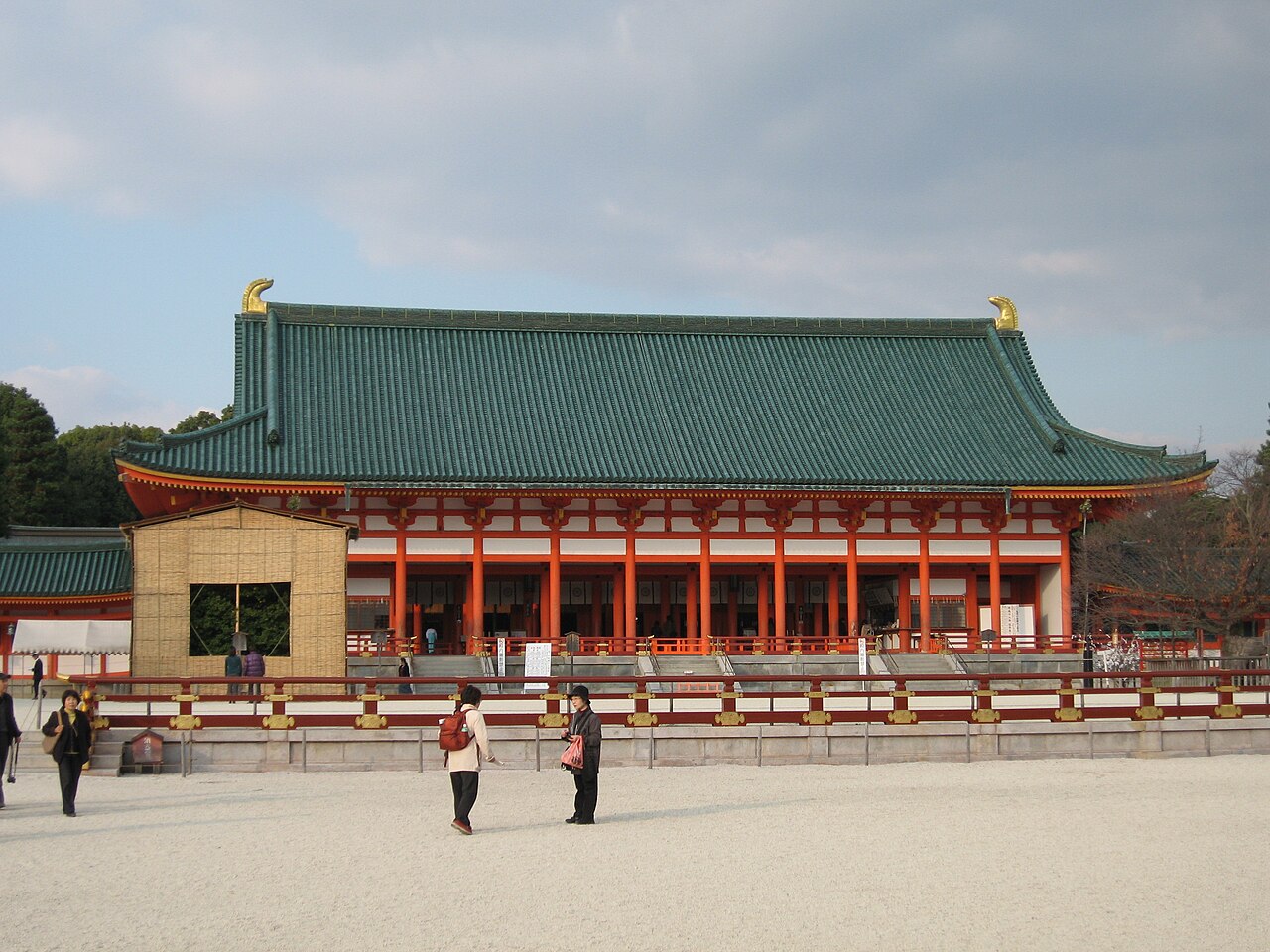
Het Heian-paleis (平安宮, Heian-kyū) was het oorspronkelijke keizerlijke paleis van Heian-kyō (het huidige Kioto), destijds de hoofdstad van Japan. Zowel het paleis als de stad werden aan het einde van de 8e eeuw gebouwd en waren geïnspireerd op Chinese modellen en ontwerpen. Het paleis diende gedurende het grootste deel van de Heianperiode (794–1185) als keizerlijke residentie en bestuurlijk centrum.
Het paleis lag in het noordelijke deel van het centrum van de stad en bestond uit een groot, ommuurd, rechthoekig Groot Paleis (de Daidairi), dat verschillende ceremoniële en bestuurlijke gebouwen bevatte, waaronder de regeringsministeries. Binnen deze omheining lag het afzonderlijk ommuurde woonverblijf van de keizer, het Binnenpaleis (Dairi). Naast de woonvertrekken van de keizer bevatte het Binnenpaleis de verblijven van de keizerlijke gemalinnen en gebouwen die nauwer met de persoon van de keizer verbonden waren.
De oorspronkelijke rol van het paleis was het belichamen van het gecentraliseerde bestuursmodel dat Japan in de 7e eeuw van China had overgenomen – bekend als het ritsuryō-systeem, waarin de bureaucratie onder de keizer werd geleid door de grote staatsraad (Daijō-kan) en de daaraan ondergeschikte Acht Ministeries. Het paleis was ontworpen om een passend kader te bieden voor de residentie van de keizer, de behandeling van grote staatszaken en de bijbehorende ceremonies. Terwijl de woonfunctie van het paleis tot in de 12e eeuw voortduurde, raakten de voorzieningen die voor grootse staatsceremonies waren gebouwd vanaf de 9e eeuw in onbruik. Dat kwam zowel door het afschaffen van verschillende wettelijk voorgeschreven ceremonies en procedures als door het verplaatsen van enkele resterende ceremonies naar de kleinschaliger omgeving van het Binnenpaleis.
Vanaf het midden van de Heianperiode werd het paleis door meerdere branden en andere rampen getroffen.
Machinaal vertaald uit “Heian Palace” op de Engelstalige Wikipedia, CC BY-SA 4.0.
Heian Palace staat op plaats 490 van 8.134 in de bekendheidsranglijst van deze atlas en op plaats 24 van de 297 die de atlas in Japan in kaart brengt. Gebouwd in ca. 775, en daarmee ouder dan 95% van de gedateerde bouwwerken in de atlas — een van de 41 bouwwerken in de atlas die uit de 8e eeuw stammen. De Wikipedia-artikelen erover werden de afgelopen 60 dagen 8.593 keer geopend, meer dan 91% van de atlas. Binnen 25 km staan nog 15 andere bouwwerken uit de atlas. De dichtstbijzijnde dagtripgids is Kyoto, 2 km verderop. Dit is een van de 71 bouwwerken op de regiokaart Kansai. Zie hoe dat zich verhoudt in de kastelenstatistiek.
Bekijk op de interactieve kastelenkaart →Veelgestelde vragen
Waar ligt Heian Palace?
Heian Palace ligt in Japan, op 35.01361°, 135.74222°.
Wanneer werd Heian Palace gebouwd?
De atlas dateert de stichting op ca. 775. Er kunnen eerdere bouwwerken hebben gestaan; dit is het oudste gedocumenteerde bouwjaar.
Hoe bekend is Heian Palace?
In de bekendheidsranglijst van deze atlas: plaats 490 van 8.134 wereldwijd, plaats 24 in Japan. Bekendheid combineert het aantal Wikipedia-taalversies met het aantal lezers.
Welk kasteel ligt het dichtst bij Heian Palace?
Kasteel Nijo, ongeveer 1 km verderop.
Meer kastelen in Japan
- Okayama Castle Japan · 14e eeuw
- Odawara Castle Japan · 15e eeuw
- Maruoka Castle Japan · 16e eeuw
- Heijō Palace Japan
Meer paleizen
- Lake Palace hotel India · 18e eeuw
- Charlottenlund (slot) Denemarken · 18e eeuw
- Paleis Huis ten Bosch Nederland · 17e eeuw
- Presidential Palace (Warsaw) Polen · 17e eeuw