Vesting
Shusha Fortress
🇦🇿 Azerbeidzjan · 18e eeuw
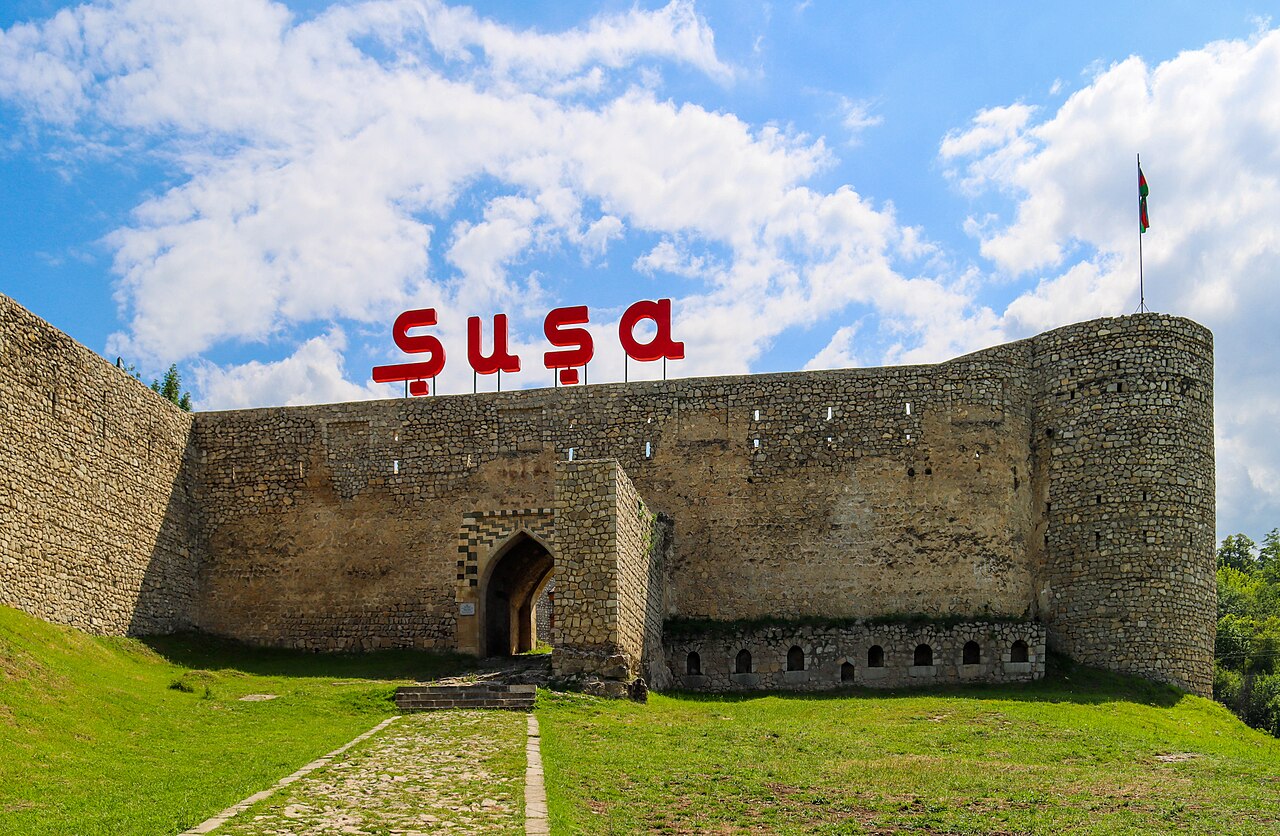
Het fort van Sjoesja (Azerbeidzjaans: Şuşa qalası, Perzisch: قلعه شوش) of fort van Sjoesji (Armeens: Շուշիի բերդ) is een fort dat het historische centrum van Sjoesja omringt. De nieuw veroverde kasteelstad werd "fort Panahabad" genoemd, naar Panah Ali Khan, die samen met Melik Sjahnazar de stichter van het fort was. In latere jaren werd de stad simpelweg "het Fort" genoemd. Een nederzetting bij Sjoesja wordt voor het eerst vermeld in een 15e-eeuws geïllustreerd Armeens evangelie, waarin het "dorp Sjoesjoe" wordt genoemd.
Het gebied waar het fort van Sjoesja werd gebouwd, is een bergachtig plateau in de vorm van een amfitheater vanuit het westen, met talrijke heuvels en spleten. Het hoogste deel van het plateau ligt op 1600 meter en het laagste op 1300 meter boven zeeniveau. Tegenwoordig bestaat het grondgebied van de stad Sjoesja uit een plateau met een langwerpige heuvel in het midden. De architectuur van het fort van Sjoesja weerspiegelt de basisprincipes van de architectuur van het feodale tijdperk, zowel wat betreft de locatiekeuze, de structurele planning als het artistieke uiterlijk van het fort.
Het fort van Sjoesja had drie hoofdpoorten: de Ganja-poort, de Iravan-poort en de Aghoghlan-poort. De namen van al deze poorten worden vaak genoemd in historische bronnen, evenals in alle getekende plattegronden van het 19e-eeuwse Sjoesja.
Machinaal vertaald uit “Shusha fortress” op de Engelstalige Wikipedia, CC BY-SA 4.0.
Shusha Fortress staat op plaats 1.835 van 8.134 in de bekendheidsranglijst van deze atlas en op plaats 3 van de 45 die de atlas in Azerbeidzjan in kaart brengt. Gebouwd in 1752, en daarmee ouder dan 17% van de gedateerde bouwwerken in de atlas — een van de 556 bouwwerken in de atlas die uit de 18e eeuw stammen. De Wikipedia-artikelen erover werden de afgelopen 60 dagen 1.909 keer geopend, meer dan 66% van de atlas. Binnen 25 km staan nog 2 andere bouwwerken uit de atlas. Zie hoe dat zich verhoudt in de kastelenstatistiek.
Bekijk op de interactieve kastelenkaart →Veelgestelde vragen
Waar ligt Shusha Fortress?
Shusha Fortress ligt in Azerbeidzjan, op 39.76611°, 46.75111°.
Wanneer werd Shusha Fortress gebouwd?
De atlas dateert de stichting op 1752. Er kunnen eerdere bouwwerken hebben gestaan; dit is het oudste gedocumenteerde bouwjaar.
Hoe bekend is Shusha Fortress?
In de bekendheidsranglijst van deze atlas: plaats 1.835 van 8.134 wereldwijd, plaats 3 in Azerbeidzjan. Bekendheid combineert het aantal Wikipedia-taalversies met het aantal lezers.
Welk kasteel ligt het dichtst bij Shusha Fortress?
Hajigulular Palace, ongeveer 1 km verderop.
Meer kastelen in Azerbeidzjan
- Ronde Burcht van Mardakan Azerbeidzjan · 13e eeuw
- Shahbulag Castle Azerbeidzjan · 18e eeuw
- Burcht van Mardakan Azerbeidzjan · 13e eeuw
- Sabayil Castle Azerbeidzjan · 13e eeuw
Meer vestingen
- Azov Fortress Rusland · 15e eeuw
- Skansin Faeröer · 16e eeuw
- Fort Provintia Taiwan · 17e eeuw
- Ramnagar Fort India · 18e eeuw