Fortress
Barabati Fort
🇮🇳 India · 10th century
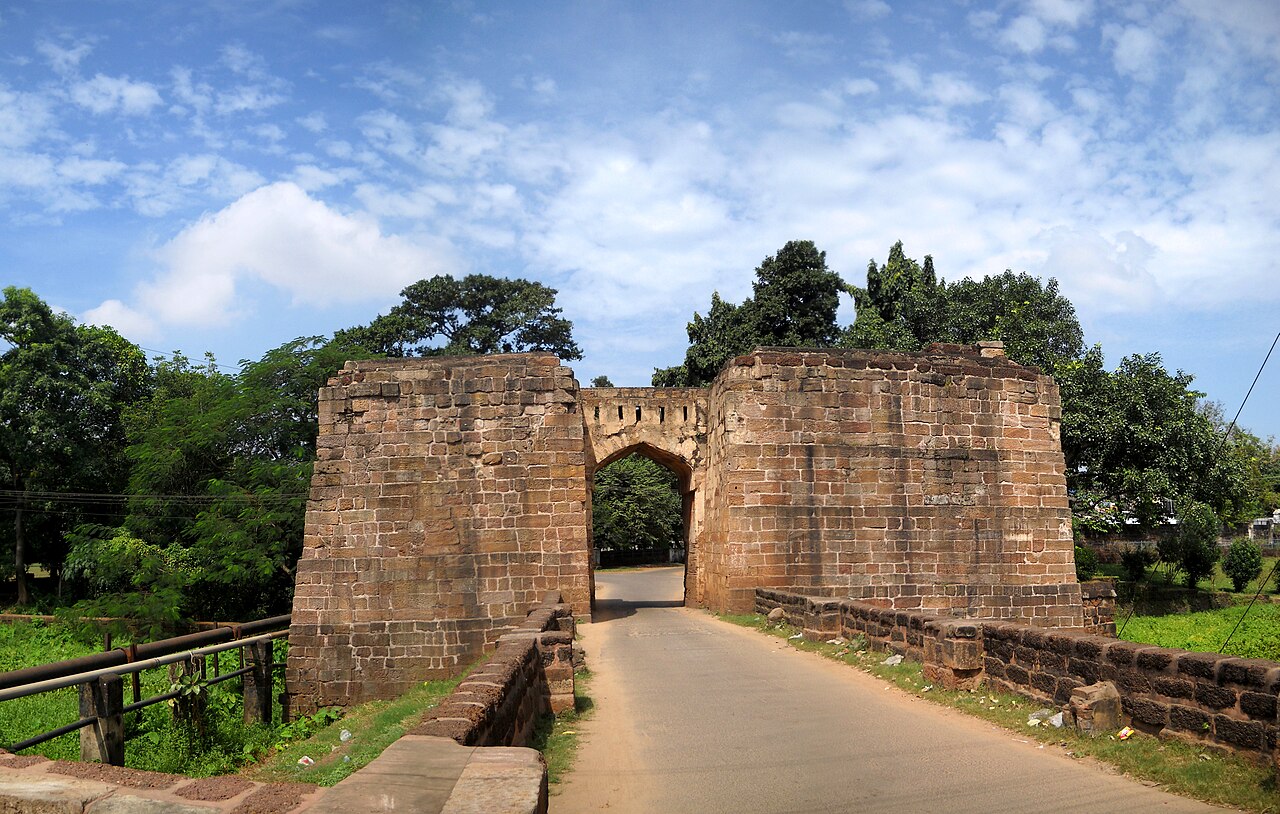
Barabati Fort is a 987 CE fort built by Marakata Keshari of Somavanshi (Keshari) dynasty in Cuttack, Odisha. The ruins of the fort remain with its moat, gate, and the earthen mound of the nine-storied palace.
This medieval fort is situated at 20°29′1.32″N 85°52′3.36″E, about 8 km from the center of the Cuttack, at the apex of a delta formed by the river Mahanadi in the north and its distributary, the Kathajodi in the south, and is located at 14.62 metres above sea level.
The Barabati was built in 987 CE by the Somavamshi dynasty lineage ruler Maharaja Markata Keshari while building a stone embankment to protect Cuttack which was known as Kataka at that time.
Scholars give different opinions regarding the date of construction of Barabati fort. Madalapanji, the Jagannatha temple chronicle narrates an interesting story which is as follows.
King Anangabhima Deva III of the Eastern Ganga dynasty lived in his capital, Chaudwar (1211-1238 A.D.) One day, the king crossed the Mahanadi and came towards the southern side. Here he noticed in the Barabati village belonging to the Ko-danda sub-division that near the god Visweswar, a heron had jumped upon a hawk. Seeing this, the king was very much surprised; on an auspicious day, he laid the foundation of construction of the fort and this village was named Barabati Cuttack. After that, he left Choudwar and lived at Cuttack making it his capital.
In 1568 AD, the city passed to the hands of Karranis of Bengal, then to the Mughal Empire in 1576 and then to the Maratha Empire in 1741. Cuttack, with the rest of Odisha, came under British rule in 1803. The Bengal-Nagpur Railways connected Cuttack with Madras (Chennai) and Calcutta (Kolkata) in 1919. It became the capital of the newly formed state of Odisha in 1936. It continued to be the capital until 1948, when the capital was shifted to Bhubaneswar. The city completed one thousand years of its existence in 1989.
During the rule of the Muslims and the Marathas, it continued to be the capital of Odisha. The British army took possession of Barabati fort in October 1803, and it became a prison for the confinement of several illustrious rulers of the land. In 1800 the Raja of Kujanga, in 1818, the Raja of Surgaja with his family members were kept under strict confinement to this fort. In addition, vandalism to destroy the fort was intensified in the early phase of British rule.
Text adapted from “Barabati fort” on Wikipedia, CC BY-SA 4.0.
Barabati Fort ranks #4,047 of 8,764 worldwide in the atlas's castle fame ranking, and #151 of the 220 mapped in India. Founded 987, it is older than 93% of the atlas's dated landmarks — one of 146 atlas entries founded in the 10th century. Its Wikipedia articles were opened 1,197 times in the last 60 days, more than 54% of the atlas. See how India compares in the castle statistics.
View on the interactive castle map →Frequently asked questions
Where is Barabati Fort?
Barabati Fort stands in India, at 20.48463°, 85.86443°.
When was Barabati Fort built?
The atlas dates its founding to 987. Earlier structures may have stood on the site; this is the earliest documented founding year.
How famous is Barabati Fort?
In this atlas's fame ranking: #4,047 of 8,764 worldwide, and #151 in India. Fame here combines how many Wikipedia language editions cover a landmark with how many people read them.
What is the nearest castle to Barabati Fort?
Fort William (West Bengal), about 344 km away.
More castles in India
- Gulbarga Fort India · 14th century
- Jhansi Fort India
- Srirangapatna Fort India · 15th century
- Summer Palace of Maharaja Ranjit Singh India · 19th century
More fortresses
- Visapur Fort India · 18th century
- Furg Citadel Iran · 18th century
- Ligny Tower Italy · 17th century
- Qawra Tower Malta · 17th century