 England · 18th century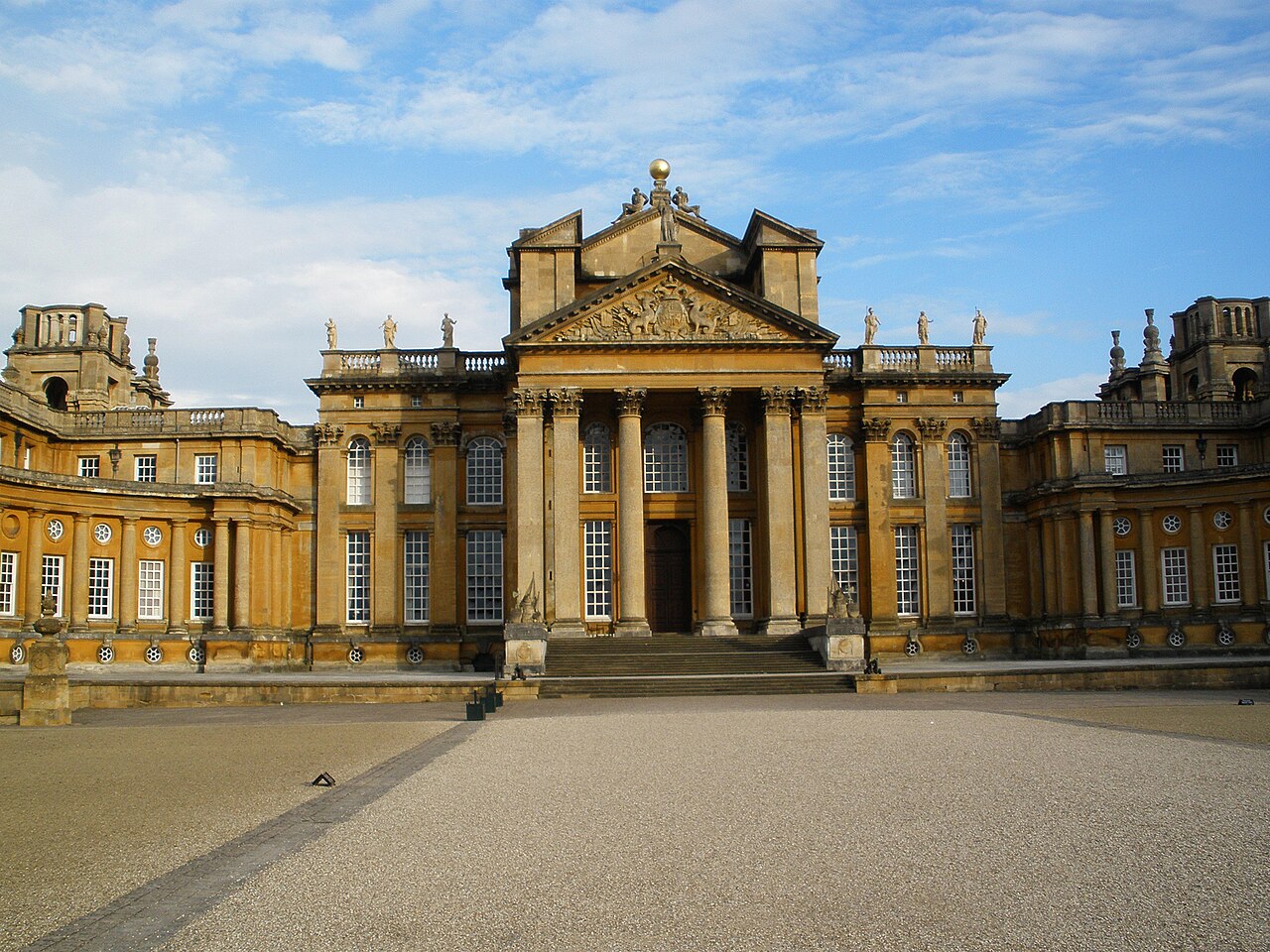
Blenheim Palace ( BLEN-im) is a country house in Woodstock, Oxfordshire, England. It is the seat of the Dukes of Marlborough, and the birthplace of Sir Winston Churchill. Originally called Blenheim Castle, it has been known as Blenheim Palace since the 19th century. One of England's largest houses, it was built between 1705 and 1722, and was designated a UNESCO World Heritage Site in 1987.
The palace is named after the 1704 Battle of Blenheim. It was originally intended to be a reward to the 1st Duke of Marlborough for his military triumphs against the French and Bavarians in the War of the Spanish Succession, which culminated in the eponymous battle near the town of Blenheim in what is today southern Germany.
The land on which the Palace sits was given as a gift, and construction began in 1705, with some financial support from Queen Anne. The project soon became the subject of political infighting and controversy, with the Crown cancelling further financial support in 1712, Marlborough's three-year voluntary exile to the Continent, the fall from royal influence of his wife, and lasting damage to the reputation of the architect Sir John Vanbrugh. Designed in the rare, and short-lived, English Baroque style, the palace elicits architectural assessments as divided today as they were in the 1720s.
Following the palace's completion, it became the home of the Churchill (later Spencer-Churchill) family for the next 300 years, and various members of the family have wrought changes to the interiors, park and gardens. At the end of the 19th century, the palace was saved from ruin by funds gained from the 9th Duke of Marlborough's marriage to the American railroad heiress Consuelo Vanderbilt. The Palace is unique in its combined use as a family home, mausoleum and national monument.
Text adapted from “Blenheim Palace” on Wikipedia, CC BY-SA 4.0.
Blenheim Palace ranks #30 of 9,079 worldwide in the atlas's castle fame ranking, and #6 of the 360 mapped in England. Founded 1705, it is older than 21% of the atlas's dated landmarks — one of 696 atlas entries founded in the 18th century. Its Wikipedia articles were opened 89,233 times in the last 60 days, more than 99% of the atlas. 4 more atlas landmarks stand within 25 km. The nearest day-trip guide is Oxford, 12 km away. See how England compares in the castle statistics.
View on the interactive castle map →