 Northern Cyprus · 10th century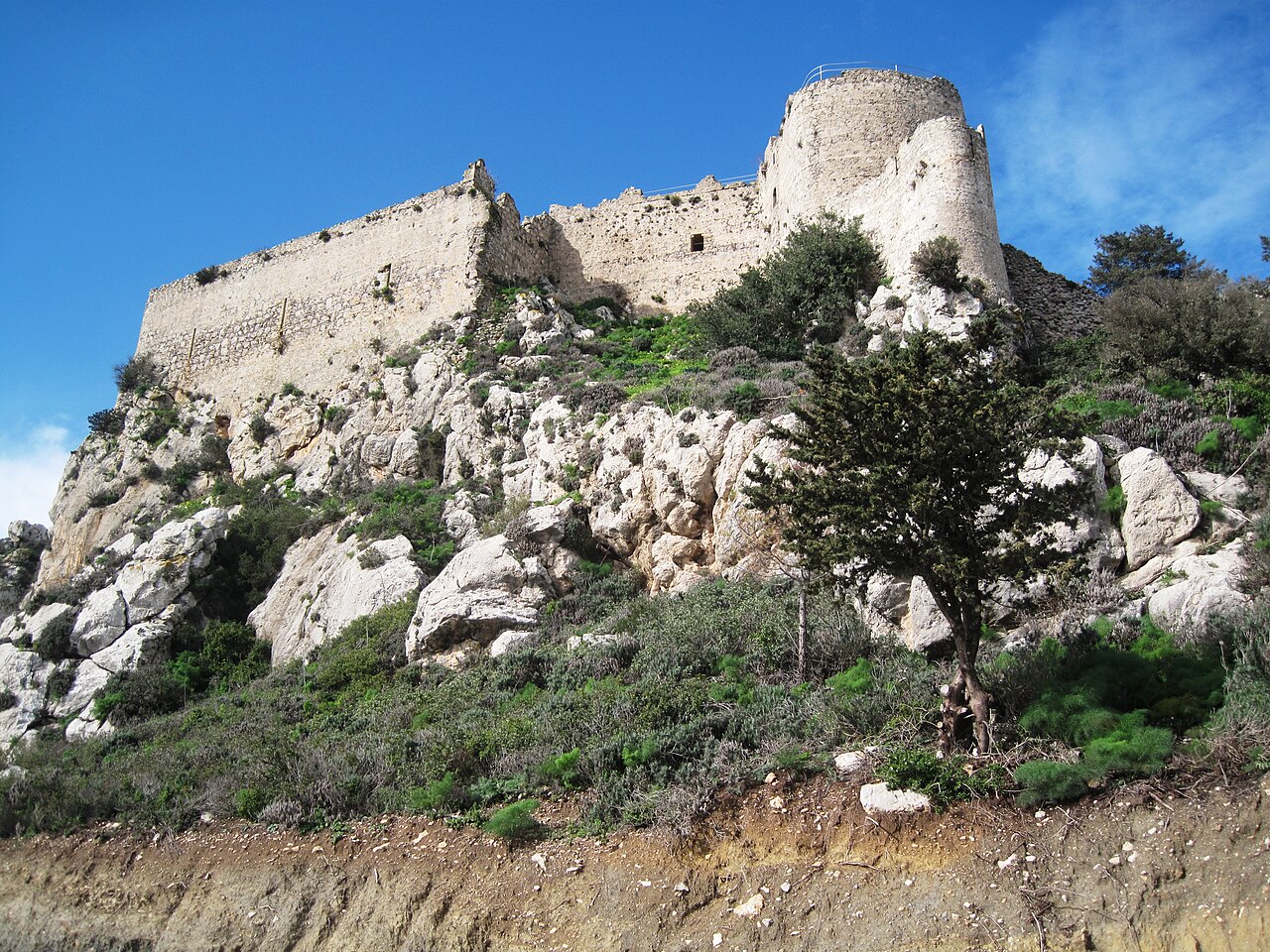
Kantara Castle (Greek: Κάστρο της Καντάρας Turkish: Kantara Kalesi) is a castle in Cyprus, in the area controlled by Northern Cyprus. The exact date of its construction is unknown, the most plausible theory being the Byzantine period. It combines Byzantine and Frankish architectural elements, became derelict in 1525 and was dismantled in 1560. It gave its name to the nearby Kantara Monastery.
Kantara is situated to the east of Buffavento Castle with Saint Hilarion Castle standing farther to the west forming a protective axis in the Kyrenia Mountains. As the other castles are visible from Buffavento, it was used to pass signals between them. The castles were built in conjunction during the Byzantine period but the date of their commission is unknown. Theories to explain their date of origin include: In 965 (after the expulsion of the Arabs from the island), in 1091 by the rebel Rhapsomates, during the rule of Eumathios Philokales (1091–1094), in the late 11th century after the Cilician coast was overrun by the Seljuk Empire or in 1096 as a countermeasure for the upheaval caused by the First Crusade. The name of the castle derives from the Cypriot Arabic word kandak which means stone bridge.
Serving as a watchtower for pirate raids, an administrative centre and a place of incarceration, the castle saw next to no fighting. In 1191, it was taken by Richard the Lionheart during his campaign against the island's ruler Isaac Komnenos of Cyprus. Richard subsequently sold the island to the Knights Templar whose rule abruptly ended after a major revolt in Nicosia. Cyprus was thus resold to Guy of Lusignan, the former king of Jerusalem who became the first king of Cyprus in 1192. A period of peace ended with the death of Hugh I of Cyprus in 1218. A struggle over who should act as the kingdom's regent ensued, pitting the House of Ibelin with the local supporters of Frederick II, Holy Roman Emperor.
Frederick's arrival in Limassol in 1228 escalated the conflict into an open war. In 1229, the castle came under siege by the Ibelins, who bombarded it with trebuchets, reportedly destroying several buildings. The castle's garrison surrendered a year later when its commander Gauvain de Cheneche was killed by a crossbow bolt. Afterwards, the Lusignans continued their reign interrupted only by occasional palace coups.
Text adapted from “Kantara Castle” on Wikipedia, CC BY-SA 4.0.
Kantara Castle ranks #1,253 of 9,079 worldwide in the atlas's castle fame ranking, and #3 of the 6 mapped in Northern Cyprus. Founded c. 950, it is older than 92% of the atlas's dated landmarks — one of 193 atlas entries founded in the 10th century. Its Wikipedia articles were opened 2,182 times in the last 60 days, more than 71% of the atlas. See how Northern Cyprus compares in the castle statistics.
View on the interactive castle map →