 Cuba · 18th century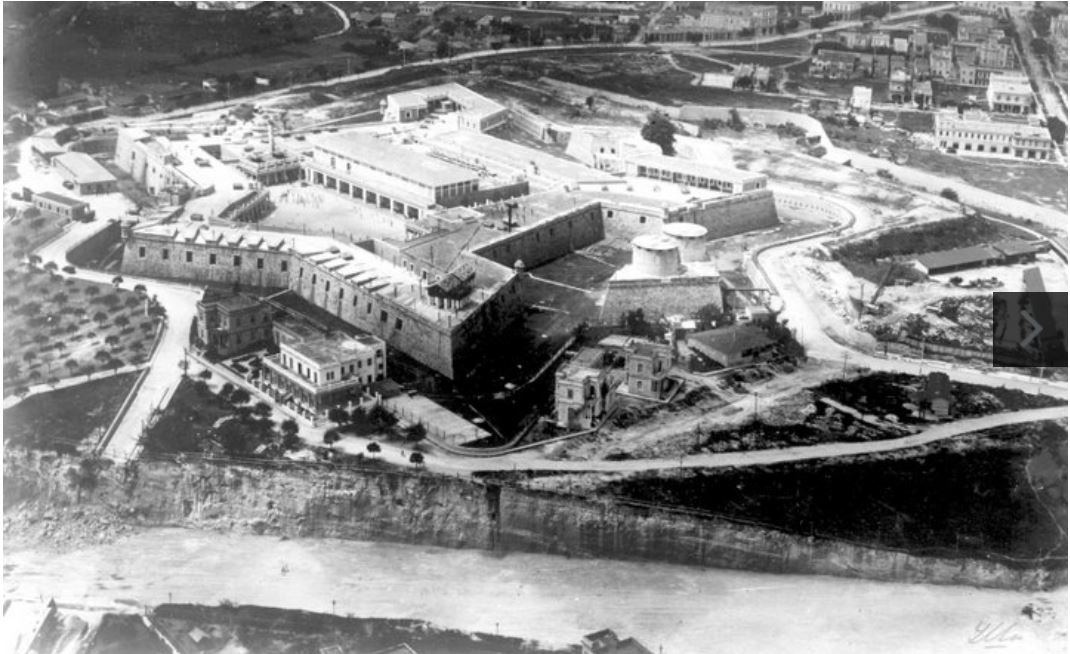
The Castillo del Príncipe (Castle of the Prince) is a military fort located in the Loma de Aróstegui, in Havana, Cuba. In 1982, the fort was inscribed on the UNESCO World Heritage List, along with other historic sites in Old Havana, because of the city's importance in the European conquest of the New World, its fortifications, and its unique architecture.
The fort was built during the wave of military constructions in Cuba, after the end of the Capture of Havana, by the English that lasted almost a year, the Spanish government realized that the city was unprotected and transformed the "Key of the New World", into the most fortified city of the American continent.
The castle owes its name to Charles of Bourbon, Prince of Asturias, son and future successor of King Charles III of Spain. The construction was in charge of the colonel of engineers the Navarrese Silvestre Abarca y Aznar, the same one who built the Fortress of San Carlos de La Cabaña in the bay.
The works began in 1767 and concluded in 1779, although since 1771, the place had already been fortified, while the rest of the works of the military complex were finished.
The fortification had different uses, among them that of prison, a function it performed from colonial times until the Cuban Revolution, the castle became the most important in Havana. The fort continued to be a prison until the 1970s of the 20th century. Then the government transforms it into a unit of military ceremonies.
It housed common and political prisoners, including José Martí's teacher, Rafael María de Mendive. Julio Antonio Mella, Eduardo Chibás, Raúl Roa, Juan Marinello and many other prominent revolutionaries were also imprisoned.
The castle has the shape of an irregular pentagon and has two bastions, two semi-bastions and a redan (V-shaped protrusion), and also contains deep trenches, mine galleries, warehouses, offices, a water cistern and a housing area large enough to accommodate a garrison of 1000 soldiers. It's stationed artillery consisted of 60 cannons of various calibers. It also has a system of tunnels built with red bricks that allow communication with all the outposts and most remote positions of the castle.
The position of Castillo del Príncipe allowed a broad view of the city, to the remains of the old city wall, from Campus Martius.
Text adapted from “Castillo del Príncipe (Havana)” on Wikipedia, CC BY-SA 4.0.
Castle del Príncipe ranks #4,650 of 9,035 worldwide in the atlas's castle fame ranking, and #8 of the 12 mapped in Cuba. Founded 1767, it is older than 14% of the atlas's dated landmarks, one of 685 atlas entries founded in the 18th century. 9 more atlas landmarks stand within 25 km. The nearest day-trip guide is Havana, 3 km away. See how Cuba compares in the castle statistics.
View on the interactive castle map →