 England · 12th century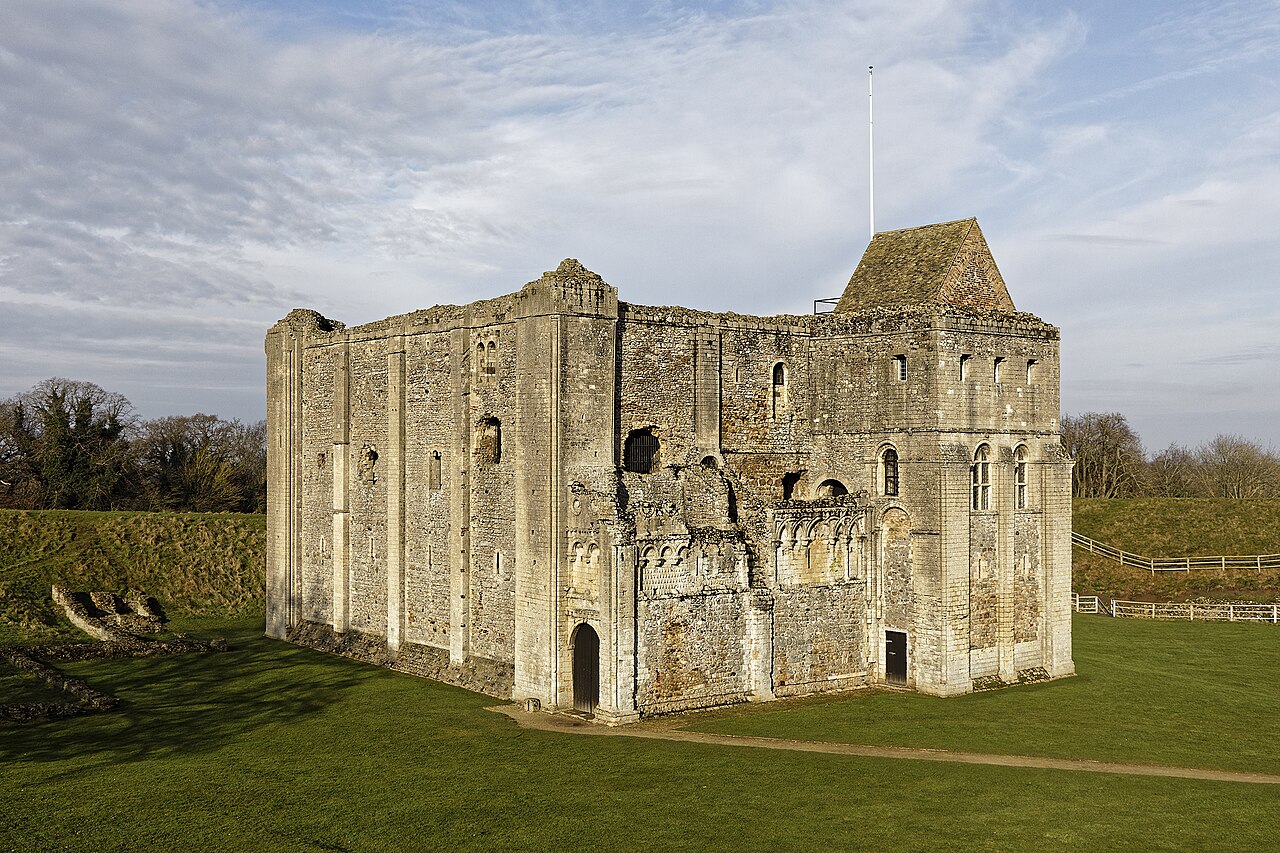
Castle Rising is a ruined medieval fortification in the village of Castle Rising, Norfolk, England. It was built soon after 1138 by William d'Aubigny II, who had risen through the ranks of the Anglo-Norman nobility to become the Earl of Arundel. With his new wealth, he constructed Castle Rising and its surrounding deer park, a combination of fortress and palatial hunting lodge. It was inherited by William's descendants before passing into the hands of the de Montalt family in 1243. The Montalts later sold the castle to Queen Isabella, who lived there after her fall from power in 1330. Isabella extended the castle buildings and enjoyed a regal lifestyle, entertaining her son, Edward III, on several occasions. After her death, it was granted to Edward, the Black Prince, to form part of the Duchy of Cornwall.
During the 15th century, the castle became increasingly valued for its hunting facilities rather than its military defences. It fell into disrepair and, despite the construction of new living quarters and service facilities, by the middle of the 16th century it was derelict. Henry VIII sold the property to Thomas Howard, the Duke of Norfolk, and most of the castle buildings were demolished. It was not until the 19th century, when Mary and Fulke Greville Howard inherited the property, that the castle was renovated and restored. Victorian scholars examined the site, and it was opened to the public. In 1958 the castle passed into the custody of the state, which carried out further stabilisation work and a programme of archaeological investigation.
In 1998 English Heritage passed the management of the site back to its current owner, Baron Howard of Rising, who continues to operate the castle as a tourist attraction.
Text adapted from “Castle Rising Castle” on Wikipedia, CC BY-SA 4.0.
Castle Rising Castle ranks #1,854 of 9,079 worldwide in the atlas's castle fame ranking, and #116 of the 360 mapped in England. Founded 1138, it is older than 83% of the atlas's dated landmarks — one of 756 atlas entries founded in the 12th century. Its Wikipedia articles were opened 2,530 times in the last 60 days, more than 75% of the atlas. 2 more atlas landmarks stand within 25 km. The nearest day-trip guide is Cambridge (England), 69 km away. See how England compares in the castle statistics.
View on the interactive castle map →