 France · 17th century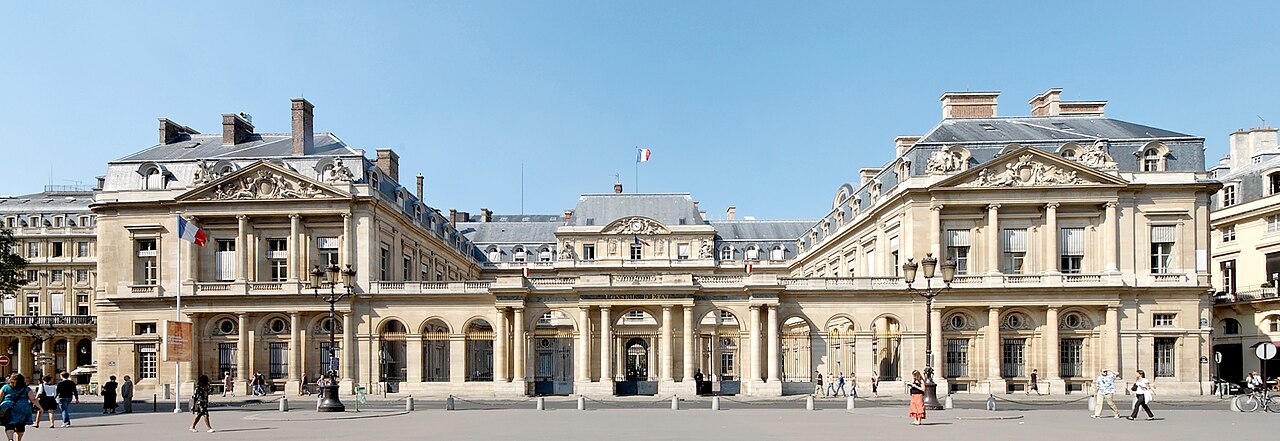
The Palais-Royal (French: [pa.lɛ ʁwa.jal]) is a former French royal palace located on Rue Saint-Honoré in the 1st arrondissement of Paris. The screened entrance court faces the Place du Palais-Royal, opposite the Louvre. Originally called the Palais-Cardinal, it was built for Cardinal Richelieu from about 1633 to 1639 by architect Jacques Lemercier. Richelieu bequeathed it to Louis XIII, before Louis XIV gave it to his younger brother, Philippe I, Duke of Orléans. As the succeeding Dukes of Orléans made such extensive alterations over the years, almost nothing remains of Lemercier's original design.
The Palais-Royal is now the seat of the Ministry of Culture, the Conseil d'État and the Constitutional Council. The central Palais-Royal Garden (Jardin du Palais-Royal) serves as a public park; its arcade houses shops.
Text adapted from “Palais-Royal” on Wikipedia, CC BY-SA 4.0.
Palais-Royal ranks #79 of 9,079 worldwide in the atlas's castle fame ranking, and #9 of the 793 mapped in France. Founded 1628, it is older than 28% of the atlas's dated landmarks — one of 721 atlas entries founded in the 17th century. Its Wikipedia articles were opened 30,682 times in the last 60 days, more than 99% of the atlas. Wikidata records about 10,000 visitors in 2022. 45 more atlas landmarks stand within 25 km. The nearest day-trip guide is Paris, 1 km away. See how France compares in the castle statistics.
View on the interactive castle map →