 France · 14th century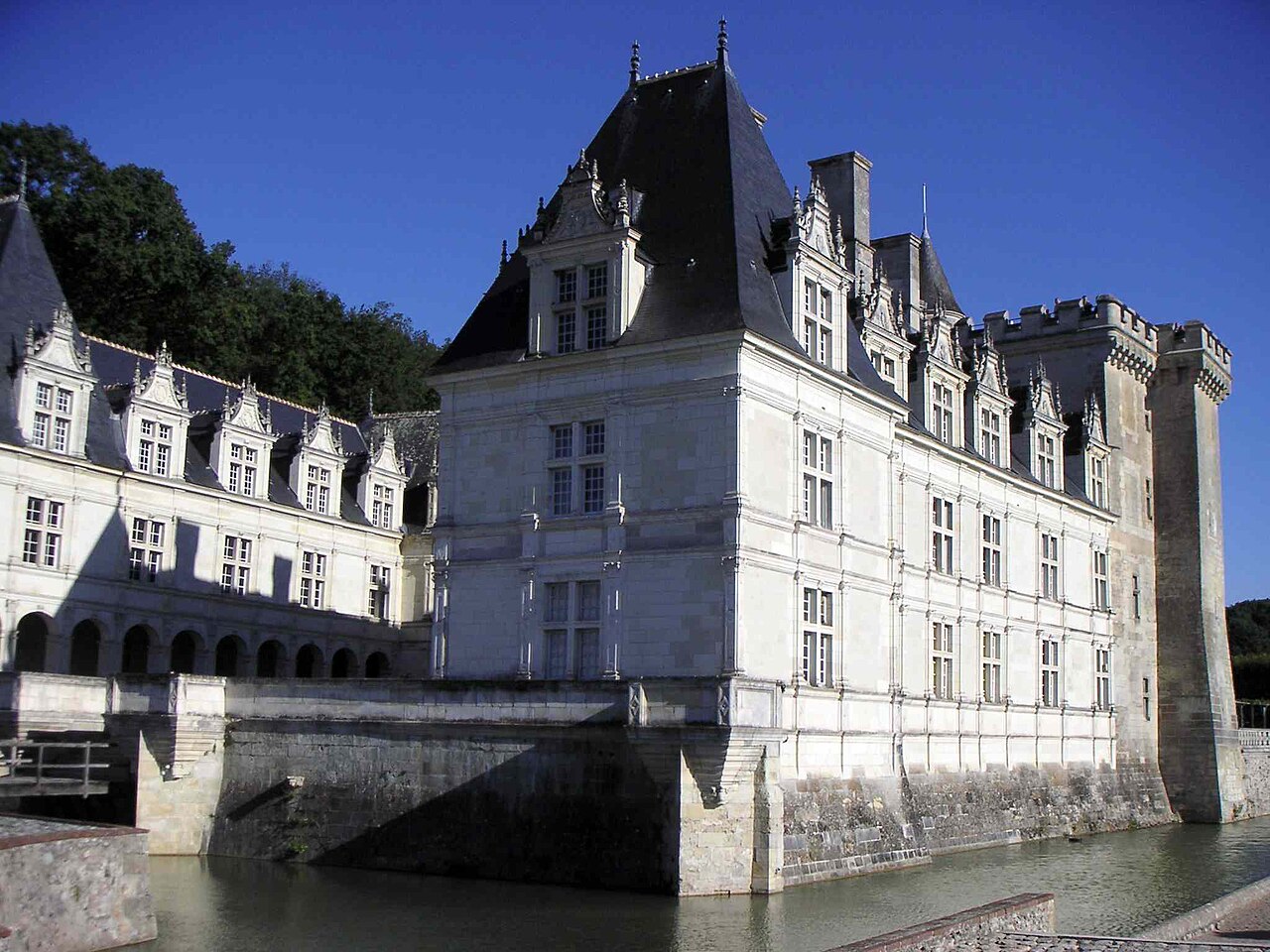
The Château de Villandry is a grand country house located in Villandry, in the département of Indre-et-Loire, France. It is especially known for its beautiful gardens.
The lands where an ancient fortress once stood were known as Columbine until the 17th century. They were acquired in the early 16th century by Jean Le Breton, France's Controller-General for War under King Francis I, and a new château was constructed around the original 14th-century keep where King Philip II of France once met Richard I of England to discuss peace.
The château remained in the Le Breton family for more than two centuries until it was acquired by the Marquis de Castellane. During the French Revolution the property was confiscated and in the early 19th century, Emperor Napoleon acquired it for his brother Jérôme Bonaparte.
In 1906, Joachim Carvallo purchased the property, financed by his wife Ann Coleman, who was an heiress to the Coleman fortune. Extensive time, money, and devotion were then poured into repairing it and creating extraordinary gardens. Its famous Renaissance gardens include a water garden, ornamental flower gardens, and vegetable gardens. The gardens are laid out in formal patterns created with low box hedges. In 1934, Château de Villandry was designated a Monument historique. Like all the other châteaux of the Loire Valley, it is a World Heritage Site.
Still owned by the Carvallo family, the Château de Villandry is open to the public and is one of the most visited châteaux in France; in 2007 the château received about 330,000 visitors.
Text adapted from “Château de Villandry” on Wikipedia, CC BY-SA 4.0.
Château de Villandry ranks #308 of 9,079 worldwide in the atlas's castle fame ranking, and #32 of the 793 mapped in France. Founded c. 1350, it is older than 55% of the atlas's dated landmarks — one of 755 atlas entries founded in the 14th century. Its Wikipedia articles were opened 11,830 times in the last 60 days, more than 95% of the atlas. 11 more atlas landmarks stand within 25 km. The nearest day-trip guide is Tours, 14 km away. It is one of the 73 landmarks on the atlas's regional map of the Loire Valley. It is stop 12 of 32 on the Loire Valley château route, Angers to Orléans. See how France compares in the castle statistics.
View on the interactive castle map →