 Iraq
Iraq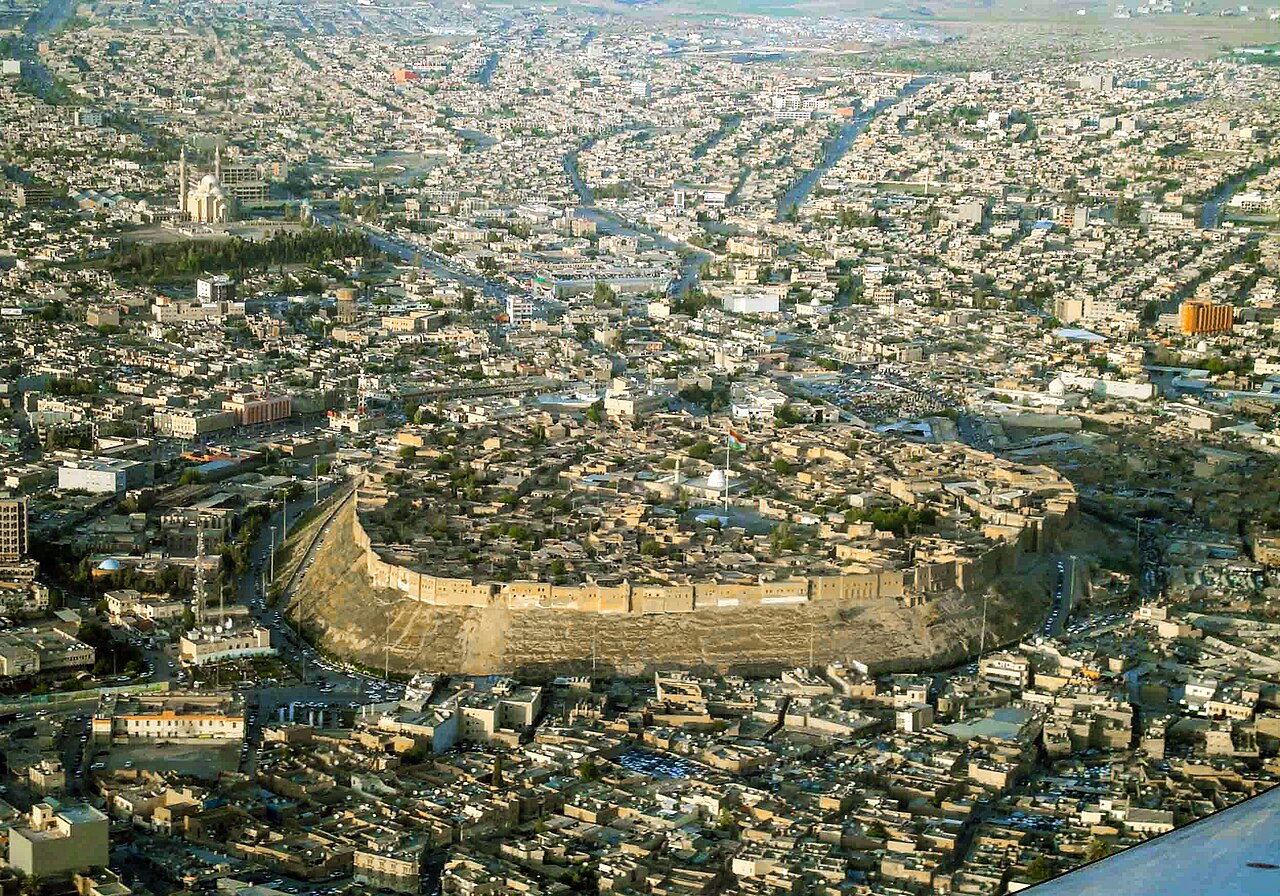
The Citadel of Erbil (Kurdish: قەڵای هەولێر Qelay Hewlêr, Arabic: قلعة اربيل, romanized: Qal'at Erbīl), locally called Qellat, is a tell or occupied mound, and the historical city centre of Erbil in the Kurdistan Region of Iraq. The citadel was added to the World Heritage List on 21 June 2014.
The earliest evidence for occupation of the citadel mound dates to the 5th millennium BC, and possibly earlier. It appears for the first time in historical sources in the Ebla tablets in modern Syria around 2000 BC, and gained particular importance during the Neo-Assyrian period. During the Sassanian period and the Abbasid Caliphate, Erbil was an important centre for Christianity. After the Mongols captured the citadel in 1258, the importance of Erbil declined. During the 20th century, the urban structure was significantly modified, as a result of which a number of houses and public buildings were destroyed.
The buildings on top of the tell stretch over a roughly oval area of 430 by 340 metres (1,410 ft × 1,120 ft) occupying 102,000 square metres (1,100,000 sq ft). The only religious structure that currently survives is the Mulla Afandi Mosque. The mound rises between 25 and 32 metres (82 and 105 ft) from the surrounding plain.
Text adapted from “Citadel of Erbil” on Wikipedia, CC BY-SA 4.0.
Citadel of Erbil ranks #300 of 9,035 worldwide in the atlas's castle fame ranking, and #3 of the 15 mapped in Iraq. Its Wikipedia articles were opened 11,046 times in the last 60 days, more than 94% of the atlas. 1 more atlas landmarks stand within 25 km. See how Iraq compares in the castle statistics.
View on the interactive castle map →