Ruin
Eglinton Castle
SCT Scotland · 18th century
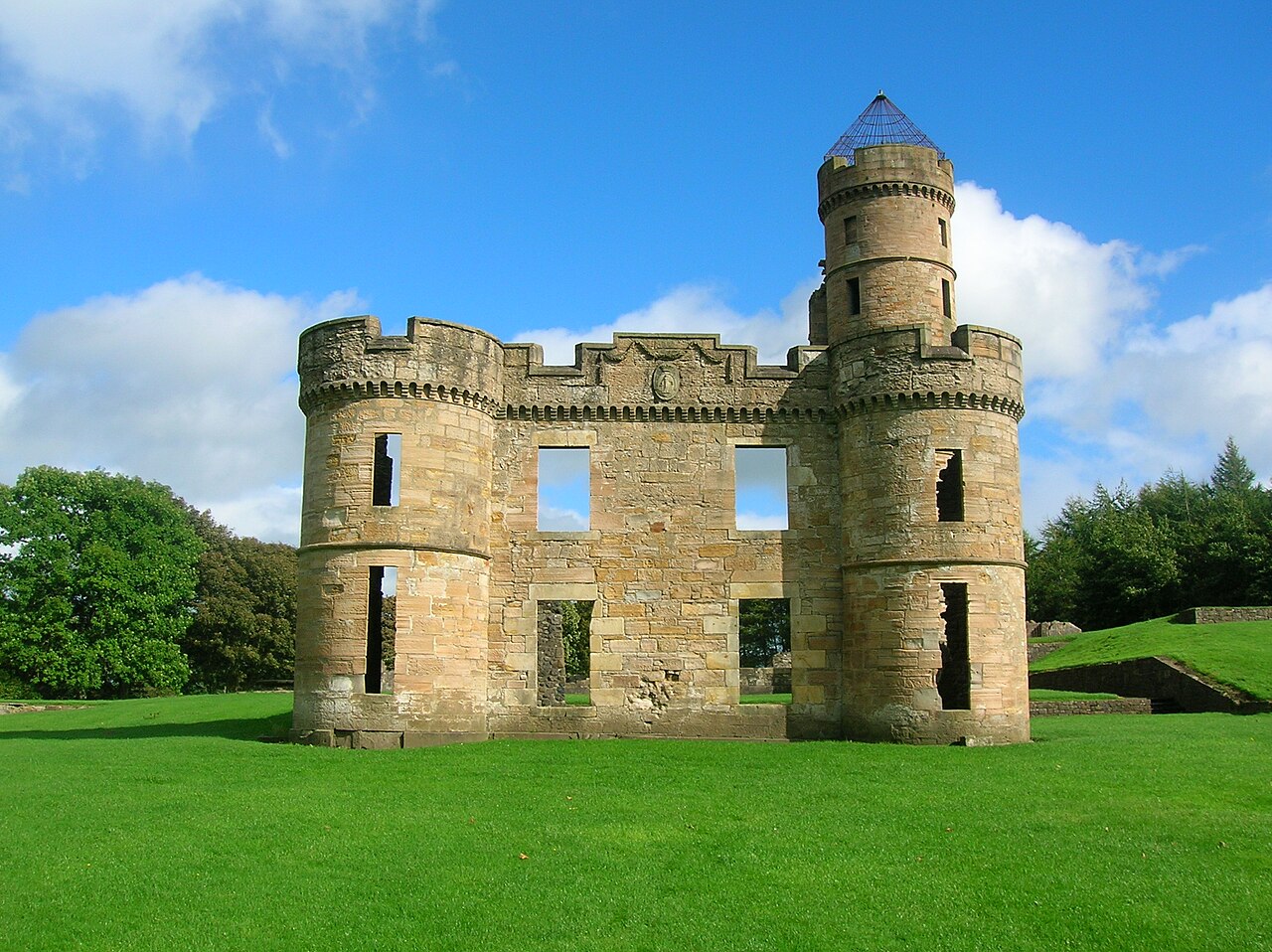
Eglinton Castle was a large Gothic castellated mansion in Kilwinning, North Ayrshire, Scotland.
The ancient seat of the Earls of Eglinton, it is located just south of the town of Kilwinning. The original Eglinton Castle was burnt by the Earl of Glencairn in 1528. The current castle was built between 1797 and 1802 in Gothic castellated style dominated by a central 100-foot (30 m) large round keep and four 70-foot (21 m) outer towers, it was second only to Culzean Castle in appearance and grandeur. The foundation stone of the new Eglinton Castle in Kilwinning was laid in 1797, the 12th Earl of Eglinton, was proud to have the ceremony performed by Alexander Hamilton of Grange, grandfather of the American Hero Alexander Hamilton.
Eglinton was the most notable post-Adam Georgian castle in Ayrshire. Among many items of interest, the castle contained a chair built from the oak timbers of Alloway kirk and the back of the chair was inlaid with a brass plaque which bore the whole of Burns' poem Tam o' Shanter. This was sold at an auction in 1925. The previous Eglington castle (sic) was described circa 1563–1566 as a fare castell, but noo strength againsts any power. An escape tunnel is said to run from the old castle to the area of the rockery on the castle lawns. The appearance of the old waterfall may have inspired this story as it looks like a sealed doorway. The total acreage of the Earl of Eglinton's holdings was 34,716 Scots Acres (1 Scots acre = 1.5 English Acres) in 1788. This included Little Cumbrae, and lands at Southannan and Eaglesham (Polnoon).
The original castle of Eglinton may have been near Kidsneuk, Bogside (NS 309 409) where a substantial earth mound or motte stands and excavated pottery was found tentatively dating the site to the thirteenth century.
The Montgomerie's' first holdings were the Barony of Eaglesham and its Castle of Polnoon.
In 1691 the 'Hearth Tax for Ayrshire' records show 25 hearths in use, the highest number for a single dwelling in Ayrshire. It is noted that the earl had not paid the tax. The earl's house in Kilwinning, Easter Chambers or the old abbot's dwelling, had 15 hearths. Thirty-seven other dwellings were listed within the barony of Eglinton.
The stables were built from stones taken from the Easter Chambers of Kilwinning Abbey; being the Abbots lodgings and later that of the Earls of Eglinton.
Text adapted from “Eglinton Castle” on Wikipedia, CC BY-SA 4.0.
Eglinton Castle ranks #4,905 of 8,764 worldwide in the atlas's castle fame ranking, and #173 of the 207 mapped in Scotland. Founded 1797, it is older than 13% of the atlas's dated landmarks — one of 638 atlas entries founded in the 18th century. Its Wikipedia articles were opened 1,773 times in the last 60 days, more than 65% of the atlas. 7 more atlas landmarks stand within 25 km. The nearest day-trip guide is Glasgow, 36 km away. See how Scotland compares in the castle statistics.
View on the interactive castle map →Frequently asked questions
Where is Eglinton Castle?
Eglinton Castle stands in Scotland, at 55.6418°, -4.67164°.
When was Eglinton Castle built?
The atlas dates its founding to 1797. Earlier structures may have stood on the site; this is the earliest documented founding year.
How famous is Eglinton Castle?
In this atlas's fame ranking: #4,905 of 8,764 worldwide, and #173 in Scotland. Fame here combines how many Wikipedia language editions cover a landmark with how many people read them.
What is the nearest castle to Eglinton Castle?
Stanecastle, about 3 km away.
More castles in Scotland
- Fatlips Castle Scotland · 16th century
- Gilnockie Tower Scotland · 17th century
- Hallforest Castle Scotland · 14th century
- Invermark Castle Scotland · 16th century
More ruins
- Knock Castle Scotland
- Macduff's Castle Scotland
- Old Slains Castle Scotland · 13th century
- Pencoed Castle Wales · 16th century