Fortress
Fort Conger
🇨🇦 Canada · 19th century
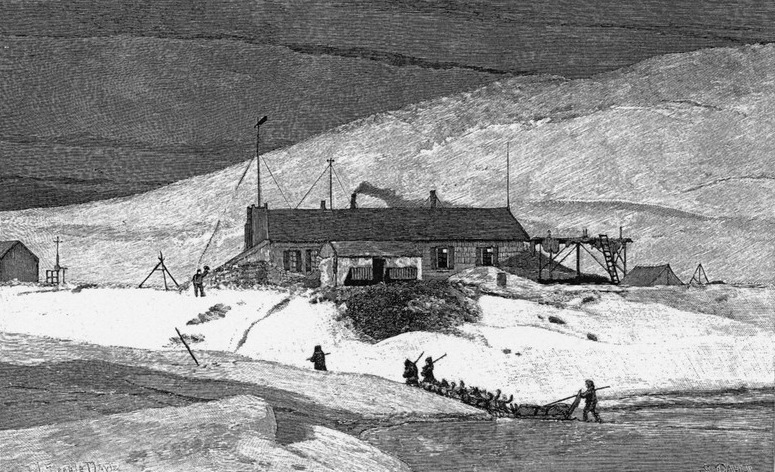
Fort Conger is a former settlement, military fortification, and scientific research post in the Qikiqtaaluk Region, Nunavut, Canada. It was established in 1881 as an Arctic exploration camp, notable as the site of the first major northern polar region scientific expedition, the Lady Franklin Bay Expedition, led by Adolphus Greely as part of the United States government's contribution to the First International Polar Year. It was later occupied by Robert Peary during some of his Arctic expeditions.
Fort Conger is located on the northern shore of Lady Franklin Bay in Grinnell Land, northeastern Ellesmere Island within Quttinirpaaq National Park. Bellot Island lies across from Fort Conger within Discovery Harbour. Though lacking in timber, the area is characterized by grasses and sedges. The surroundings are rugged and boast high cliffs around the harbour. Now uninhabited, it is one of only a handful of previously staffed stations in the Queen Elizabeth Islands. In 1991, some of the structures at Fort Conger were designated as Classified Federal Heritage Buildings.
Text adapted from “Fort Conger” on Wikipedia, CC BY-SA 4.0.
Fort Conger ranks #3,027 of 8,133 worldwide in the atlas's castle fame ranking, and #17 of the 26 mapped in Canada. Founded 1881, it is older than 5% of the atlas's dated landmarks — one of 607 atlas entries founded in the 19th century. Its Wikipedia articles were opened 1,437 times in the last 60 days, more than 58% of the atlas. See how Canada compares in the castle statistics.
View on the interactive castle map →Frequently asked questions
Where is Fort Conger?
Fort Conger stands in Canada, at 81.71667°, -64.71667°.
When was Fort Conger built?
The atlas dates its founding to 1881. Earlier structures may have stood on the site; this is the earliest documented founding year.
How famous is Fort Conger?
In this atlas's fame ranking: #3,027 of 8,133 worldwide, and #17 in Canada. Fame here combines how many Wikipedia language editions cover a landmark with how many people read them.
More castles in Canada
- Fort San Miguel Canada · 18th century
- Fort Erie Canada · 18th century
- Prince of Wales Fort Canada · 18th century
- Fort George (Ontario) Canada · 18th century
More fortresses
- Fort Brown United States · 19th century
- Fort Oranje (Bonaire) Netherlands · 17th century
- Trekroner Fort Denmark · 18th century
- Fort Mandan United States · 19th century