 United States · 17th century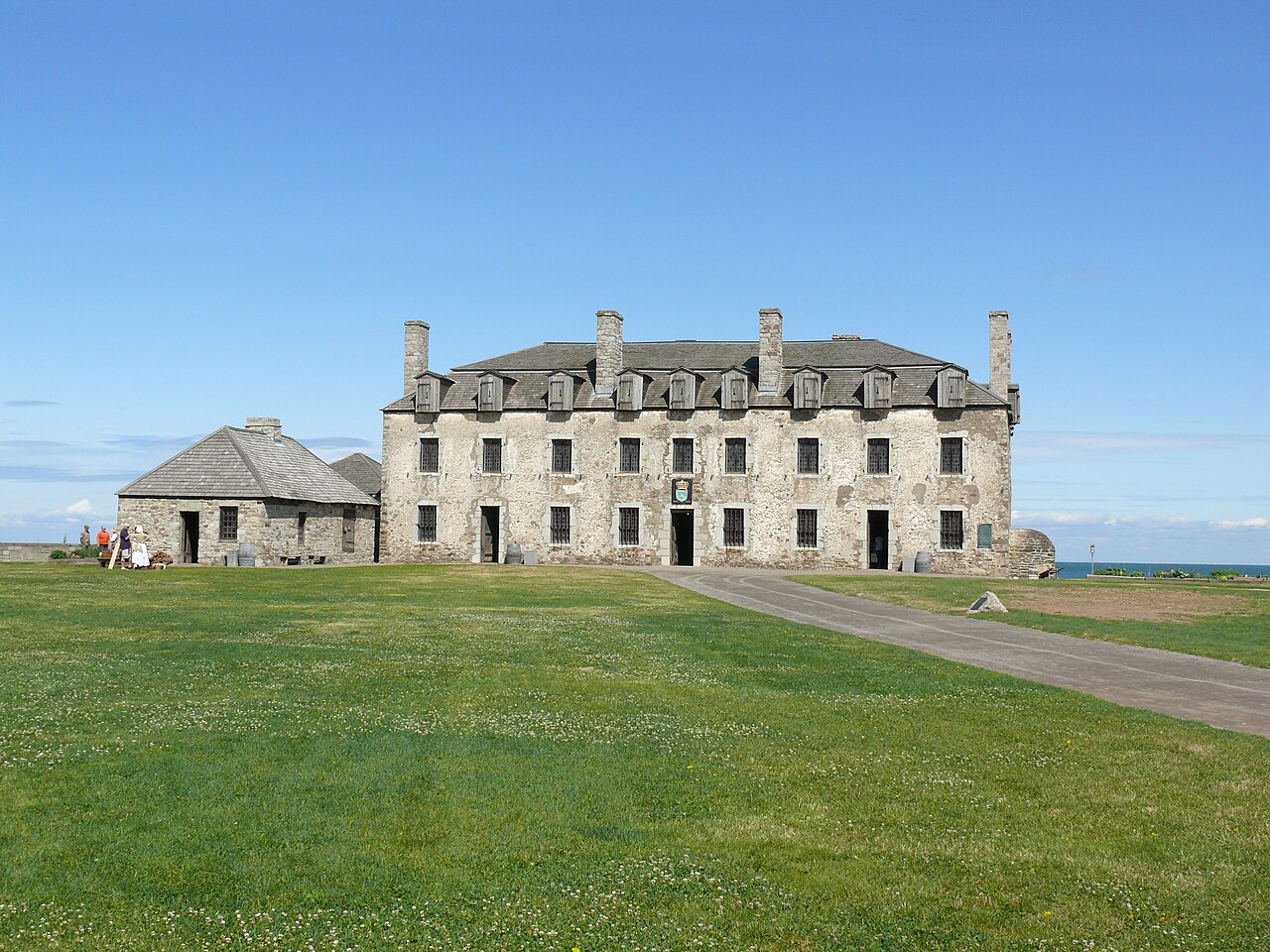
Fort Niagara, also known as Old Fort Niagara, is a fortification originally built by New France to protect its interests in North America, specifically control of access between the Niagara River and Lake Ontario, the easternmost of the Great Lakes. The fort is on the river's eastern bank at its mouth on Lake Ontario. Youngstown, New York, later developed nearby.
The British took over the fort in 1759 during the French and Indian War. Although the United States ostensibly was ceded the fort after it gained independence in the American Revolutionary War, the British stayed until 1796. Transfer to the U.S. came after signing of the Jay Treaty that reaffirmed and implemented the legal border with British Canada. Although the US Army deactivated the fort in 1963, the Coast Guard continues to have a presence. A non-profit group operates the fort and grounds as a state park and preserves it in part as a museum and site for historical re-enactments. It is also a venue for special events related to the region's history.
Text adapted from “Fort Niagara” on Wikipedia, CC BY-SA 4.0.
Fort Niagara ranks #1,274 of 9,079 worldwide in the atlas's castle fame ranking, and #21 of the 110 mapped in United States. Founded 1678, it is older than 23% of the atlas's dated landmarks — one of 721 atlas entries founded in the 17th century. Its Wikipedia articles were opened 8,670 times in the last 60 days, more than 92% of the atlas. 1 more atlas landmarks stand within 25 km. The nearest day-trip guide is Buffalo, 44 km away. See how United States compares in the castle statistics.
View on the interactive castle map →