 Greece · 11th century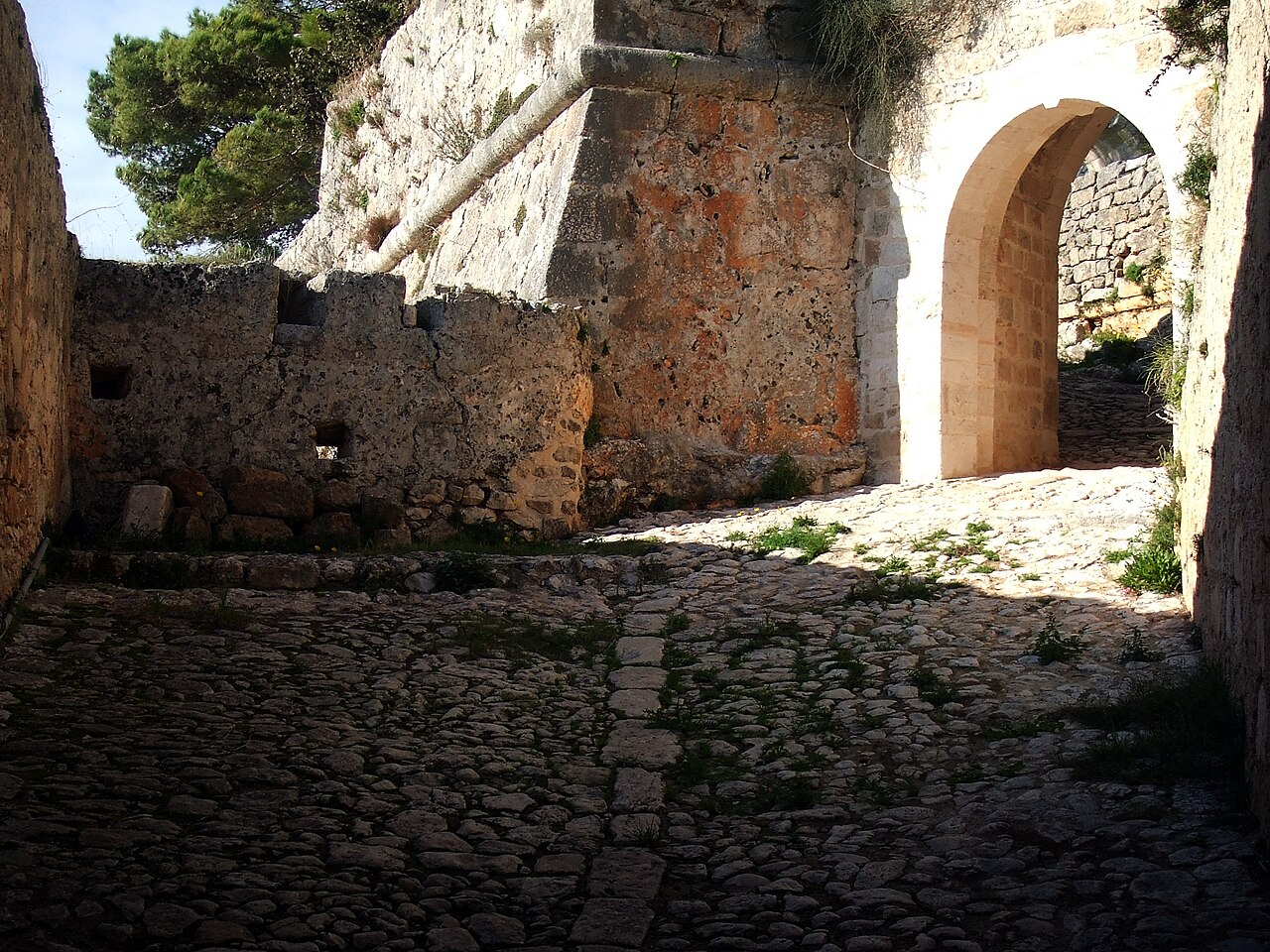
The Castle of Saint George (Greek: Κάστρο Αγίου Γεωργίου), Castle of Cephalonia (Κάστρο Κεφαλληνίας), or simply Kastro (Κάστρο, lit. 'fortress') was a fortified settlement that was the main town of the island of Cephalonia, Greece, from the Middle Ages until the 18th century. The site is currently located near Peratata.
The castle is located on a 320 metres (1,050 ft) tall limsestone hill in southwestern Cephalonia, just east of the modern village of Kastro and about 7 kilometres (4.3 mi) southeast of the modern capital of the island, Argostoli. The site is of strategic importance, dominating the southwestern parts of the island with the fertile valley of Livatho, as well as the Bay of Livadi, the island's main anchorage.
The castle is first attested in 1085, when it was unsuccessfully besieged by the Italo-Normans under Roger Borsa, during the invasion of the Byzantine Empire. The Normans suffered heavy losses due to malaria and even Roger's father, Robert Guiscard, died on the island during this time. In 1099 a raid by a Pisan fleet under Dagobert of Pisa, on its way to the Holy Land, is also recorded, but the castle was able to withstand their attacks. In 1125 or 1126, the castle was captured by a Venetian fleet, an event which forced Emperor John II Komnenos to reconfirm the privileges that had been granted to the Venetians in 1082.
The Venetians also took away the relics of Donatus of Euroea, which were deposed in the church of Santa Maria e San Donato in Murano. The Muslim geographer al-Idrisi visited the island and the castle town in the middle of the 12th century, and described both as flourishing.
The castle was named after Saint George, apparently due to a small church inside the original Byzantine castle, but is given the name for the first time in a document of 1264, and again in 1325, when John of Gravina campaigned on the island to claim possession of the county palatine of Cephalonia and Zakynthos. During the later 14th and early 15th century, the castle is attested as a residence of the Tocco family, rulers of the county palatine and of the Despotate of Epirus in the mainland. Under the Tocco, the castle was rebuilt and extended, to serve its new purpose as the seat of a feudal court. The castle and its settlement suffered heavy damage during an earthquake in 1469.
Text adapted from “Castle of Saint George, Cephalonia” on Wikipedia, CC BY-SA 4.0.
Fortress St. George ranks #5,080 of 9,035 worldwide in the atlas's castle fame ranking, and #69 of the 133 mapped in Greece. Founded 1085, it is older than 87% of the atlas's dated landmarks, one of 439 atlas entries founded in the 11th century. Its Wikipedia articles were opened 1,400 times in the last 60 days, more than 60% of the atlas. See how Greece compares in the castle statistics.
View on the interactive castle map →