 Germany · 13th century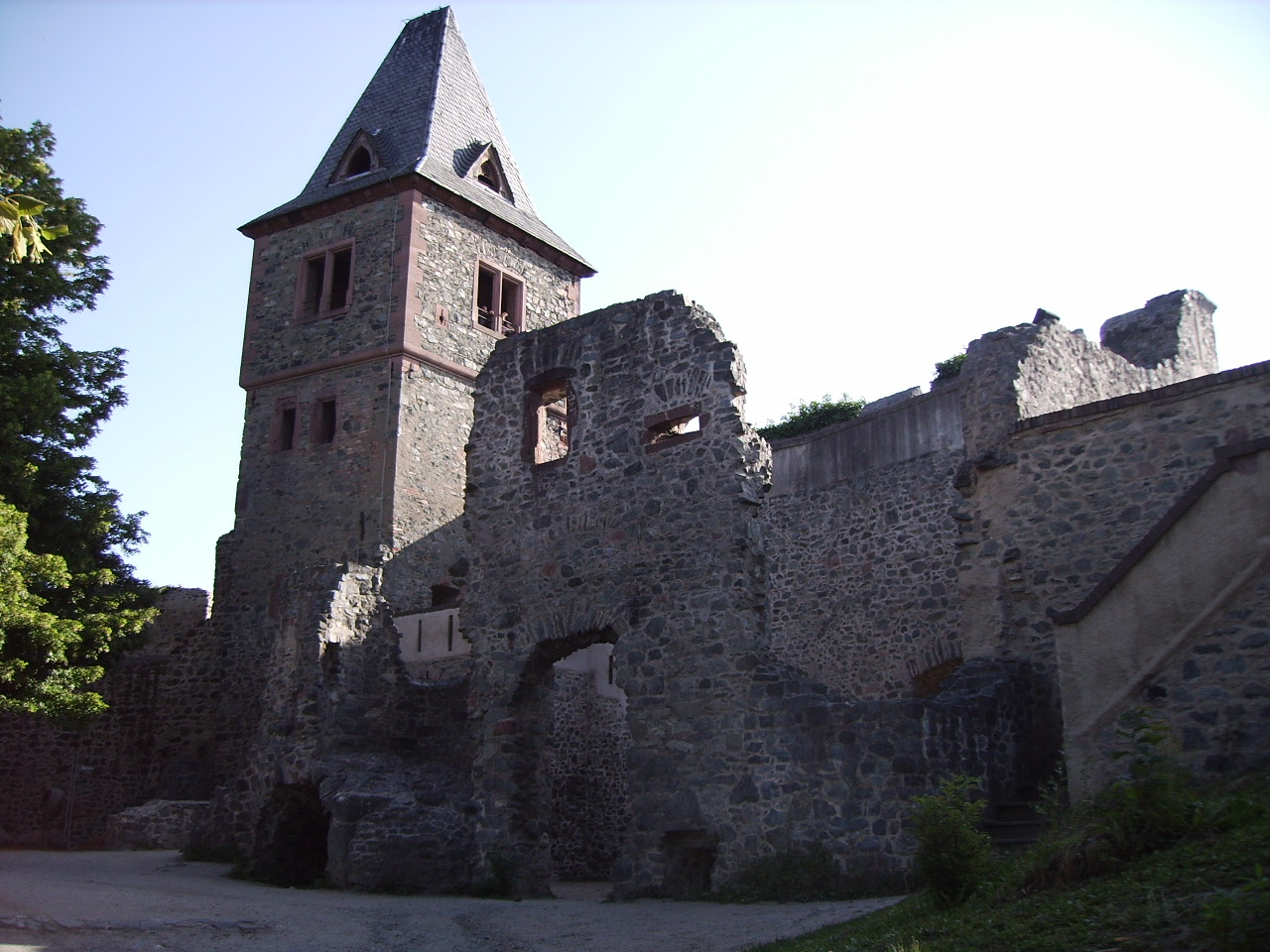
Frankenstein Castle (German: Burg Frankenstein) is a hilltop castle in the Odenwald overlooking the city of Darmstadt in Germany. This castle may have been an inspiration for Mary Shelley when she wrote her 1818 Gothic novel Frankenstein; or, The Modern Prometheus.
Frankenstein Castle is in southern Hesse, Germany, on the spurs of the Odenwald mountain range at an elevation of 370 m (1,210 ft) close to the southern outskirts of Darmstadt. It is one of many historic castles along the Hessian Bergstraße Route, also famous for its vineyards and its mild climate.
Frankenstein is a German name consisting of two words: The Franks are a Germanic tribe and "stein" is the German word for "stone". In the past, the word "stein" also meant "rock". It refers to the rock the castle sits on. The big tribe of the Franks were ruling this region. The word "stein" is common in names of landscapes, places and castles in Germany. Consequently, the term "Frankenstein" is a rather ordinary name for a castle in this region.
Before 1250, Lord Conrad II Reiz of Breuberg built Frankenstein Castle and thereafter named himself von und zu Frankenstein. The first document proving the existence of the castle in 1252 bears his name. He was the founder of the free imperial Barony of Frankenstein, which was subject only to the jurisdiction of the emperor, with possessions in Nieder-Beerbach, Darmstadt, Ockstadt, Wetterau and Hesse. Additionally the Frankensteins held other possession and sovereignty rights as burgraves in Zwingenberg (Auerbach (Bensheim)), in Darmstadt, Groß-Gerau, Frankfurt am Main and Bensheim. The hill on which the castle stands was probably occupied by another castle from the 11th century, which fell into ruins after Frankenstein Castle was built a short distance away to the northwest. Claims of an even older predecessor upon the hill are widespread, but historically unlikely.
In 1292, the Frankensteins opened the castle to the counts of Katzenelnbogen (County of Katzenelnbogen) and formed an alliance with them.
In 1363, the castle was split into two parts and owned by two different families of the lords and knights of Frankenstein. At the beginning of the 15th century, the castle was enlarged and modernized. The Frankenstein knights became, again, independent of the counts of Katzenelnbogen.
Text adapted from “Frankenstein Castle” on Wikipedia, CC BY-SA 4.0.
Frankenstein Castle ranks #548 of 9,079 worldwide in the atlas's castle fame ranking, and #45 of the 711 mapped in Germany. Founded 1252, it is older than 67% of the atlas's dated landmarks — one of 1080 atlas entries founded in the 13th century. Its Wikipedia articles were opened 14,237 times in the last 60 days, more than 96% of the atlas. 8 more atlas landmarks stand within 25 km. The nearest day-trip guide is Frankfurt, 35 km away. See how Germany compares in the castle statistics.
View on the interactive castle map →