 Norway · 17th century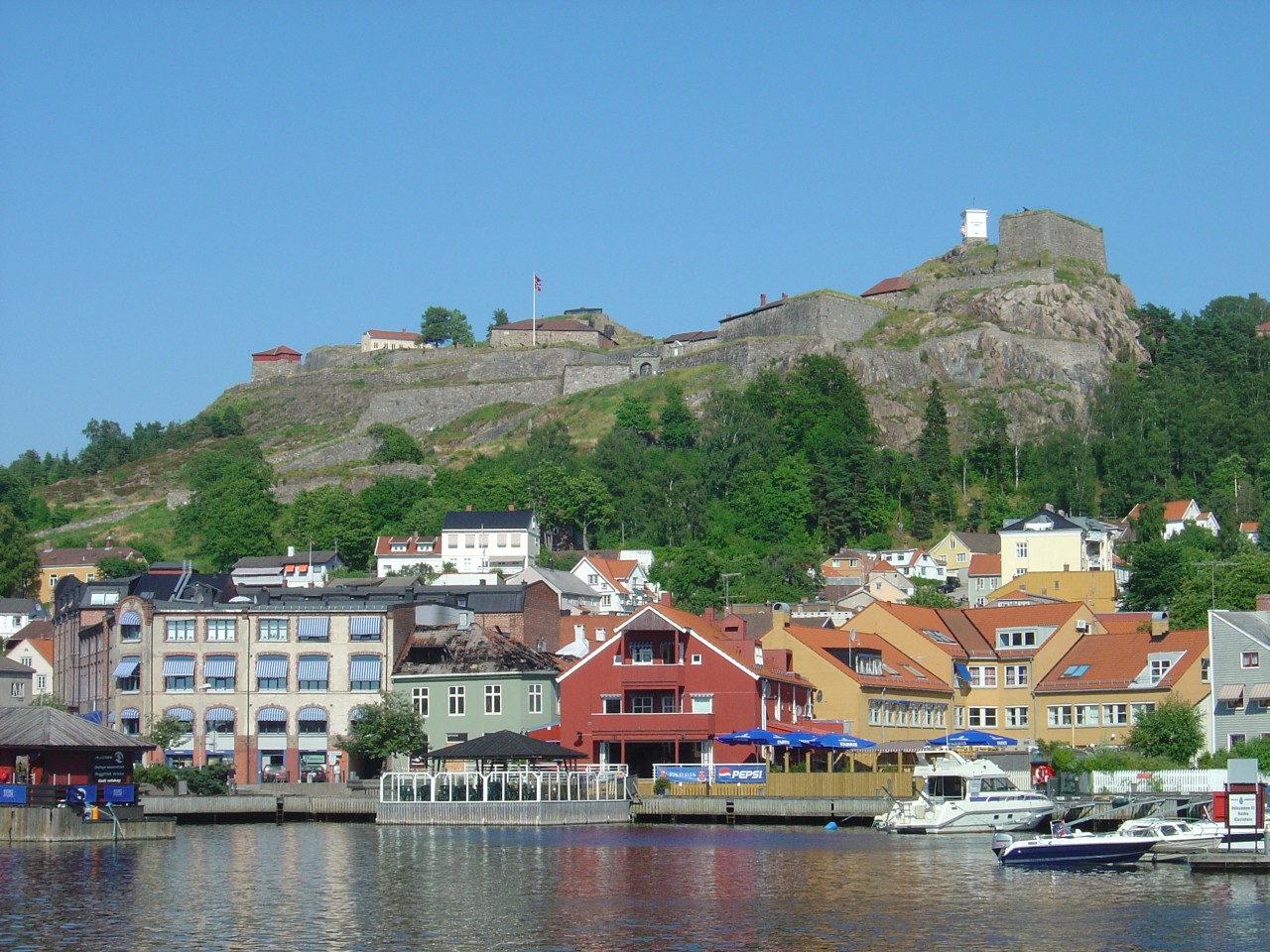
Fredriksten is a fortress in the city of Halden in Halden Municipality, Østfold county, Norway.
This Fortresses was constructed by Denmark-Norway in the 17th century as a replacement for the border fortress at Bohus, which had been lost when the province of Bohuslän was ceded to Sweden by the terms of the Treaty of Roskilde in 1658. The fortress was named after King Fredrik III of Denmark and Norway, and the town of Halden was also originally named after him, having been known as Fredrikshald between 1665 and 1928.
At the close of the Northern War King Charles X Gustav of Sweden, having negotiated the Treaty of Roskilde in bad faith, invested Copenhagen in August 1658. Under his orders, in September the new Swedish governor of Bohuslän invaded Norway with 1,500 men and attempted to invade Halden. The inhabitants put up a vigorous defense and the Swedish forces retreated back to Bohuslän.
Five months later in February 1659 the Swedes again attacked. Since their first attack, the garrison had been strengthened. Under the leadership of Tønne Huitfeldt the Norwegian forces again repulsed the Swedish forces. Concurrently, Huitfeldt began construction of fortifications. Cretzenstein, later to be renamed Fredriksten, was the citadel of the new fortification system.
In early January 1660, the Swedish forces attacked Halden for the third time; it was to serve as the base for their advance on Akershus fortress in Christiania. Huitfeldt responded to their demand that they surrender, that the 2,100 man garrison would defend Halden to the last man. After the attempt to storm the fortifications was unsuccessful, the Swedes prepared a regular siege. Under heavy bombardment the inhabitants requested the commandant to surrender, but putting his faith in his garrison, Huitfeldt held out. On 22 February 1660 the Swedes again were forced to retreat to Bohuslän. There they learned that Charles X Gustav had died.
Peace negotiations were reopened. Sweden demanded that Norway vacate all land east of the river Glomma, which was to serve as the new border. With the intercession of Hannibal Sehested, a separate Scandinavian treaty was negotiated, the Treaty of Copenhagen (1660), which improved on the terms of the Treaty of Roskilde, returning Trøndelag to Norwegian control.
The existing star shaped fortress complex was upgraded during the period of peace between 1661–1675.
Text adapted from “Fredriksten” on Wikipedia, CC BY-SA 4.0.
Fredriksten ranks #956 of 9,079 worldwide in the atlas's castle fame ranking, and #5 of the 26 mapped in Norway. Founded c. 1660, it is older than 25% of the atlas's dated landmarks — one of 721 atlas entries founded in the 17th century. Its Wikipedia articles were opened 5,814 times in the last 60 days, more than 88% of the atlas. The nearest day-trip guide is Oslo, 96 km away. See how Norway compares in the castle statistics.
View on the interactive castle map →