 South Korea · 17th century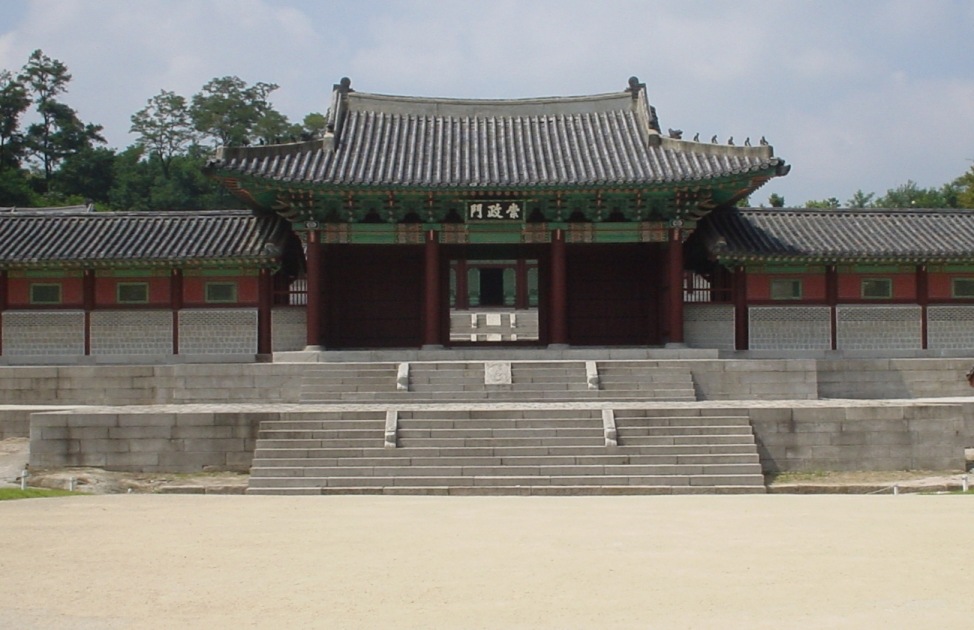
Gyeonghuigung (Korean: 경희궁; Hanja: 慶熙宮, lit. 'Palace of Serene Harmony') is a palace located in Seoul, South Korea. It was one of the "Five Grand Palaces" built by the Joseon Dynasty.
The land where Gyeonghuigung stood was originally the site of the house of Prince Jeongwon, who was the father of King Injo. Construction began in the 1600s during the reign of King Gwanghaegun and was completed in 1617. The name of the palace was originally Gyeongdeokgung (경덕궁; 慶德宮), but it was later changed to avoid naming it similar to the posthumous name of Prince Jeongwon. In the latter Joseon period, Gyeonghuigung served as the secondary palace (which was called igung (離宮) in those times) for the king, and as it was situated on the west side of Seoul, it was also called Seo-gwol (西闕, a palace of the west). The secondary palace was usually the palace where the King moves to in times of emergency.
From King Injo to King Cheoljong, about ten kings of Joseon dynasty stayed here at Gyeonghuigung. For a time, it was of a considerable size that contained 100 buildings. For the king's royal audience, there were the Sungjeongjeon and Jajeongjeon buildings, and for sleeping, Yungbokjeon (융복전; 隆福殿) and Hoesangjeon (회상전; 會祥殿) buildings. The palace also used to have an arched bridge that connected it with Deoksugung called Honggyo (홍교; 虹橋).
Most of Gyeonghuigung was lost in the 19th century, first due to a fire that broke out during the reigns of King Sunjo, although the palace was rebuilt later, Heungseon Daewongun dismantled large part of the palace for construction materials to rebuild Gyeongbokgung. The Japanese dismantled what remained of the palace during their occupation of the Korean peninsula, and the Keijo Middle School was built on the site for Japanese citizens, which later became Seoul High School. Two major structures of the former palace — the Sungjeongjeon throne hall and the Heunghwamun gate — were disassembled and moved to other parts of Seoul. Reconstruction started after Seoul High School moved out from the site in 1980, also as part of the South Korean government's initiative to rebuild the "Five Grand Palaces" that were heavily destroyed by the Japanese.
Heunghwamun (흥화문; 興化門) is the main entrance door to the palace.
Text adapted from “Gyeonghuigung” on Wikipedia, CC BY-SA 4.0.
Gyeonghuigung ranks #955 of 9,079 worldwide in the atlas's castle fame ranking, and #7 of the 57 mapped in South Korea. Founded 1617, it is older than 30% of the atlas's dated landmarks — one of 721 atlas entries founded in the 17th century. Its Wikipedia articles were opened 3,801 times in the last 60 days, more than 82% of the atlas. 14 more atlas landmarks stand within 25 km. The nearest day-trip guide is Seoul, 2 km away. See how South Korea compares in the castle statistics.
View on the interactive castle map →