Castle
Karlštejn Castle
 Czech Republic · 14th century
- Founded
- 1348
- Style
- Gothic architecture
- Architect
- Matthias of Arras, Josef Mocker
- Heritage status
- Tentative World Heritage Site · cultural monument of the Czech Republic
- Location
- Karlštejn
- Elevation
- 298 m
- Visitors
- ≈160,000 (2022)
- Coordinates
- 49.93955°, 14.18793°
- Open data
- Wikidata Q266698
- Links
- Wikimedia Commons · Plan

Description
Karlštejn Castle (Czech: hrad Karlštejn; German: Burg Karlstein) is a large Gothic castle in Czechia, founded in 1348 by King Charles IV. It served as a place for safekeeping the Imperial Regalia as well as the Bohemian crown jewels, holy relics, and other royal treasures. Karlštejn is among the most famous and most frequently visited castles in the country.
Karlštejn Castle is located in the market town of Karlštejn, in the Central Bohemian Region. It is situated on a hill overlooking the Berounka river and the market town proper, roughly 30 km (19 mi) southwest of the capital city of Prague.
Karlštejn is one of the most popular castles in Czechia. As of 2019, it was the fifth most-visited castle, receiving more than 200,000 visitors.
Founded in 1348, the construction of Karlštejn Castle was directed by the later Karlštejn burgrave Vitus of Bítov, but there are no records of the builder himself. Some historians have speculated that Matthias of Arras may be credited with being the architect, but he died in 1352. Holy Roman Emperor Charles IV personally supervised the construction works and interior decoration. The project was finished nearly twenty years later, in 1365, when the "heart" of the treasury—the Chapel of the Holy Cross, situated in the great tower—was consecrated.
Following the outbreak of the Hussite Wars, the Imperial Regalia of the Holy Roman Empire were evacuated in 1421 and brought via Hungary to Nuremberg. In 1422, during the siege of the castle, Hussite attackers used biological warfare when Prince Sigismund Korybut employed catapults to throw dead (but not plague-infected) bodies and 2,000 carriage-loads of dung over the walls, apparently managing to spread infection among the defenders.
Later, the Bohemian crown jewels were moved back to the castle and kept there for almost two centuries. The castle underwent several reconstructions: in late Gothic style after 1480 and in Renaissance style in the last quarter of the 16th century. In 1487, the great tower was damaged by fire, and during the 16th century, there were several adaptations. During the Thirty Years' War in 1619, the coronation jewels and the archive were brought to Prague, and in 1620, the castle was turned over to Ferdinand II, Holy Roman Emperor. After having been conquered in 1648 by Swedes, it fell into disrepair.
Text adapted from “Karlštejn” on Wikipedia, CC BY-SA 4.0.
In the rankings
Karlštejn Castle ranks #139 of 9,902 worldwide in the atlas's castle fame ranking, and #3 of the 257 mapped in Czech Republic. Founded 1348, it is older than 58% of the atlas's dated landmarks, one of 797 atlas entries founded in the 14th century. Its Wikipedia articles were opened 18,321 times in the last 60 days, more than 97% of the atlas. Wikidata records about 160,000 visitors in 2022. 23 more atlas landmarks stand within 25 km. The nearest day-trip guide is Prague, 23 km away. It is one of the 201 landmarks on the atlas's regional map of Bohemia. It is stop 19 of 28 on the Bohemian castle route, Prague to Český Krumlov. See how Czech Republic compares in the castle statistics.
Castles nearby
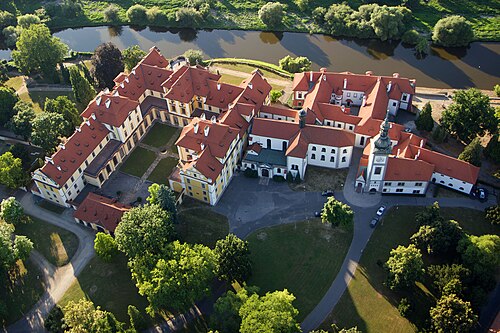
- Zbraslav Monastery15 km · Czech Republic
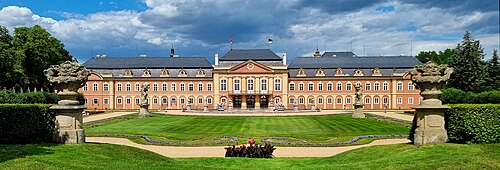
- Dobříš Castle18 km · Czech Republic
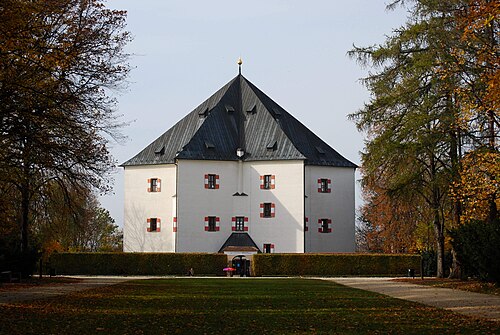
- Letohrádek Hvězda19 km · Czech Republic
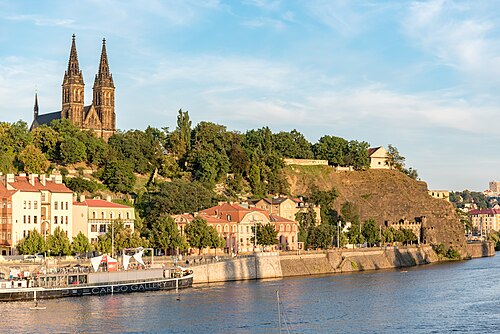
- Vyšehrad22 km · Czech Republic
More castles in the Czech Republic
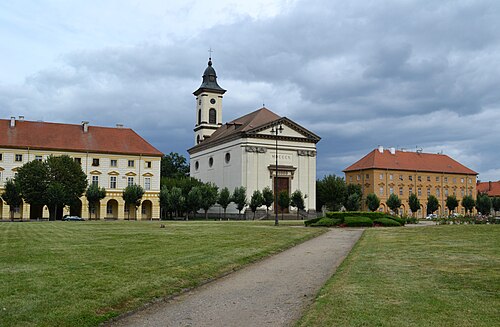
- TerezínCzech Republic · 18th century
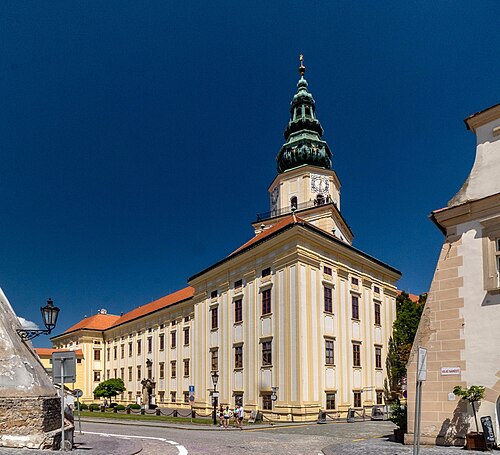
- Kroměříž CastleCzech Republic · 15th century
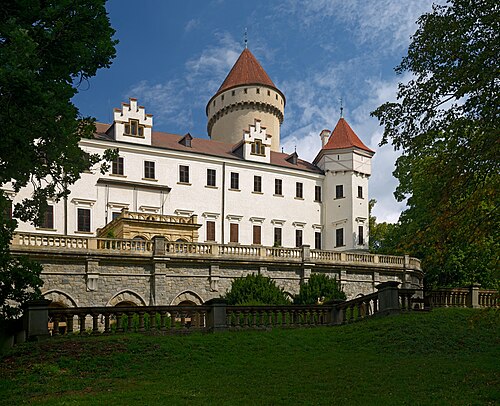
- Konopiště CastleCzech Republic · 13th century
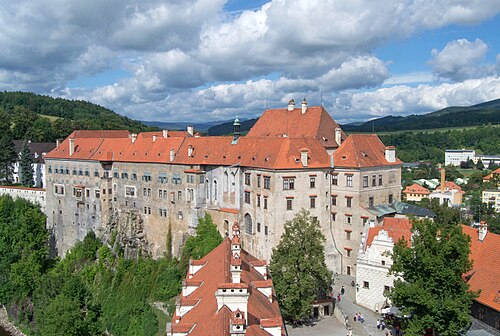
- Český Krumlov CastleCzech Republic · 13th century