 England · 12th century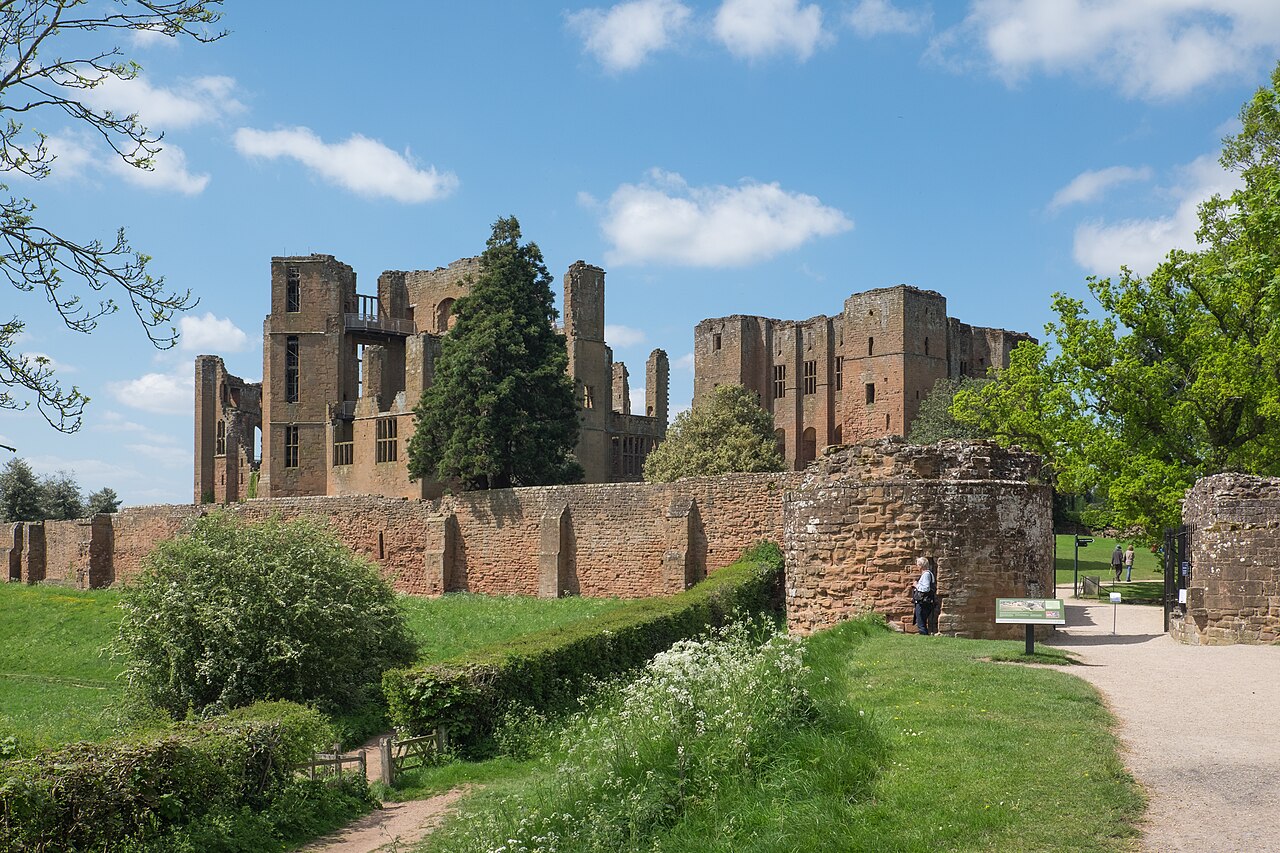
Kenilworth Castle is a castle in the town of Kenilworth in Warwickshire, England, managed by English Heritage; much of it is in ruins. The castle was founded after the Norman Conquest of 1066; with development through to the Tudor period. It has been described by the architectural historian Anthony Emery as "the finest surviving example of a semi-royal palace of the later Middle Ages, significant for its scale, form and quality of workmanship".
Kenilworth played an important historical role: it was the subject of the six-month-long siege of Kenilworth in 1266, thought to be the longest siege in medieval English history, and formed a base for Lancastrian operations in the Wars of the Roses. Kenilworth was the scene of the removal of Edward II from the English throne, the perceived French insult to Henry V in 1414 of a gift of tennis balls (said by John Strecche to have prompted the campaign that led to the Battle of Agincourt), and the Earl of Leicester's lavish reception of Elizabeth I in 1575. It has been described as "one of two major castles [with Caerphilly Castle] in Britain which may be classified as water-castles or lake-fortresses...".
The castle was built over several centuries. Founded in the 1120s around a powerful Norman great tower, the castle was significantly enlarged by King John at the beginning of the 13th century. Huge water defences were created by damming the local streams, and the resulting fortifications proved able to withstand assaults by land and water in 1266. John of Gaunt spent lavishly in the late 14th century, turning the medieval castle into a palace fortress designed in the latest perpendicular style. The Earl of Leicester then expanded the castle during his tenure in the 16th century, constructing new Tudor buildings and exploiting the medieval heritage of Kenilworth to produce a fashionable Renaissance palace.
Text adapted from “Kenilworth Castle” on Wikipedia, CC BY-SA 4.0.
Kenilworth Castle ranks #422 of 9,079 worldwide in the atlas's castle fame ranking, and #34 of the 360 mapped in England. Founded 1122, it is older than 84% of the atlas's dated landmarks — one of 756 atlas entries founded in the 12th century. Its Wikipedia articles were opened 12,866 times in the last 60 days, more than 95% of the atlas. 3 more atlas landmarks stand within 25 km. The nearest day-trip guide is Birmingham, 26 km away. See how England compares in the castle statistics.
View on the interactive castle map →