 England · 14th century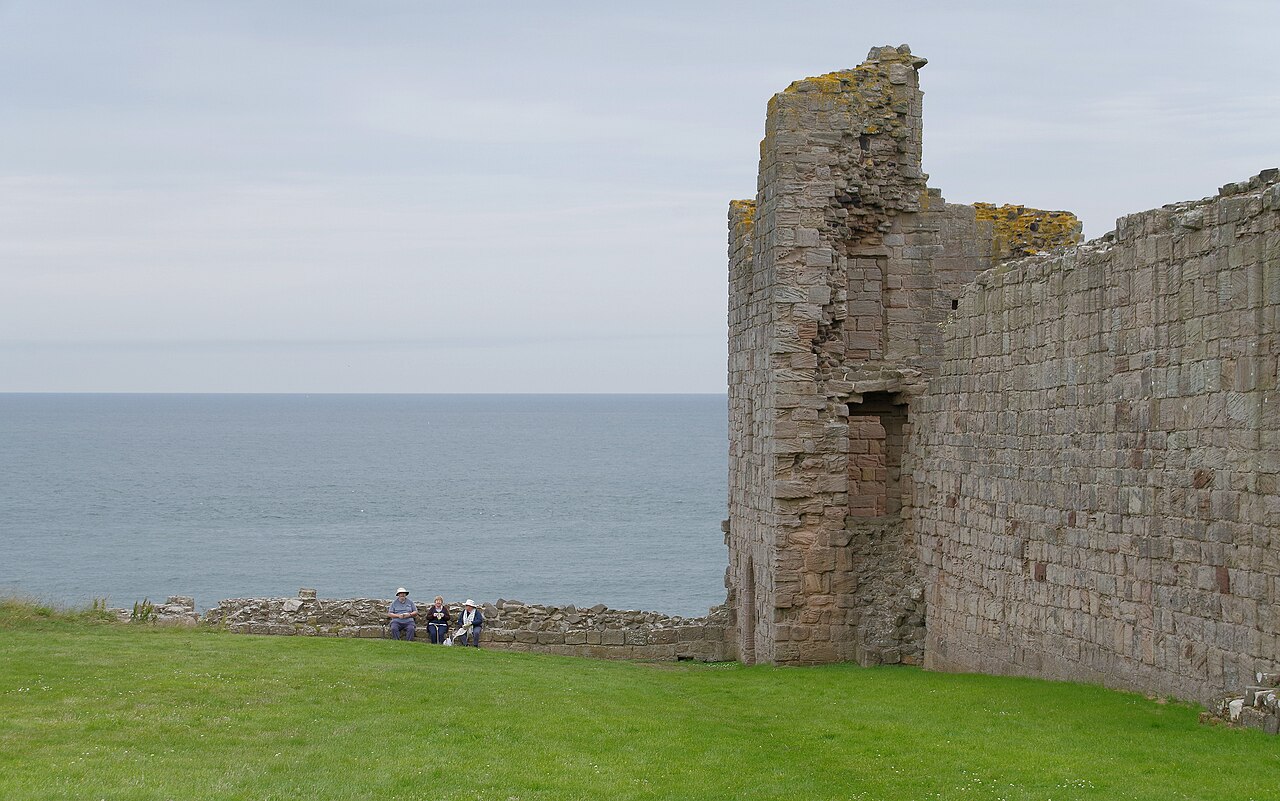
Dunstanburgh Castle is a 14th-century fortification on the coast of Northumberland in northern England, between the villages of Craster and Embleton. The castle was built by Thomas, 2nd Earl of Lancaster between 1313 and 1322, taking advantage of the site's natural defences and the existing earthworks of an Iron Age fort. Thomas was a leader of a baronial faction opposed to King Edward II, and probably intended Dunstanburgh to act as a secure refuge, should the political situation in southern England deteriorate. The castle also served as a statement of the Earl's wealth and influence and would have invited comparisons with the neighbouring royal castle of Bamburgh.
Thomas probably only visited his new castle once, before being captured at the Battle of Boroughbridge in 1322 as he attempted to flee royal forces for the safety of Dunstanburgh. Thomas was executed, and the castle became the property of the Crown before passing into the Duchy of Lancaster.
Dunstanburgh's defences were expanded in the 1380s by John of Gaunt, 1st Duke of Lancaster, in the light of the threat from Scotland and the peasant uprisings of 1381. The castle was maintained in the 15th century by the Crown, and formed a strategic northern stronghold in the region during the Wars of the Roses, changing hands between the rival Lancastrian and Yorkist factions several times. The fortress never recovered from the sieges of these campaigns, and by the 16th century the Warden of the Scottish Marches described it as having fallen into "wonderfull great decaye". As the Scottish border became more stable, the military utility of the castle steadily diminished, and King James I finally sold the property off into private ownership in 1604.
Text adapted from “Dunstanburgh Castle” on Wikipedia, CC BY-SA 4.0.
Dunstanburgh Castle ranks #794 of 9,079 worldwide in the atlas's castle fame ranking, and #57 of the 360 mapped in England. Founded 1313, it is older than 60% of the atlas's dated landmarks — one of 755 atlas entries founded in the 14th century. Its Wikipedia articles were opened 5,144 times in the last 60 days, more than 87% of the atlas. 6 more atlas landmarks stand within 25 km. The nearest day-trip guide is Newcastle upon Tyne, 57 km away. It is one of the 19 landmarks on the atlas's regional map of Northumberland. It is stop 13 of 18 on the Northumberland castle coast, Newcastle upon Tyne to Berwick-upon-Tweed. See how England compares in the castle statistics.
View on the interactive castle map →