 Slovakia · 14th century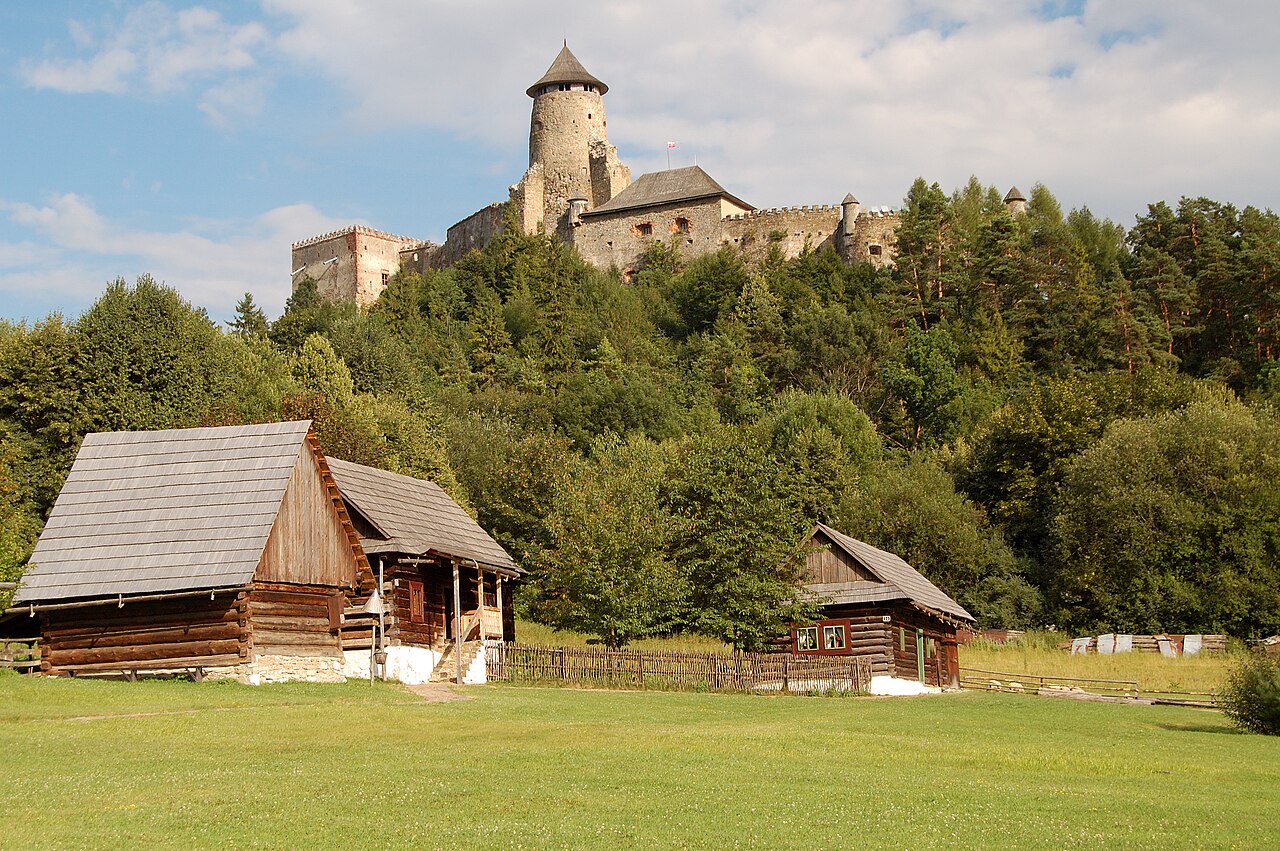
Ľubovňa Castle (Slovak: Ľubovniansky hrad, Hungarian: Lubló vára, Polish: Zamek Lubowelski) is a medieval castle located in the city of Stará Ľubovňa in Slovakia. The castle was built in the late 13th century, when the territory belonged to the Kingdom of Hungary. The first written mention dates back to the year 1311. In 1412, King Sigismund of Hungary and King Władysław Jagiellon of Poland met at the castle and signed a pact of friendship and peace.
The castle is now partly a ruin and partly rebuilt. The preserved rooms house a museum. The castle chapel houses a permanent exhibition of copies of the Polish crown jewels, the originals of which were kept there during the Swedish Deluge. Below the castle is the Museum of Folk Architecture of the Spiš Region, which is an open-air museum. Within the conserved section of the castle lies a museum that features a historical exhibition, a display of period furniture and weaponry. The castle houses an exhibition room that hosts seasonal exhibitions. Some rooms retain barrel and Prussian vaults, while an underground torture chamber has also been preserved.
Text adapted from “Ľubovňa Castle” on Wikipedia, CC BY-SA 4.0.
Ľubovňa Castle ranks #1,262 of 9,079 worldwide in the atlas's castle fame ranking, and #14 of the 136 mapped in Slovakia. Founded c. 1400, it is older than 50% of the atlas's dated landmarks — one of 755 atlas entries founded in the 14th century. Its Wikipedia articles were opened 3,828 times in the last 60 days, more than 82% of the atlas. 7 more atlas landmarks stand within 25 km. The nearest day-trip guide is Nowy Sącz, 34 km away. See how Slovakia compares in the castle statistics.
View on the interactive castle map →