 Japan · 14th century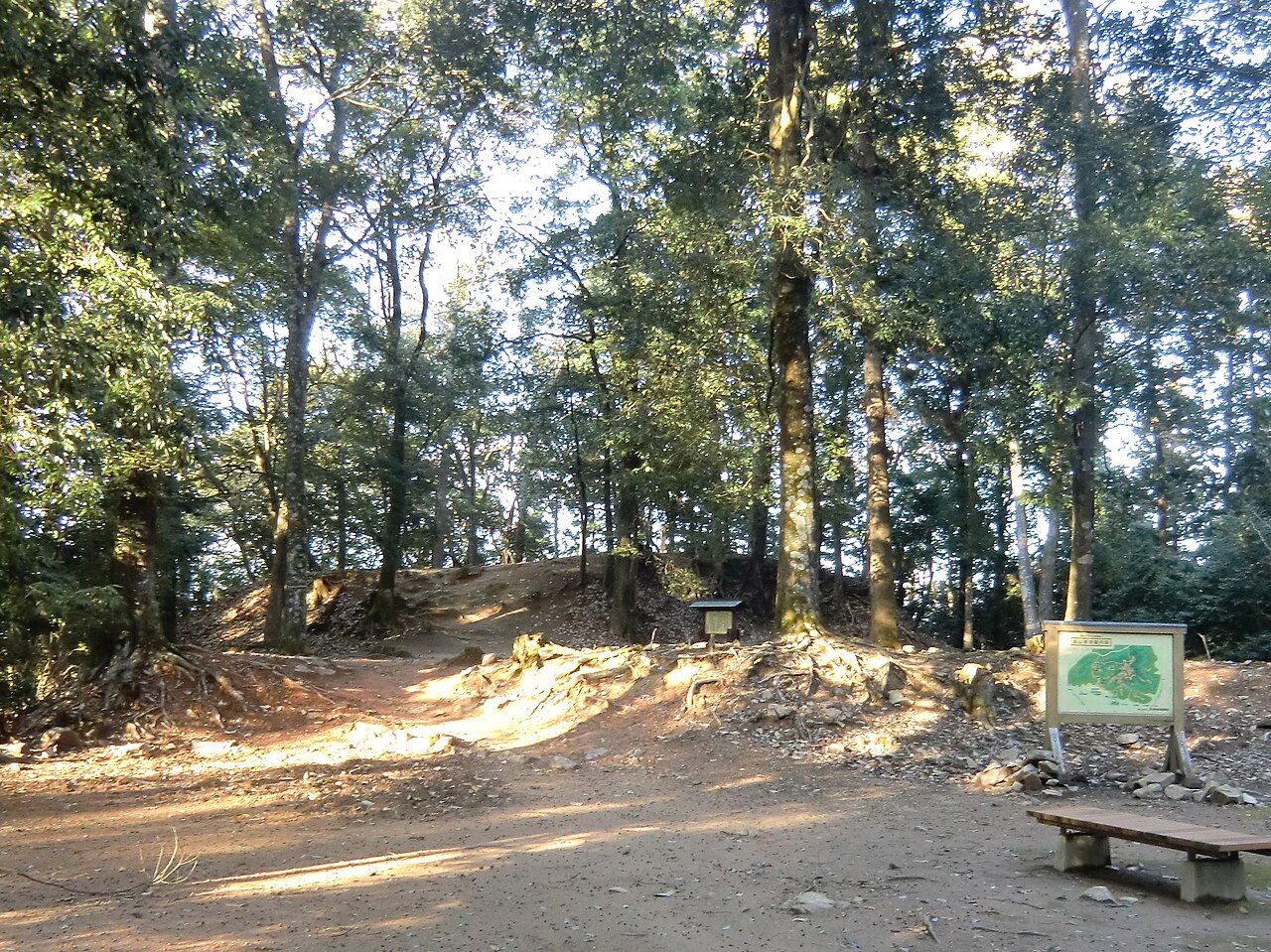
Yoshida-Kōriyama Castle (吉田郡山城, Yoshida-Kōriyama-jō) was a Japanese castle located in Akitakata, Hiroshima Prefecture. It was also called Aki-Kōriyama Castle (安芸郡山城, Aki-Kōriyama-jō) from its location in former Aki Province. Its ruins have been protected by the central government as a National Historic Site since 1940.
Yoshida-Kōriyama Castle is located in the Yoshida basin in northern Hiroshima prefecture, surrounded by the Chugoku Mountains. The basin has two large rivers; the Gonokawa which flows north to the Sea of Japan and the Otagawa, which flows south to the Seto Inland Sea. The castle was initially built as a small fortification in the 14th century, by the Mōri clan, which descended from Ōe no Hiromoto, an important retainer of the Kamakura shogunate. His fourth son, Mōri Suemitsu controlled a shōen landed estate in Aki Province, and through the Muromachi period, his descendants gradually became leader of an alliance of jizamurai local lords in eastern Aki and western Bingo Province.
At the time, Aki was a highly contested border area between the powerful Ouchi clan based in Suo Province and the Yamana clan, who were allied with the Muromachi shogunate. After the Yamana clan was destroyed in the struggles of the Onin War (1467-1477), the Izumo-based Amago clan rose to challenge the Ouchi clan, and the Mōri clan changed allegiance multiple times between these two powerful neighbors in order to survive. Under Mōri Motonari, Yoshida-Kōriyama Castle was greatly expanded to become the main stronghold of the clan. Mōri Motonari chose to ally with the Ouchi and in response to this, in September 1540, the Amago besieged the castle at the Siege of Yoshida-Kōriyama Castle, but the Mōri defeated them with Ouchi assistance in January 1541.
Mōri Motonari first defeated the Amago with the help of the Ouchi, and then defeated the Ouchi after they were weakened by internal conflict. The Mōri became more influential, and extended its holdings to cover most of the Chugoku region. Yoshida-Kōriyama Castle was repaired, rebuilt and expanded in size to cover most of the mountain. It became quite advanced for a mountaintop castle (yamashiro), with complex inner and outer stone walls, a quadrangle and a stone-walled fort. Mōri Motonari had three sons.
Text adapted from “Yoshida-Kōriyama Castle” on Wikipedia, CC BY-SA 4.0.
Yoshida-Kōriyama Castle ranks #1,646 of 9,035 worldwide in the atlas's castle fame ranking, and #98 of the 295 mapped in Japan. Founded 1336, it is older than 58% of the atlas's dated landmarks, one of 757 atlas entries founded in the 14th century. Its Wikipedia articles were opened 5,305 times in the last 60 days, more than 87% of the atlas. See how Japan compares in the castle statistics.
View on the interactive castle map →