 France · 12th century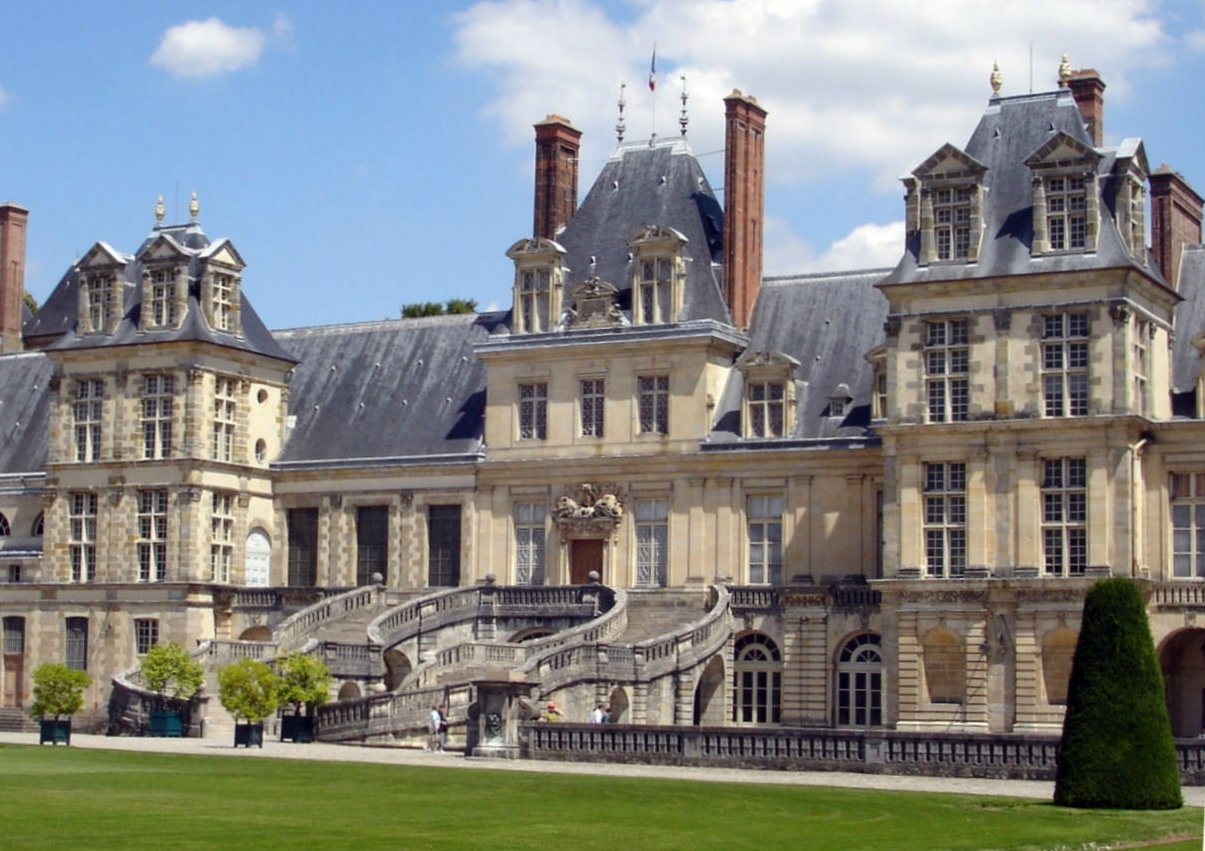
Palace of Fontainebleau ( FON-tin-bloh, US also -bloo; French: Château de Fontainebleau [ʃɑto d(ə) fɔ̃tɛnblo]), located 55 kilometers (34 miles) southeast of the center of Paris, in the commune of Fontainebleau, is one of the largest French royal châteaux. It served as a hunting lodge and autumn residence for many of the French monarchs, including Louis VII, Francis I, Henry II, Louis-Philippe, Napoleon I, and Napoleon III. Though the monarchs only resided there for a few months of the year, they gradually transformed it into a genuine palace, filled with art and decoration. It became a national museum in 1927 and was designated a UNESCO World Heritage Site in 1981 for its unique architecture and historical importance.
Text adapted from “Palace of Fontainebleau” on Wikipedia, CC BY-SA 4.0.
Palace of Fontainebleau ranks #32 of 9,079 worldwide in the atlas's castle fame ranking, and #5 of the 793 mapped in France. Founded c. 1150, it is older than 80% of the atlas's dated landmarks — one of 756 atlas entries founded in the 12th century. Its Wikipedia articles were opened 60,890 times in the last 60 days, more than 99% of the atlas. 5 more atlas landmarks stand within 25 km. The nearest day-trip guide is Paris, 57 km away. See how France compares in the castle statistics.
View on the interactive castle map →