 Italy · 18th century
Palazzo Doria d'Angri ranks #3,169 of 9,040 worldwide in the atlas's castle fame ranking, and #246 of the 555 mapped in Italy. Founded 1778, it is older than 13% of the atlas's dated landmarks, one of 685 atlas entries founded in the 18th century. Its Wikipedia articles were opened 1,208 times in the last 60 days, more than 56% of the atlas. 24 more atlas landmarks stand within 25 km. The nearest day-trip guide is Naples, 1 km away. See how Italy compares in the castle statistics.
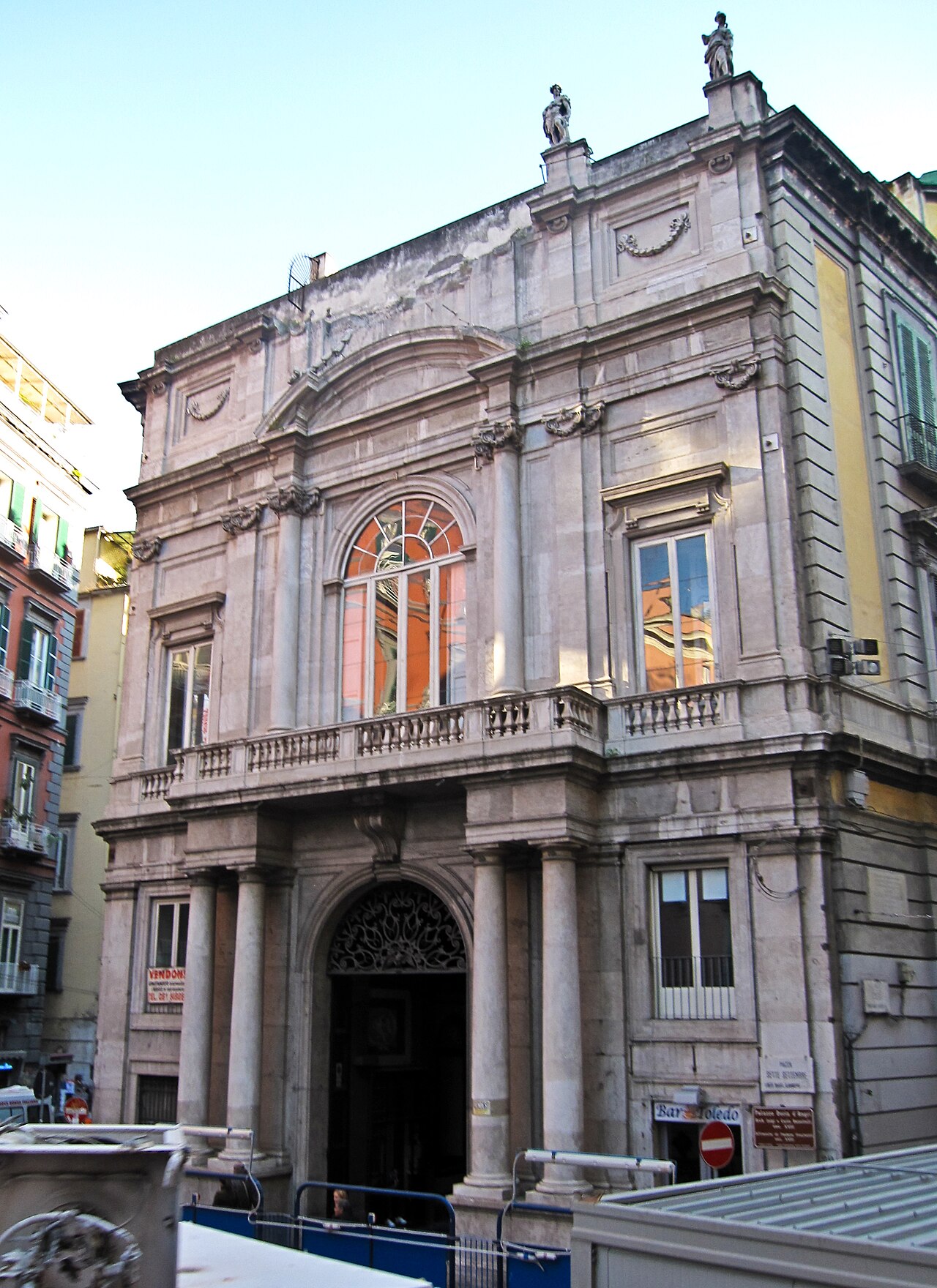
The Palazzo Doria d’Angri is an historic palace and monument in Naples in southern Italy located in Piazza 7 Settembre in the corner with the busy Via Toledo and Via Monteoliveto.
The building was commissioned by Prince Marcantonio Doria on the site of two previous houses of the 1500s. In 1760 the prince died, and the implementation of the Family Palace passed to his son Giovanni Carlo who entrusted the architect and engineer Luigi Vanvitelli.
After the death of Vanvitelli, in 1773, the plans passed first to Ferdinando Fuga, then to Mario Gioffredo, and lastly to Carlo Vanvitelli, son of Luigi.
In 1860 the palace became famous because on 7 September from the main balcony Giuseppe Garibaldi announced the annexation of the Kingdom of the Two Sicilies into the Kingdom of Italy.
In 1940 the collection of Marcantonio Doria kept in the palace, which included also a Rubens' painting and Caravaggio's "Martirio di Sant'Orsola" (thought to be his last painting), was sold at auction. During World War II the building suffered some damage, especially on the top side of the façade, losing six of the eight sculptures which beautified the upper edge and the noble crest of the Doria's Family located above the main window of the façade.
Text adapted from “Palazzo Doria d'Angri” on Wikipedia, CC BY-SA 4.0.
View on the interactive castle map →