 England · 1st century BC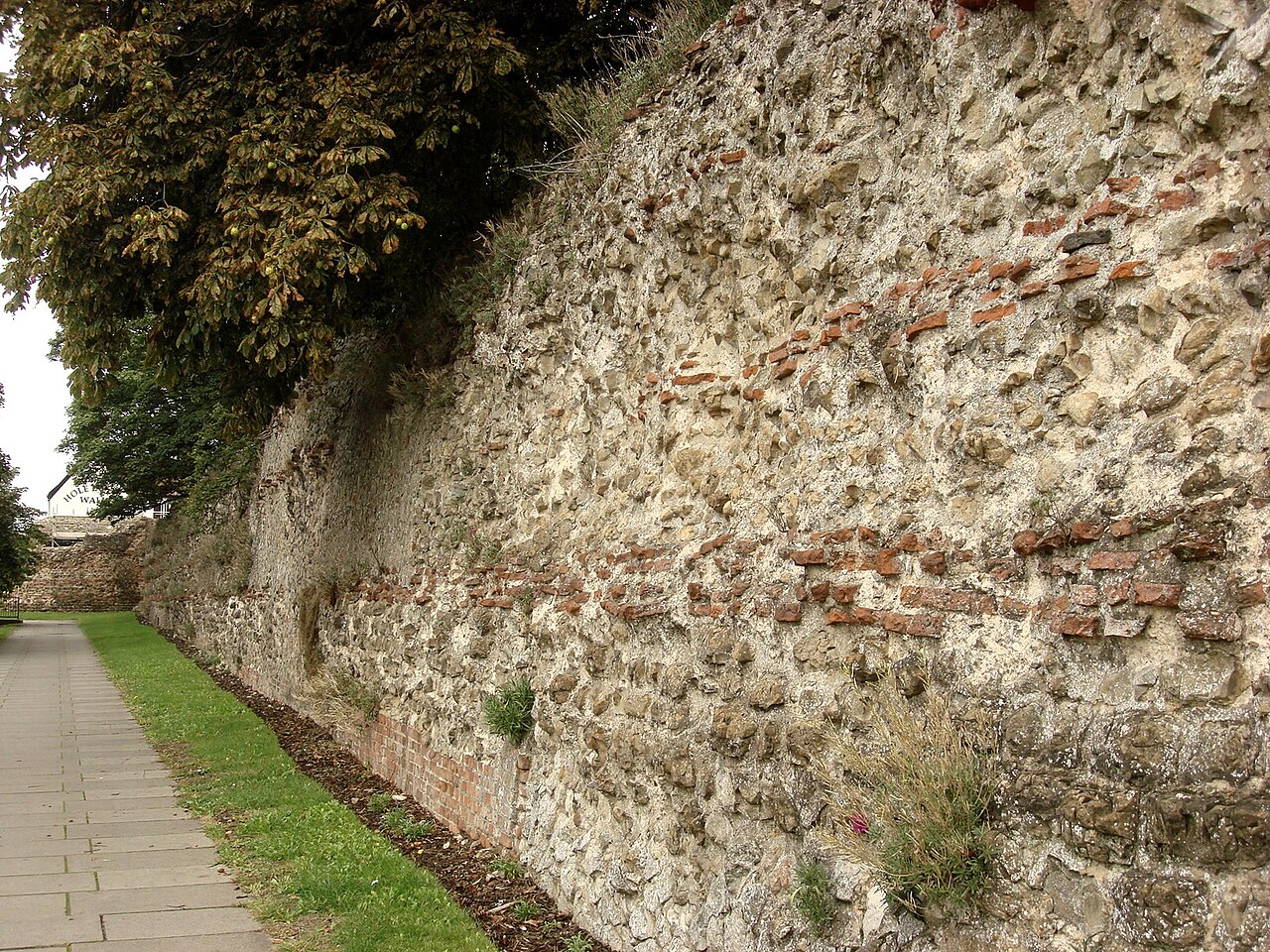
Camulodunum ( KAM-(y)uu-loh-DEW-nəm; Latin: camvlodvnvm), the Ancient Roman name for what is now Colchester in Essex, was an important castrum and city in Roman Britain, and the first capital of the province. A temporary "strapline" in the 1960s identifying it as the "oldest recorded town in Britain" has become popular with residents and is still used on heritage roadsigns on trunk road approaches. Originally the site of the Brythonic-Celtic oppidum of Camulodunon (meaning "stronghold of Camulos"), capital of the Trinovantes and later the Catuvellauni tribes, it was first mentioned by name on coinage minted by the chieftain Tasciovanus some time between 20 and 10 BC.
The Roman town began life as a Roman legionary base constructed in the AD 40s on the site of the Brythonic-Celtic fortress following its conquest by the Emperor Claudius. After the early town was destroyed during the Iceni rebellion in AD 60/61, it was rebuilt, reaching its zenith in the 2nd and 3rd centuries. During this time it was known by its official name Colonia Claudia Victricensis (colonia clavdia victricensis), often shortened to Colonia Victricensis, and as Camulodunum, a Latinised version of its original Brythonic name.
The town was home to a large classical temple, two theatres (including Britain's largest), several Romano-British temples, Britain's only known chariot circus, Britain's first town walls, several large cemeteries and over 50 known mosaics and tessellated pavements. It may have reached a population of 30,000 at its height.
Text adapted from “Camulodunum” on Wikipedia, CC BY-SA 4.0.
Camulodunum ranks #486 of 9,079 worldwide in the atlas's castle fame ranking, and #38 of the 360 mapped in England. Founded c. 15 BC, it is older than 98% of the atlas's dated landmarks — one of 16 atlas entries founded in the 1st century BC. Its Wikipedia articles were opened 15,147 times in the last 60 days, more than 96% of the atlas. 2 more atlas landmarks stand within 25 km. The nearest day-trip guide is Colchester, 1 km away. See how England compares in the castle statistics.
View on the interactive castle map →