 India · 10th century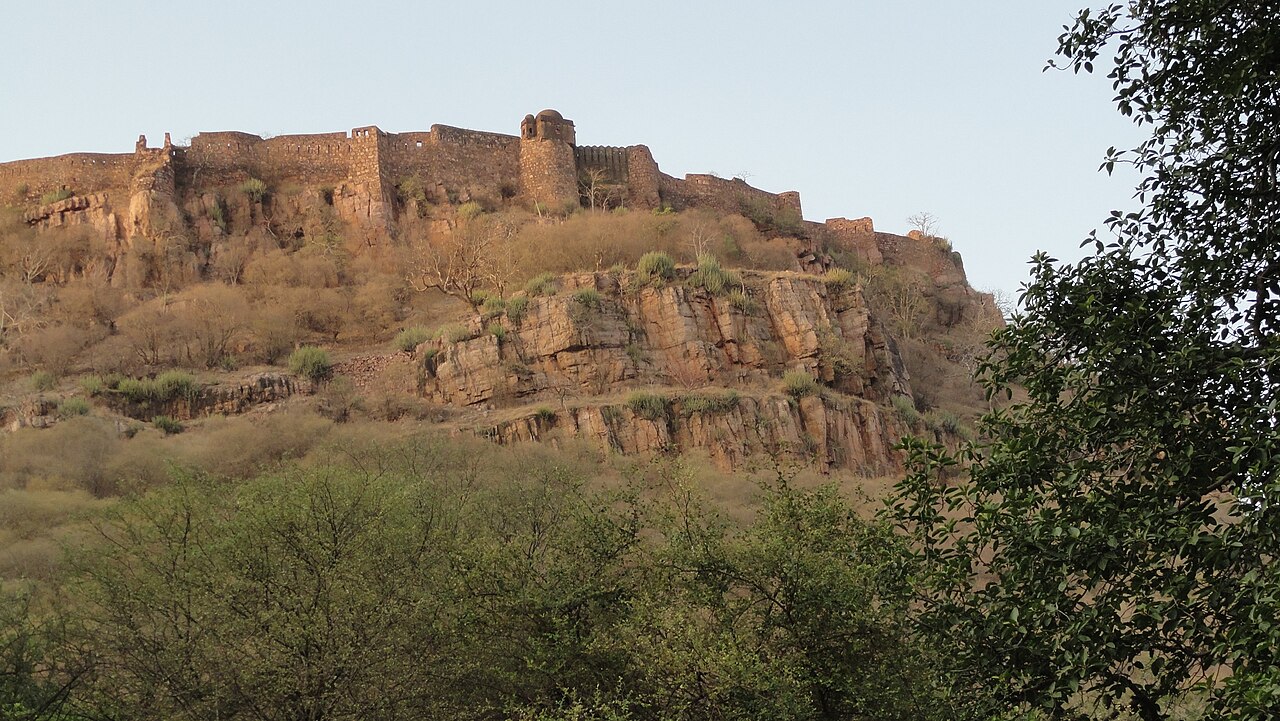
Ranthambore Fort lies within the Ranthambore National Park, near the city of Sawai Madhopur in Sawai Madhopur district of Rajasthan, India. The park being the former hunting grounds of the Maharajas of Jaipur until the time of India's Independence. It is a formidable fort, having been a focal point of the historical developments of Rajasthan. The fort provides a panoramic view of the surrounding Ranthambore National Park and is now a popular tourist attraction.
Rajput King Sapaldaksha of the Chauhan Dynasty laid the foundation of Ranthambore Fort during the mid-10th century. The kings who succeeded him contributed to the construction of the fort. Back in the day, Ranthambore Fort was considered impregnable owing to its strategic location and design. This became one of the many reasons why several rulers wanted to capture the fort. Subsequently, the fort was occupied by the Muslim rulers of Delhi, and later captured by several other dynasties including Hada and Mewar. The Delhi Sultanate captured it for a brief time. Later on, it came under control of Marwar and Mughals.
The fortress commanded a strategic location, 700 feet above the surrounding plain. In 2013, at the 37th session of the World Heritage Committee held in Phnom Penh, Cambodia, Ranthambore Fort, along with 5 other forts of Rajasthan, was declared a UNESCO World Heritage Site under the group Hill Forts of Rajasthan.
Text adapted from “Ranthambore Fort” on Wikipedia, CC BY-SA 4.0.
Ranthambore Fort ranks #508 of 9,079 worldwide in the atlas's castle fame ranking, and #19 of the 224 mapped in India. Founded c. 950, it is older than 92% of the atlas's dated landmarks — one of 193 atlas entries founded in the 10th century. Its Wikipedia articles were opened 7,831 times in the last 60 days, more than 92% of the atlas. It is one of the 30 landmarks on the atlas's regional map of Rajasthan. It is stop 2 of 6 on the Rajasthan hill forts, Amber to Jaisalmer. See how India compares in the castle statistics.
View on the interactive castle map →