Palace & château
Ripley Castle
ENG England · 16th century
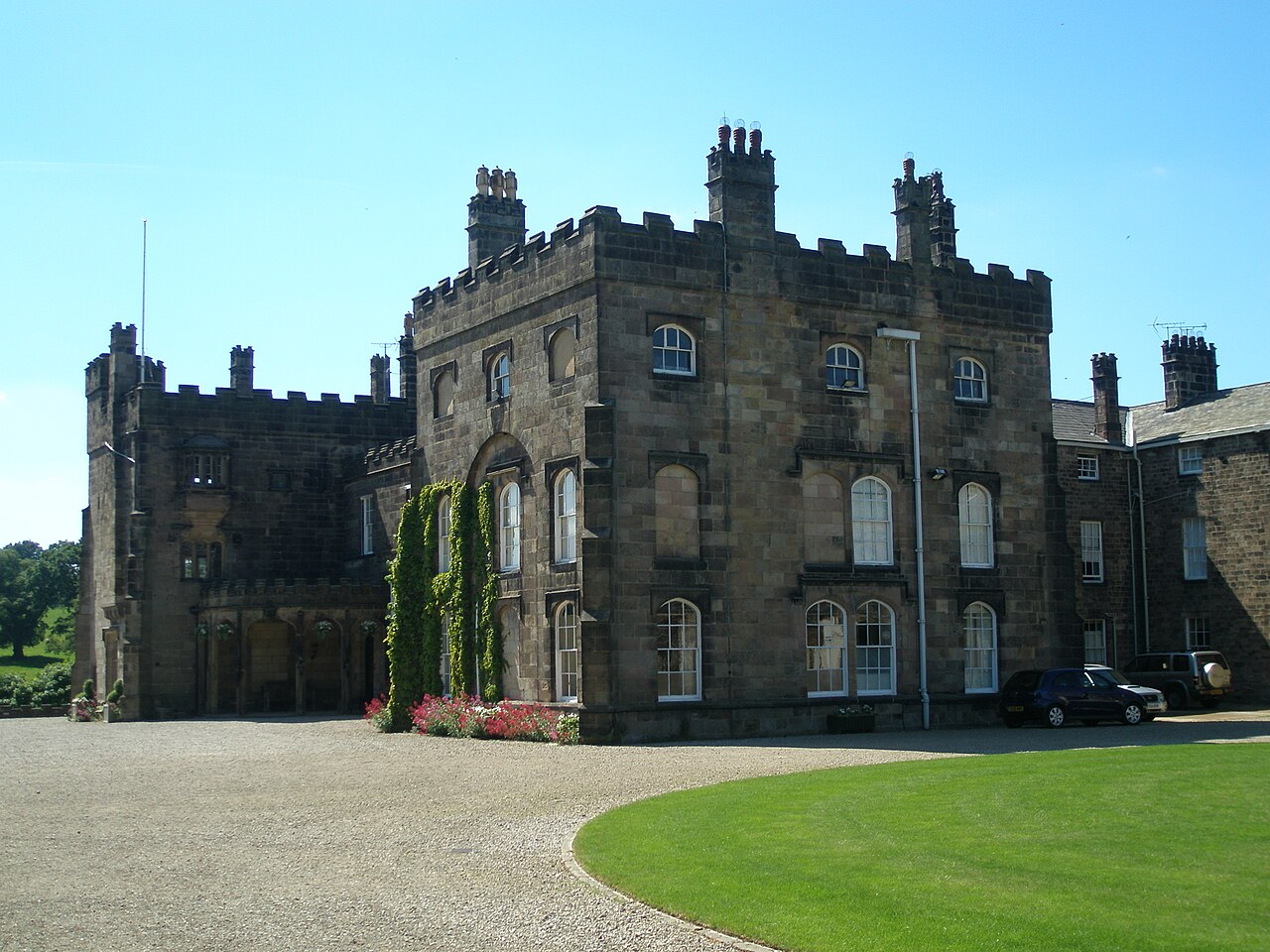
Ripley Castle is a Grade I listed 14th-century country house in Ripley, North Yorkshire, England, 3 miles (4.8 km) north of Harrogate.
The castle has been the seat of the Ingilby baronets for centuries. In June 2024 it was announced that it was to be sold.
Sir Thomas Ingleby (c. 1290–1352) married the heiress Edeline Thwenge in 1308/9 and acquired the Ripley Castle estate with its medieval manor house as her dowry. His oldest son, also called Thomas (1310–1369), saved the king from being gored by a wild boar whilst on a hunting expedition and was knighted in return with the boar's head symbol as his crest.
His descendant Sir John Ingleby (1434–1499) inherited the estate at the age of five from his father William and built the castle gatehouse, before becoming a monk at Mount Grace Priory, near Northallerton, and later the Bishop of Llandaff. His son Sir William Ingleby was raised by his deserted mother. Sir John's grandson, Sir William Ingleby (1518–1578), was High Sheriff of Yorkshire in 1564–65. Sir William added the tower to the building in 1548. Two of his sons were fervent Catholics on the run from the authorities. Francis, a priest, was caught, sentenced and hanged, drawn and quartered in York in 1586; David escaped to die on the Continent. Stephen Proctor captured another priest, Christopher Wharton, in the park at Ripley in 1598. Wharton was executed at York.
Sir William Ingleby (1546–1618) was knighted by James VI of Scotland when the king was en route to his coronation as James I of England in 1603. Later that year he captured one of the fugitive brothers of the Earl of Gowrie at Kirkby Malzeard. In 1605 he was involved in the Gunpowder Plot, allowing the plotters to stay at Ripley whilst they procured horses. One of the conspirators, Robert Winter, was his nephew. Ingleby was arrested and charged with treason, but acquitted.
Sir William Ingleby (1594–1652) supported Charles I during the Civil War, and was made Baronet Ingleby in 1642. He fought at Marston Moor in 1644, when the King's forces were totally routed, making his escape to Ripley and hiding in a priest hole while Oliver Cromwell billeted himself there for the night, held at gunpoint in the library by Sir William's sister, Jane Ingleby. On the death of the 4th Baronet in 1772, the baronetcy became extinct but was revived in 1781 for his illegitimate son John (1758–1815).
Text adapted from “Ripley Castle” on Wikipedia, CC BY-SA 4.0.
Ripley Castle ranks #2,594 of 8,134 worldwide in the atlas's castle fame ranking, and #172 of the 333 mapped in England. Founded 1548, it is older than 41% of the atlas's dated landmarks — one of 755 atlas entries founded in the 16th century. Its Wikipedia articles were opened 2,103 times in the last 60 days, more than 68% of the atlas. 4 more atlas landmarks stand within 25 km. The nearest day-trip guide is Sheffield, 74 km away. See how England compares in the castle statistics.
View on the interactive castle map →Frequently asked questions
Where is Ripley Castle?
Ripley Castle stands in England, at 54.04022°, -1.57048°.
When was Ripley Castle built?
The atlas dates its founding to 1548. Earlier structures may have stood on the site; this is the earliest documented founding year.
How famous is Ripley Castle?
In this atlas's fame ranking: #2,594 of 8,134 worldwide, and #172 in England. Fame here combines how many Wikipedia language editions cover a landmark with how many people read them.
What is the nearest castle to Ripley Castle?
Knaresborough Castle, about 8 km away.
More castles in England
- Rougemont Castle England
- Carn Brea Castle England · 14th century
- Worcester Castle England · 11th century
- Sizergh Castle England · 14th century
More palaces & châteaux
- Kamieniec Ząbkowicki Palace Poland · 19th century
- Gezirah Palace Egypt
- Wrocław Palace Poland · 18th century
- Palais Esterházy Austria · 17th century