 Russia · 16th century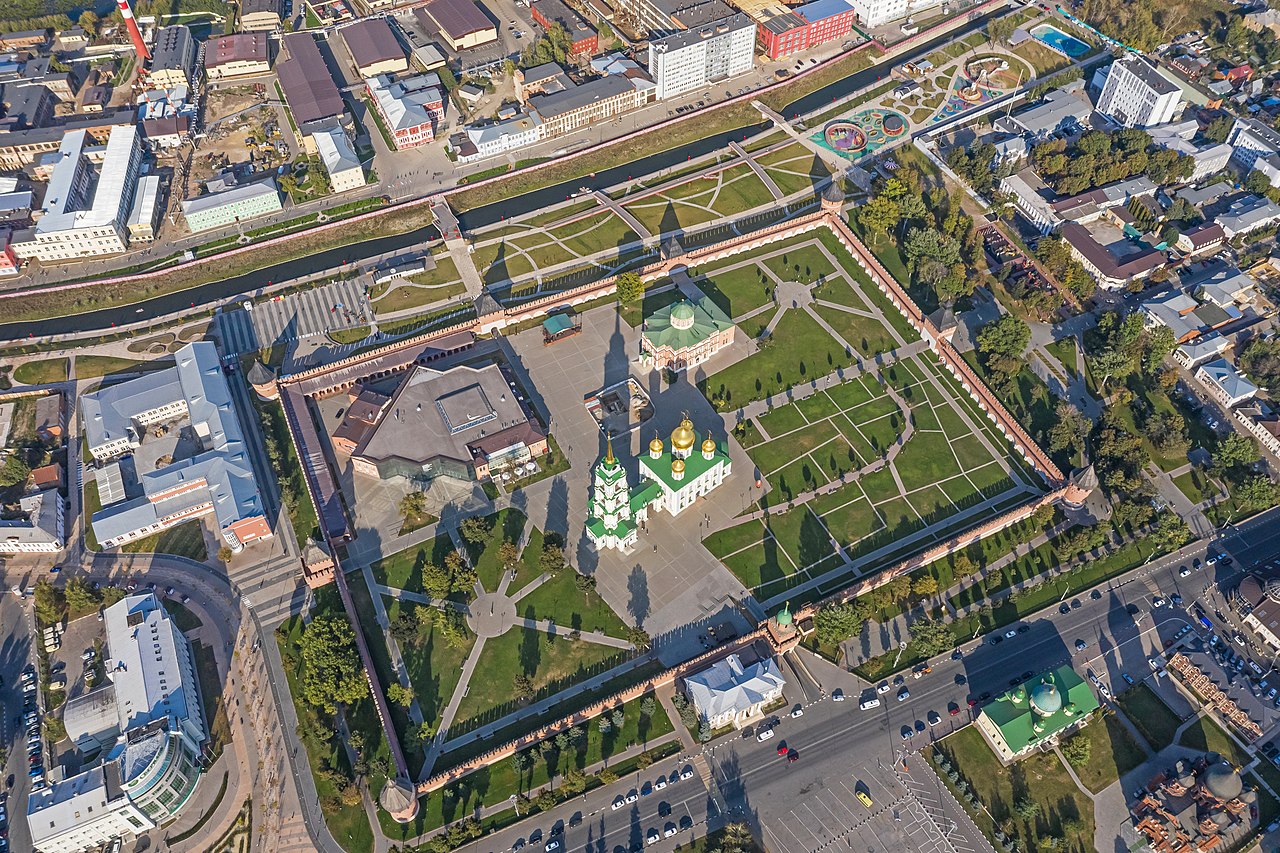
The Tula Kremlin (Russian: Тульский кремль) is a fortress in Tula, Russia, which was constructed in the early 16th century. There are two cathedrals within the Kremlin:
In 1507 Vasily III gave the order to construct an oak fortress in Tula on the left bank of the Upa River. In 1514 in an oak fortress, like in the Moscow Kremlin, Vasily III issued an order to construct the "stone city", built in 1520 (1521).
In 1552, was besieged by the Crimean khan Devlet I Giray. At that time, Tsar Ivan IV was with campaign against Kazan. Urban population fought before the arrival of reinforcements from the tsar's army from Kolomna. In memory of these events in the Tula Kremlin has been established the foundation stone near the Tower of Ivanovskie Gate.
In the second half of the 16th century, around the stone Kremlin was created Posad - a wooden fortress that more than ten times more the size of the stone Kremlin. This area at the time was the boundary of Tula.
In 1605 bell informed the residents about the arrival of the False Dmitry I and Tula for two weeks turned into pseudo capital of Moscow State. It was here in the Kremlin, came to swear allegiance to the pretender boyars and nobles.
In 1607, during the Peasants' War, the Tula Kremlin became the refuge for Ivan Bolotnikov. Together with people loyal to him, he kept the Kremlin by his control for four months.
In 1608 in the Tula Kremlin by Tsar Vasily Shuisky were besieged the leaders of the peasant movement - Ivan Bolotnikov and Ileyko Muromets. Kremlin stand very long siege but was taken due creation a dam of the bags to the ground on Upa River. Water from the river flooded the Kremlin, and the rebels surrendered. In memory of these events in 1953 in the Tula Kremlin was erected an obelisk.
In the middle of 17th century Kremlin completely left its significance.
After the reunification of left-bank Ukraine and Russia in the middle of the 17th century, Kremlin completely lost its importance in the time of Peter the fortresses in the registers are no longer covered.
Text adapted from “Tula Kremlin” on Wikipedia, CC BY-SA 4.0.
Tula Kremlin ranks #1,231 of 9,079 worldwide in the atlas's castle fame ranking, and #47 of the 146 mapped in Russia. Founded 1520, it is older than 42% of the atlas's dated landmarks — one of 891 atlas entries founded in the 16th century. Its Wikipedia articles were opened 3,693 times in the last 60 days, more than 82% of the atlas. See how Russia compares in the castle statistics.
View on the interactive castle map →