Vesting
Izzeddin Fortress
🇬🇷 Griekenland · 19e eeuw
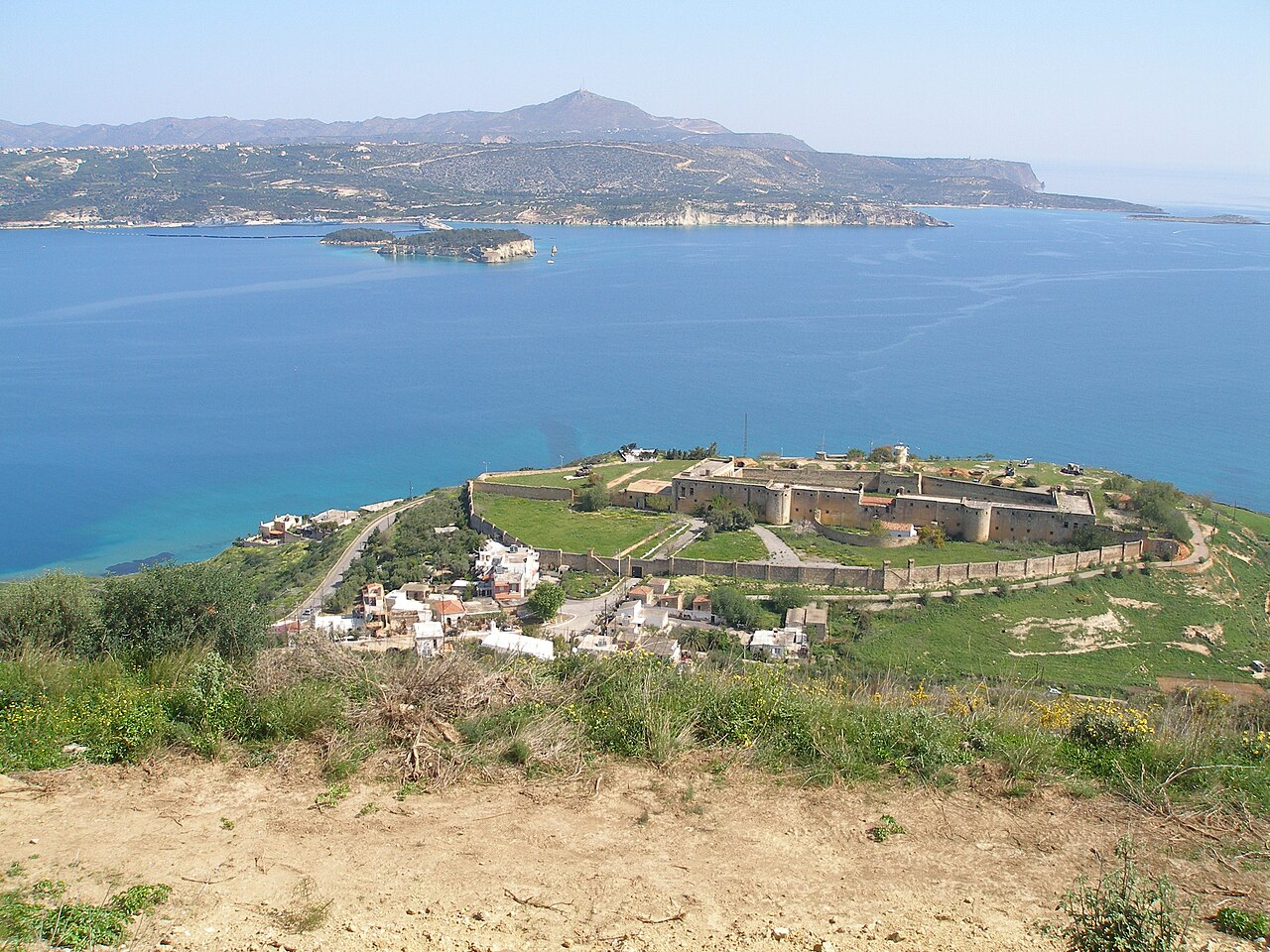
De vesting Izzeddin (Grieks: Φρούριο Ιτζεδδίν; Izzeddin betekent "Glorie van het Geloof") is een Ottomaanse vesting in de baai van Souda, Kreta, nabij het dorp Kalami, vooral bekend om haar rol als gevangenis voor politieke gevangenen in het 20e-eeuwse Griekenland.
De vesting werd in 1872 gesticht door de toenmalige Ottomaanse gouverneur van het eiland, Rauf Pasha, en genoemd naar de zoon van sultan Abdulaziz. Al onder de Kretenzische Staat (1898–1913) werd zij als gevangenis gebruikt, en dat bleef zo nadat Kreta onder Grieks bestuur kwam, tot 1950. Zij was met name berucht als plaats van gevangenschap voor politieke gevangenen, vooral tijdens de dictatuur van Theodoros Pangalos (1925–1926) en de Griekse Burgeroorlog. Onder haar gevangenen bevonden zich Eleftherios Venizelos in 1903 en de afgezette dictator Theodoros Pangalos in 1926–1928. Na 1950 kwam zij onder het gezag van de Griekse marine. Tegenwoordig is zij een beschermd monument en een locatie voor culturele evenementen.
Machinaal vertaald uit “Izzeddin Fortress” op de Engelstalige Wikipedia, CC BY-SA 4.0.
Izzeddin Fortress staat op plaats 3.399 van 8.134 in de bekendheidsranglijst van deze atlas en op plaats 50 van de 134 die de atlas in Griekenland in kaart brengt. Gebouwd in 1872, en daarmee ouder dan 6% van de gedateerde bouwwerken in de atlas — een van de 607 bouwwerken in de atlas die uit de 19e eeuw stammen. Binnen 25 km staan nog 3 andere bouwwerken uit de atlas. Zie hoe dat zich verhoudt in de kastelenstatistiek.
Bekijk op de interactieve kastelenkaart →Veelgestelde vragen
Waar ligt Izzeddin Fortress?
Izzeddin Fortress ligt in Griekenland, op 35.4694°, 24.1497°.
Wanneer werd Izzeddin Fortress gebouwd?
De atlas dateert de stichting op 1872. Er kunnen eerdere bouwwerken hebben gestaan; dit is het oudste gedocumenteerde bouwjaar.
Hoe bekend is Izzeddin Fortress?
In de bekendheidsranglijst van deze atlas: plaats 3.399 van 8.134 wereldwijd, plaats 50 in Griekenland. Bekendheid combineert het aantal Wikipedia-taalversies met het aantal lezers.
Welk kasteel ligt het dichtst bij Izzeddin Fortress?
Aptera Fortress, ongeveer 1 km verderop.
Meer kastelen in Griekenland
- Dymaean Wall Griekenland · 13e eeuw v.Chr.
- Rio Castle Griekenland · 15e eeuw
- Gardiki Castle, Corfu Griekenland · 13e eeuw
- Araklovon Castle Griekenland · 8e eeuw
Meer vestingen
- Fortress of the Immaculate Conception Nicaragua · 17e eeuw
- Handaberd Azerbeidzjan · 9e eeuw
- Babruysk Fortress Belarus · 19e eeuw
- Chakvinji Fortress Georgië