Pałac
Palazzo Venezia
🇮🇹 Włochy · XV wiek
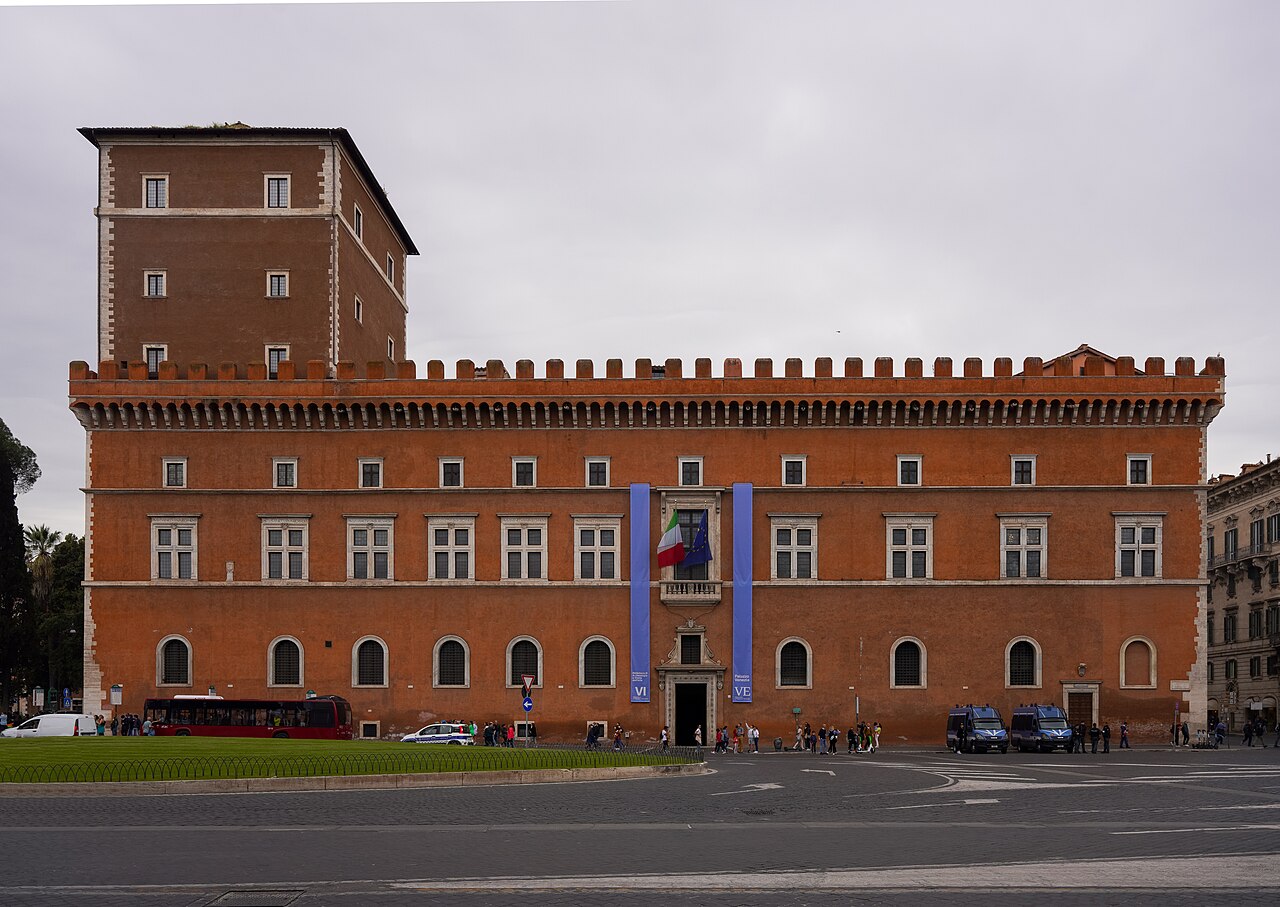
Palazzo Venezia (wł. [paˈlattso veˈnɛttsja]; „Pałac Wenecki”), zwany także Palazzo Barbo, dawniej Palazzo di San Marco („Pałac św. Marka”), to duży wczesnorenesansowy pałac w centrum Rzymu, we Włoszech, położony na północ od Kapitolu. Będący dziś własnością Republiki Włoskiej, mieści Muzeum Narodowe Palazzo Venezia. Główna (wschodnia) fasada ma 77 metrów długości i wysokość (bez wieży) około 31 metrów. Skrzydło północne, obejmujące „Apartament Cibo”, biegnące na zachód, ma 122 metry długości. Zajmuje powierzchnię 1,2 hektara i zamyka w sobie dwa ogrody oraz bazylikę św. Marka. Wzniesiono go w obecnej formie w latach 50.
XV wieku z inicjatywy kardynała Pietra Barbo (1417–1471), tytularnego posiadacza bazyliki św. Marka, który od 1464 roku rządził jako papież Paweł II. Barbo, Wenecjanin z urodzenia, jak to było zwyczajowe dla kardynałów bazyliki św. Marka, mieszkał tam nawet będąc papieżem i zgromadził tam wielką kolekcję sztuki i starożytności. W pierwszej połowie XX wieku pałac stał się rezydencją i siedzibą Benito Mussoliniego, dyktatora faszystowskich Włoch (1922–1943), który z jego balkonu wygłaszał słynne przemówienia do ogromnych tłumów wypełniających Piazza Venezia.
Pierwotna struktura tego wielkiego kompleksu architektonicznego składała się ze skromnego średniowiecznego domu przeznaczonego na rezydencję kardynałów mianowanych tytularnymi posiadaczami bazyliki św. Marka. W 1469 roku, po znacznej rozbudowie, stał się rezydencją papieską, a w 1564 roku papież Pius IV, chcąc pozyskać sympatię Republiki Weneckiej, której patronem był Marek Ewangelista, przekazał rezydencję ambasadzie weneckiej w Rzymie pod warunkiem, że część budynku pozostanie rezydencją dla kardynałów bazyliki św. Marka – ta część znana jest dziś jako Apartament Cibo (lub Cybo) – oraz że Republika Wenecka zapewni utrzymanie i przyszłą renowację budynku.
Tłumaczenie maszynowe artykułu „Palazzo Venezia” w angielskiej Wikipedii, CC BY-SA 4.0.
Palazzo Venezia zajmuje 243. miejsce na 8134 w rankingu rozpoznawalności zamków tego atlasu i 16. wśród 487 obiektów we Włoszech. Data powstania — ok. 1450, wcześniejsza niż u 49% datowanych obiektów atlasu — jeden z 455 obiektów atlasu powstałych w XV wieku. Artykuły o tym obiekcie w Wikipedii otwarto 15 681 razy w ciągu ostatnich 60 dni — więcej niż 96% obiektów atlasu. W promieniu 25 km stoi 70 innych obiektów atlasu. Najbliższy przewodnik na jednodniowy wypad to Rzym, 1 km stąd. Zobacz w statystykach zamków, jak wypada Włochy.
Zobacz na interaktywnej mapie zamków →Najczęstsze pytania
Gdzie znajduje się Palazzo Venezia?
Palazzo Venezia znajduje się we Włoszech, na współrzędnych 41.8962°, 12.4815°.
Z którego roku pochodzi Palazzo Venezia?
Atlas podaje rok powstania: ok. 1450. Wcześniejsze budowle mogły stać w tym miejscu — to najstarszy udokumentowany rok.
Które miejsce w rankingu zajmuje Palazzo Venezia?
W rankingu rozpoznawalności tego atlasu: 243. miejsce na 8134, 16. miejsce we Włoszech. Rozpoznawalność łączy liczbę wersji językowych Wikipedii z liczbą czytelników.
Palazzo Venezia — który zamek leży najbliżej?
Palazzo Bonaparte, około 1 km stąd.
Inne zamki we Włoszech
- Palazzo Strozzi Włochy · XV wiek
- Pałac Królewski w Turynie Włochy · XVI wiek
- Pałac Królewski w Neapolu Włochy · XVI wiek
- Pałac Medyceuszy Włochy · XV wiek
Inne obiekty: pałace
- Pałac Królewski w Oslo Norwegia · XIX wiek
- Palais du Tau Francja · XV wiek
- Prince's Palace of Monaco Monako · XII wiek
- Pałac Kadriorg Estonia · XVIII wiek