Fortress
Berdkunk Fortress
🇦🇲 Armenia · 10th century
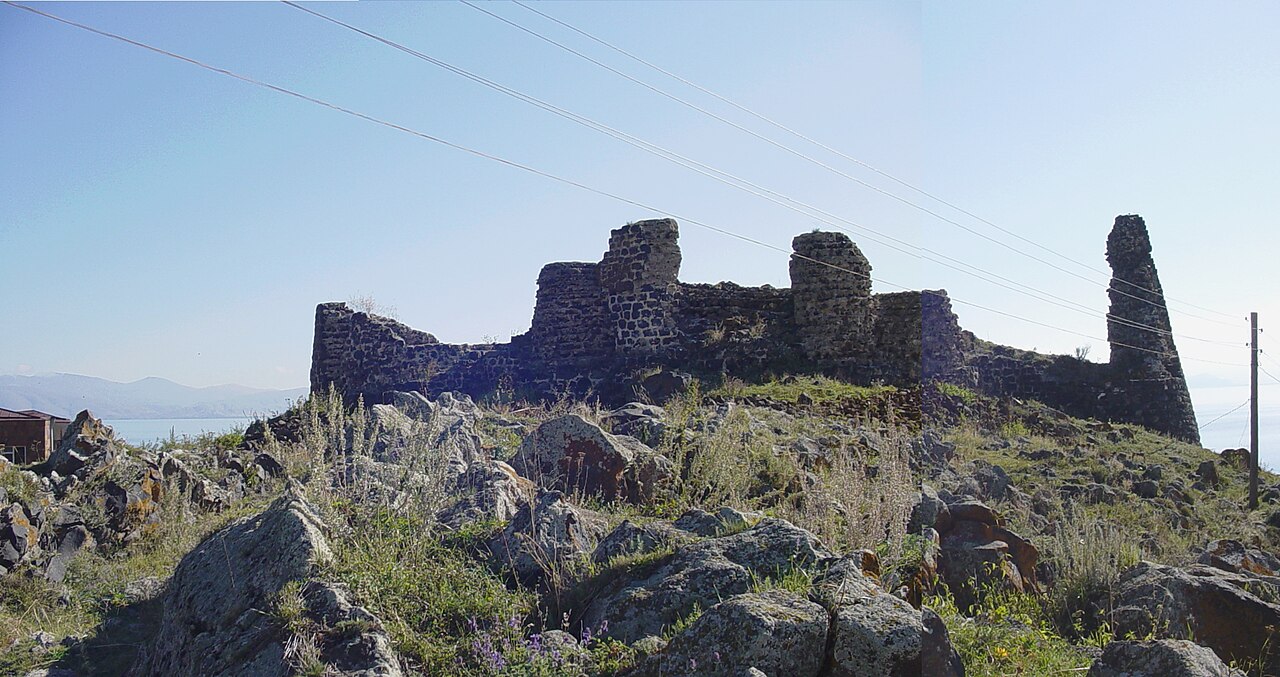
Berdkunk Fortress (in Armenian: Բերդկունք), also known by the name Spitak Berd — White Fortress — Aghala or Ishkhanats Amorts, is an ancient Armenian fortress dated to the 10th century, situated on the western edge of the village of Berdkunk in the Gegharkunik Province of Armenia.
On the way to the castle there are two khachkars, one from the 12th century and the other from between the 14th and 15th centuries. On 9 January 2003 the list of historical and cultural monuments of the Gegharkunik region of Armenia was approved, in which the Castle of Berdkunk is included.
Machine-translated from “Fortaleza Berdkunk” on the Spanish Wikipedia, CC BY-SA 4.0.
Berdkunk Fortress ranks #6,581 of 8,134 worldwide in the atlas's castle fame ranking, and #24 of the 28 mapped in Armenia. Founded c. 950, it is older than 93% of the atlas's dated landmarks — one of 138 atlas entries founded in the 10th century. The nearest day-trip guide is Yerevan, 59 km away. See how Armenia compares in the castle statistics.
View on the interactive castle map →Frequently asked questions
Where is Berdkunk Fortress?
Berdkunk Fortress stands in Armenia, at 40.44532°, 45.11135°.
When was Berdkunk Fortress built?
The atlas dates its founding to c. 950. Earlier structures may have stood on the site; this is the earliest documented founding year.
How famous is Berdkunk Fortress?
In this atlas's fame ranking: #6,581 of 8,134 worldwide, and #24 in Armenia. Fame here combines how many Wikipedia language editions cover a landmark with how many people read them.
What is the nearest castle to Berdkunk Fortress?
Bjni Fortress, about 39 km away.
More castles in Armenia
- Sardar's Fortress Armenia · 19th century
- Oshakan Armenia
- Erebuni Fortress Armenia · 8th century BC
- Teishebaini (Karmir Blur) Armenia
More fortresses
- Forte de São Sebastião (Angra do Heroísmo) Portugal · 16th century
- Fort San Antonio Abad Philippines · 16th century
- Forte de Milfontes Portugal · 17th century
- Fort of São Julião da Barra Portugal · 16th century