 Italy · 13th century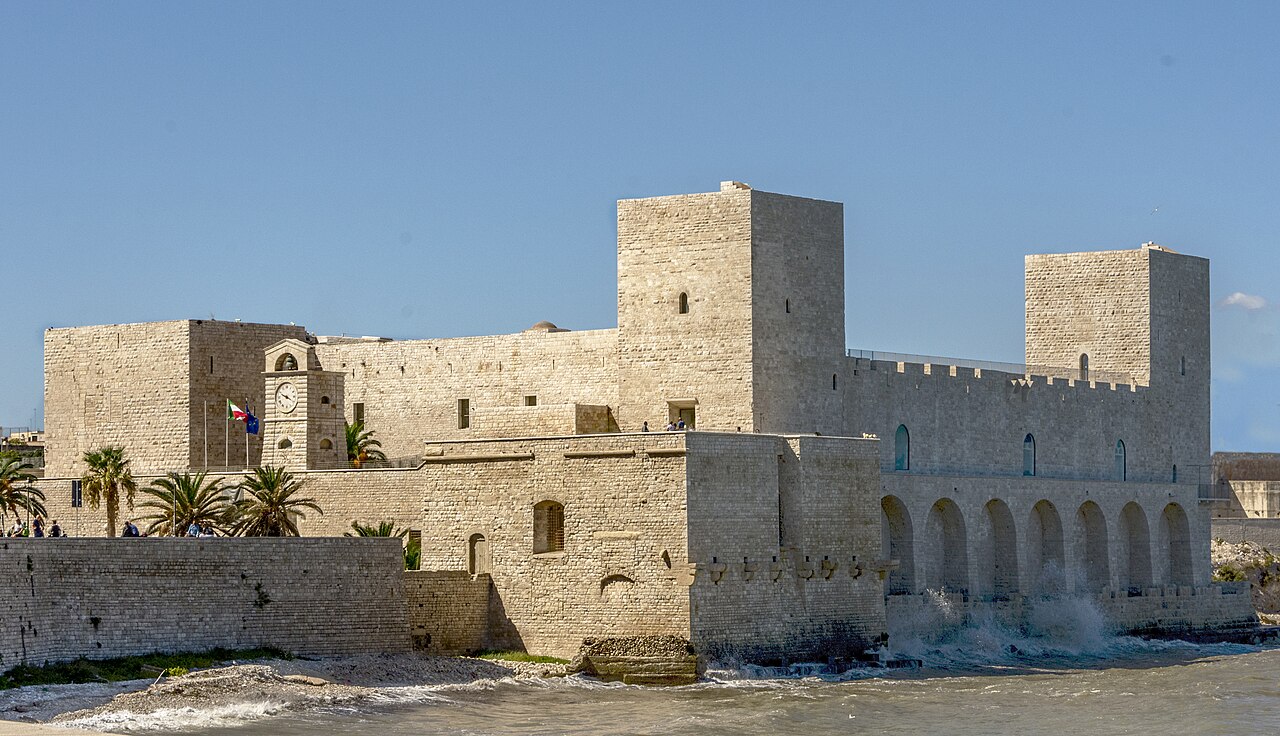
The Castello Svevo di Trani is a coastal fortress in the town of Trani in the Italian region of Apulia. It was built in 1233 under the rule of Emperor Frederick II.
The museum castle, which is under the Ministry of Culture, was administered from December 2014 by the Apulia museum group (Italian Polo museale della Puglia). Since December 2019 this task has been carried out by the newly created Regional Museum Directorate (Italian Direzione regionale Musei).
Machine-translated from “Castello Svevo (Trani)” on the German Wikipedia, CC BY-SA 4.0.
Castle of Trani ranks #4,416 of 9,035 worldwide in the atlas's castle fame ranking, and #328 of the 555 mapped in Italy. Founded 1233, it is older than 72% of the atlas's dated landmarks, one of 1090 atlas entries founded in the 13th century. Its Wikipedia articles were opened 1,262 times in the last 60 days, more than 57% of the atlas. Wikidata records about 24,000 visitors in 2022. 1 more atlas landmarks stand within 25 km. See how Italy compares in the castle statistics.
View on the interactive castle map →