Castle
Farnham Castle
ENG England · 12th century
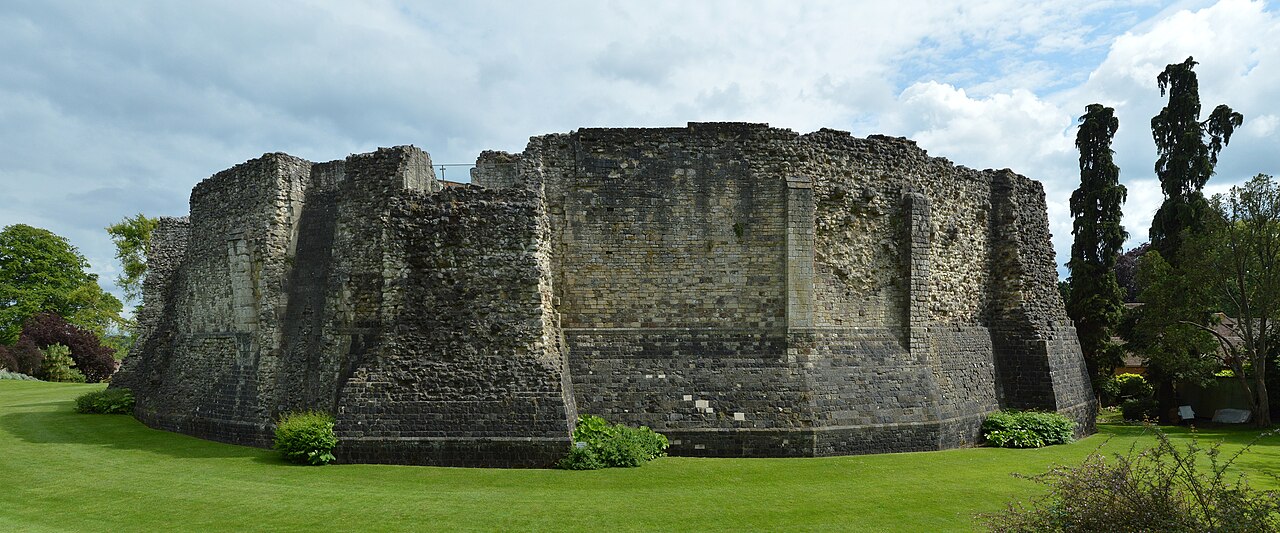
Farnham Castle is a 12th-century castle in Farnham, Surrey, England. It was formerly the residence of the Bishops of Winchester.
Built in 1138 by Henri de Blois, Bishop of Winchester, grandson of William the Conqueror, Farnham castle became the home of the Bishops of Winchester for over 800 years. The original building was slighted (demolished) by Henry II in 1155 after 'the Anarchy' and then rebuilt in the late 12th and early 13th centuries. In the early 15th century, it was the residence of Cardinal Henry Beaufort who presided at the trial of Joan of Arc in Rouen in 1431. It is for this reason that St Joan of Arc's Church in Farnham is dedicated to her.
The castle's architecture reflects changing styles through the ages, making it one of the most important historical buildings in the south of England. It is an impressive stone motte and bailey fortress, and has been in almost continuous occupation since the 12th century. The large motte was formed around the massive foundations of a Norman tower and then totally enclosed by a shell keep, with buttress turrets and a shallow gatehouse. Attached to the motte is a triangular inner bailey, with a fine range of domestic buildings and a fifteenth-century brick entrance tower. The formidable outer bailey curtain wall has square flanking towers, a 13th-century gatehouse and a large ditch.
Mary I of England stayed at Farnham Castle in the days before her wedding to Philip of Spain in July 1554. The stables burnt down during a visit by King James, Anne of Denmark, and Henry, Prince of Wales in July 1609. The castle was slighted again after the Civil War in 1648. Since then more buildings have been constructed in the castle's grounds, the most impressive being those built by Bishop George Morley in the 17th century.
The castle is set in five acres (20,000 m2) of gardens overlooking the town of Farnham. A letter in 1594 mentions that white clay was dug in Farnham Park to make drinking vessels used by lawyers at the Inner Temple in London.
By the 20th century a garden had been established within the shell keep. In 1933 the Office of Works was given custodianship of the castle.
During the Second World War, the castle was the home of the Camouflage Development and Training Centre (CDTC) of the Camouflage Branch of the Royal Engineers.
Text adapted from “Farnham Castle” on Wikipedia, CC BY-SA 4.0.
Farnham Castle ranks #3,348 of 8,134 worldwide in the atlas's castle fame ranking, and #226 of the 333 mapped in England. Founded 1138, it is older than 84% of the atlas's dated landmarks — one of 564 atlas entries founded in the 12th century. Its Wikipedia articles were opened 1,450 times in the last 60 days, more than 58% of the atlas. 3 more atlas landmarks stand within 25 km. The nearest day-trip guide is Basingstoke, 20 km away. See how England compares in the castle statistics.
View on the interactive castle map →Frequently asked questions
Where is Farnham Castle?
Farnham Castle stands in England, at 51.2185°, -0.80231°.
When was Farnham Castle built?
The atlas dates its founding to 1138. Earlier structures may have stood on the site; this is the earliest documented founding year.
How famous is Farnham Castle?
In this atlas's fame ranking: #3,348 of 8,134 worldwide, and #226 in England. Fame here combines how many Wikipedia language editions cover a landmark with how many people read them.
What is the nearest castle to Farnham Castle?
Odiham Castle, about 12 km away.
More castles in England
- Lambton Castle England · 19th century
- Longtown Castle England · 11th century
- Greystoke Castle England · 14th century
- Hartlebury Castle England · 13th century
More castles
- Colliston Castle Scotland · 16th century
- Corby Castle England · 13th century
- Dudhope Castle Scotland · 13th century
- Hereford Castle England · 11th century